I promised I would write about ‘Privateer’ – and have managed to pull together my notes. Whilst it’s a distraction from writing about ‘Corsair’ – I hope it’s interesting. This is Part 1 of 2.
I’ll start last year, where I was fortunate enough to take ownership of some photographs which were A.L. Braithwaite’s – details of that trip here; https://broadssailing.blog/2019/07/18/on-the-trail-of-a-l-braithwaite/
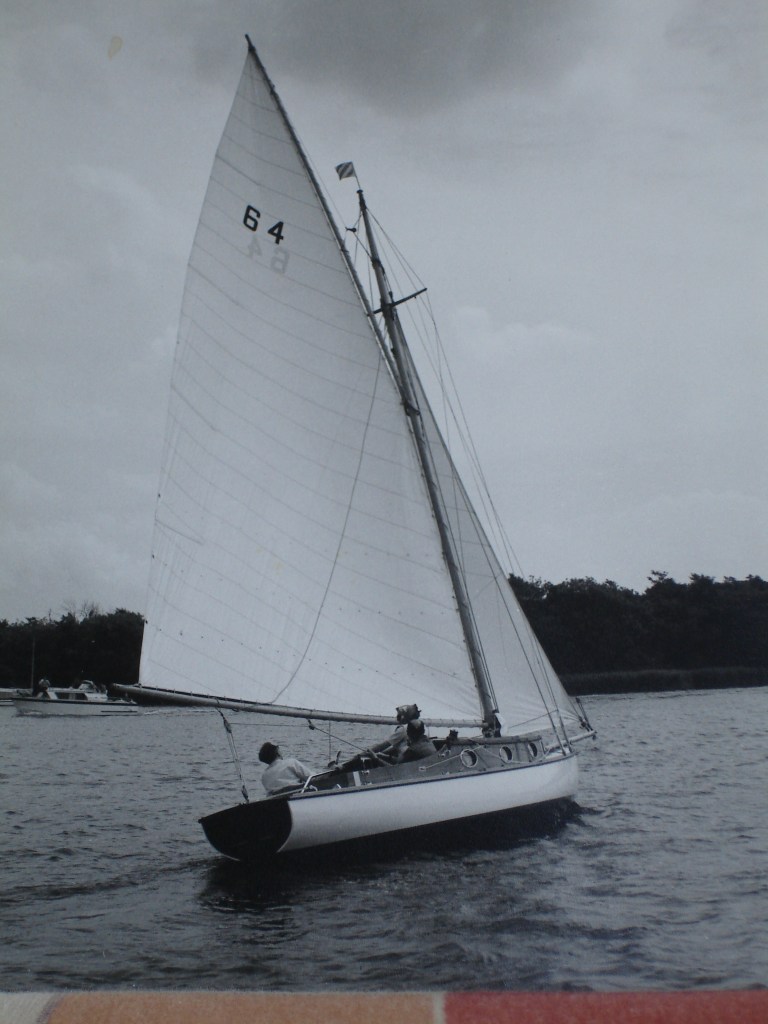
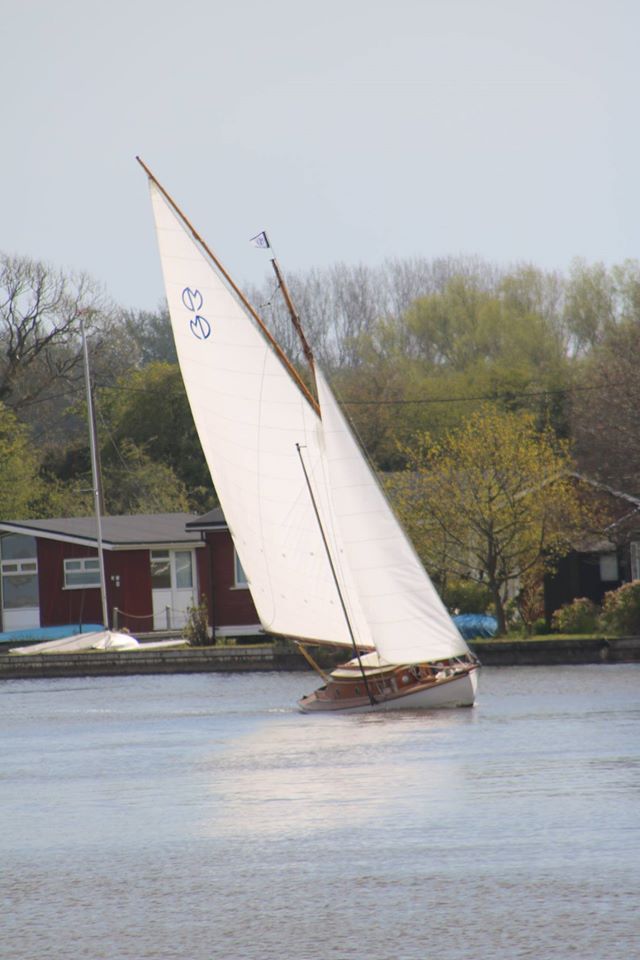
It was an incredible experience, and these photographs only emphasised that if I’m honest. I believe they’re taken in 1936, and show a newly built ‘Privateer’, heeling to a fresh breeze, clearly the pride of the C&H fleet;
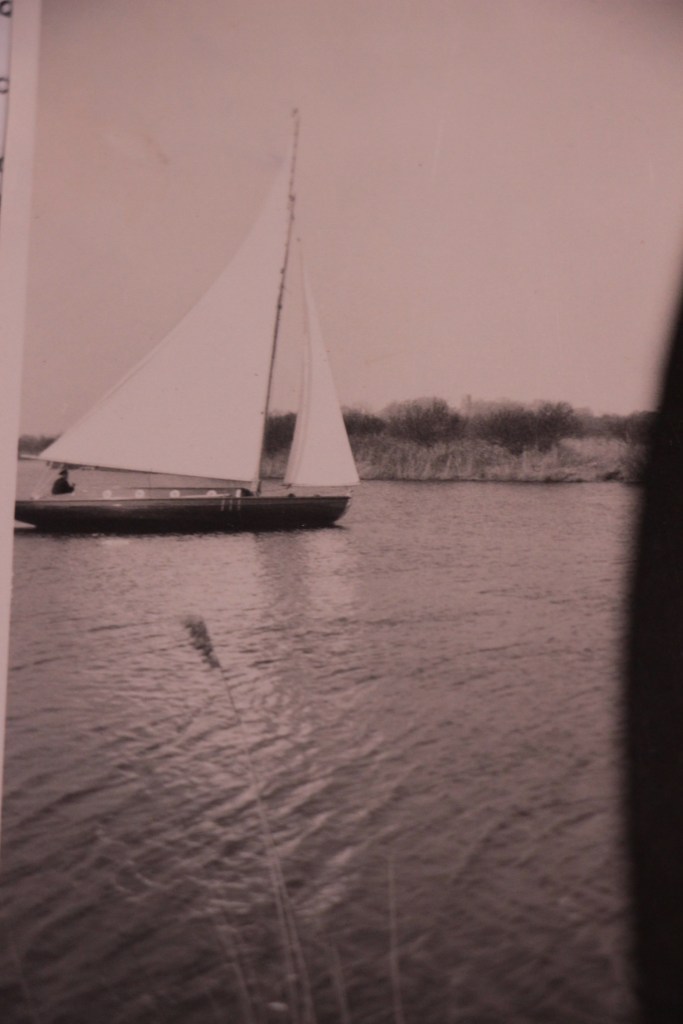
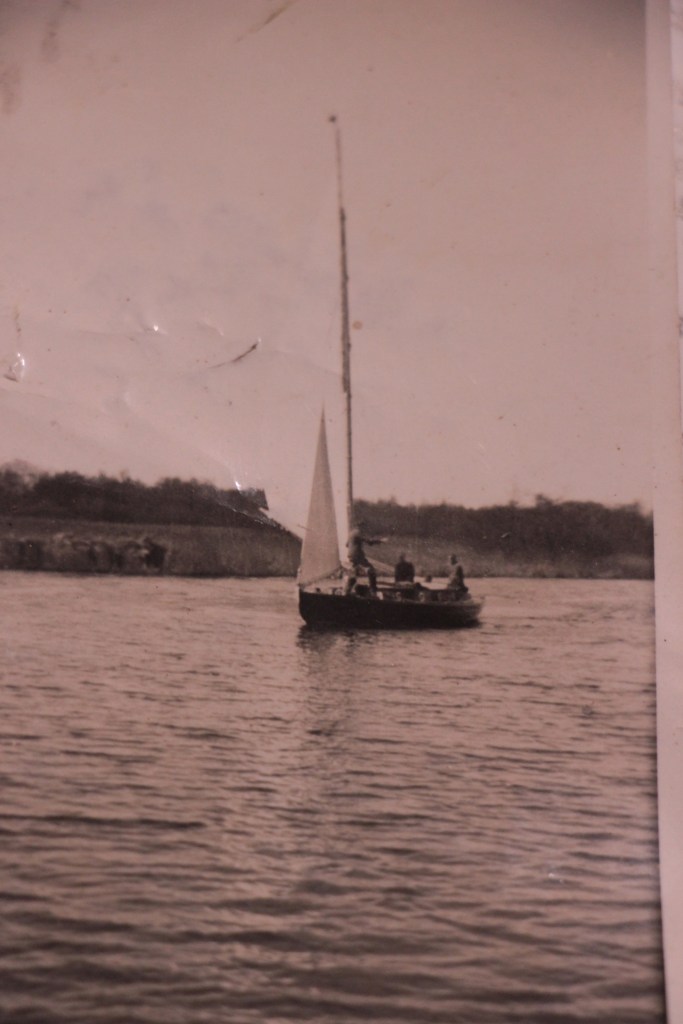

I will say, I still find it AMAZING that those photographs survived 80 odd years, before being found & rescued by me. I count myself as very lucky to have them.
‘Privateer’ is typically Braithwaite in her design, displaying the fine entry & narrow transom that’s a signature for C&H yachts he drew. Complete with characteristic chrome trim, including the corner pieces on the cockpit & cabin sides.
At 31ft on-deck, there’s a strong chance that her metacentric qualities mean the largest underwater sectional area is likely to be nearly dead-on 50% of the LWL.
Interestingly, period commentary of ‘Privateer’ from both anecdotes (more of this later) and the Blake’s catalogue suggest she was a ‘handful’. Certainly she was advertised with the stern warning;
“not available to novices”
Blakes catalogues, much like Estate Agency listings need some interpretation, ‘Lively’ means arm-breaking weather helm. “Bijou” accommodation means a pokey cabin, and ‘easily handled’ means it sails like a log whatever you do… (!)
So I suggest the warning given meant ‘Privateer’ was a powerful boat.
This was confirmed to me in an anecdote by Paul Bown – a previous owner. He recounted that a local boatbuilder – Stanley Nudd was working quietly in the rigging shed at Herbert Woods – suddenly being rudely disturbed by ‘Privateer’ bursting through the shed wall! The party of young women aboard having lost control.
I don’t think this is immediately the fault of the helm, or ‘Privateer’ if I’m honest. To capitalise on internal space, alot of hire yachts had large cabins, with comparatively small cockpits, and as a ‘work around’ – some had their rudders linked to the tiller, which could then be mounted much further aft.
This creates alot of space in the cockpit – but the mechanical linkage limits you to putting the helm over until about 45 or 50 degrees max…
‘Privateer’ originally had such a linkage, which was later removed.
My theory – is that ‘Privateer’ was running downriver – toward the bridge. Upon turning, the limits of the tiller linkage meant she couldn’t (and wouldn’t) turn. Hence the nasty thump on the shed.
No damage to ‘Privateer’ was reported!
Herbert Woods’ yard – photographed in 1938 shows a white shed, immediately adjacent to the main river – I suspect this was the unfortunate victim of ‘Privateer’s’ advances!;
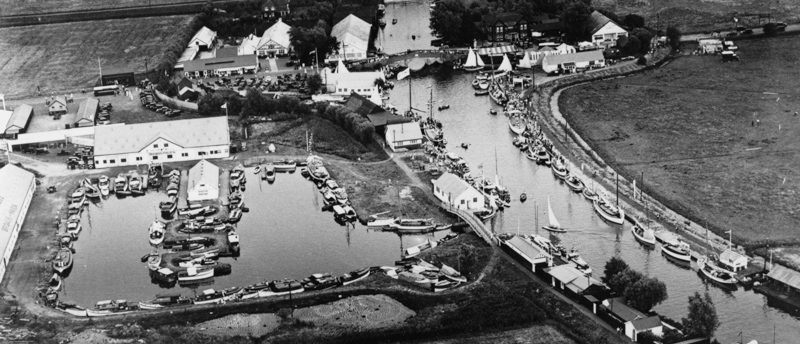
Note the white shed, next to the footbridge (and the river!)
Being larger than the ‘Clipper’s’ meant the ‘Privateer’ could boast being a 2-cabin, 4 berth yacht. That is with 2 berths in the forrad cabin, then a Heads compartment & companionway opposite segregating this from the aft cabin – also with 2 berths. I’ve slept on ‘Privateer’ – and can vouch that the bunks are over 6ft length, and very wide!
Even though she was built for hire, it’s clear that Braithwaite & Lejeune decided to experiment. The gaff spar is bamboo – reducing weight aloft and linking back to the aim that all C&H yachts would be rewarding to sail.
They also looked to reducing the weight of the hull through construction. ‘Privateer’s’ hull planking was reputedly 3/4 mahogany (!) – with oak frames at 9″ centres. By comparision ‘Corsair’ has 1 inch planking, and her ribs are at 6″ centres.
Use of metalwork featured in the structural members of the hull- there was an iron breasthook & quarter knees – plus a substantial iron frame around the tabernacle.
Internally – the cabin roof was raised by a primative hydraulic system, ambitious! Later removed – as the leather seals were prone to leaking & spraying holiday-makers with oil!
In 1957, ‘Privateer’ found herself hired by the Bowes-Lyon family.
Yes, that Bowes-Lyon family! Although Queen Elizabeth the Queen Mother was not aboard.
The Bowes-Lyon’s were sailing across Breydon, where they hooked a post with the mainsheet. BANG. You stop quite quickly doing this, and it was apparent they & ‘Privateer’ were going nowhere.
Unforgivably – they piled into the dinghy, and rowed to the ‘Star Hotel’ on Yarmouth quayside. Where upon they calmly telephone Chumley & Hawke – informed them where ‘Privateer’ was, and curtailed their holiday by getting on a train, pronto.
‘Privateer’ was found, lying on the mud on her side, full of water.
I’ll save my opinions on that, but ‘Privateer’ is the only R.C.C. yacht that can claim to be sunk by Royal Appointment!
Bizarrely, a very close friend of mine spent her childhood hiring ‘Privateer’. In fact, Jean & her family first sailed from Chumley & Hawke in 1951, to begin with, hiring ‘Clipper’ yachts. A bit of me hopes that Jean & her parents hired Clipper VI, especially as in 1951 she was the newly built C&H yacht…
Jean re-counted that her Father had previously hired ‘Brigand’ from Wroxham, but found it too frustrating getting through the trees from Wroxham each year. So turned to C&H in Horning for holidays.
The format of their holidays was quite simple, the Oliver family would drive from Birmingham, get aboard ‘Privateer’ & head to Hickling Broad in company with some other yachts, including 1 or 2 from Hunter’s yard at Ludham.
Again, I’m hugely fortunate in that Jean’s shared a number of photographs of ‘Privateer’ in hire, during the early 1950’s;
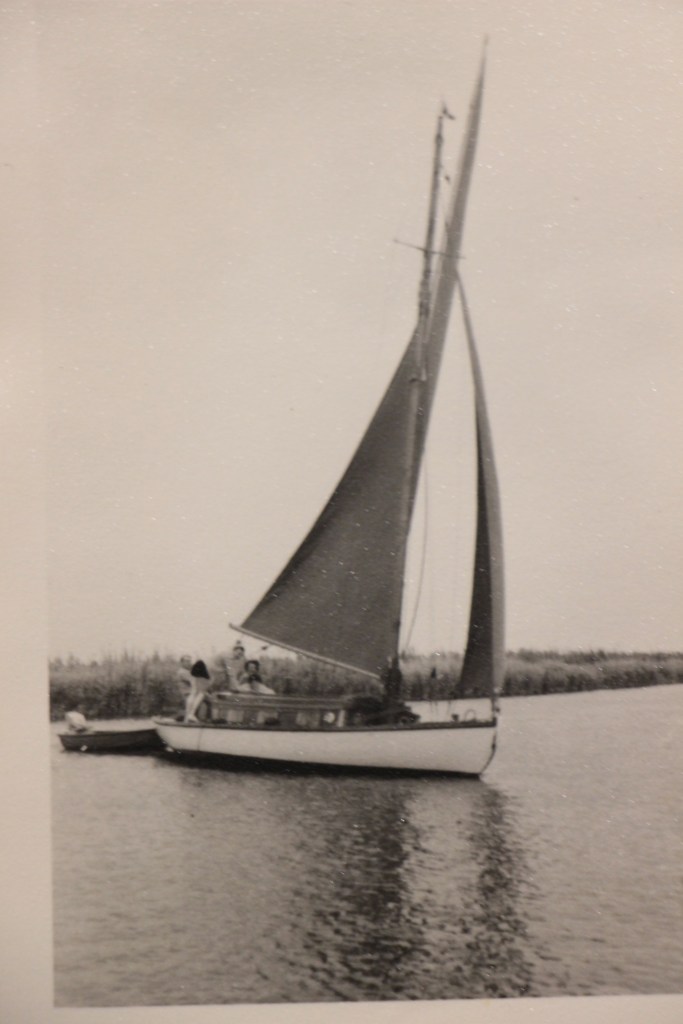

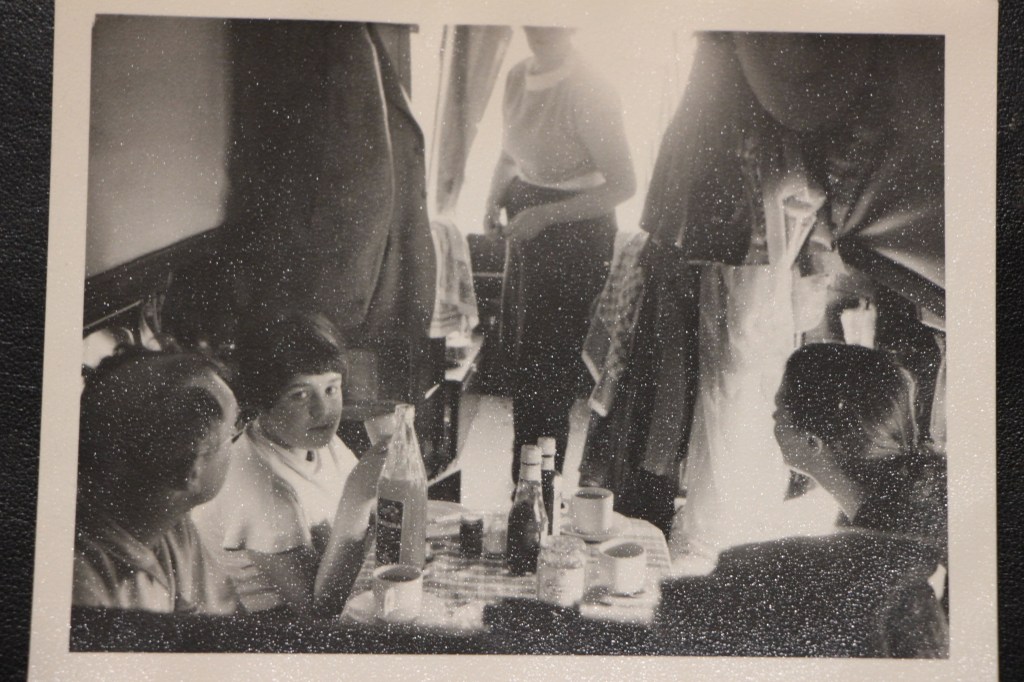
By the 1950’s – the windows in ‘Privateer’ had undergone their first change – gone were the chrome ports – replaced by sliders in external frames. Jean reports that these frequently opened when ‘Privateer’ was heeled over!
Like ‘Clipper’s’, the original chrome ports didn’t make ‘Privateer’ that light inside the cabin, so they were changed. Much like the oval hopper windows that ‘Corsair’ received in 1961 in fact.
Also note the cross-trees, and tan sails.
I’m quite taken by the scene in the cabin at mealtime. So much atmosphere – and ALOT more room than in ‘Corsair’s’ cabin!
Once on Hickling – Jean was often set adrift in the pram dinghy, learning to row quite quickly. (!) Whilst her parents roared up & down the Broad;
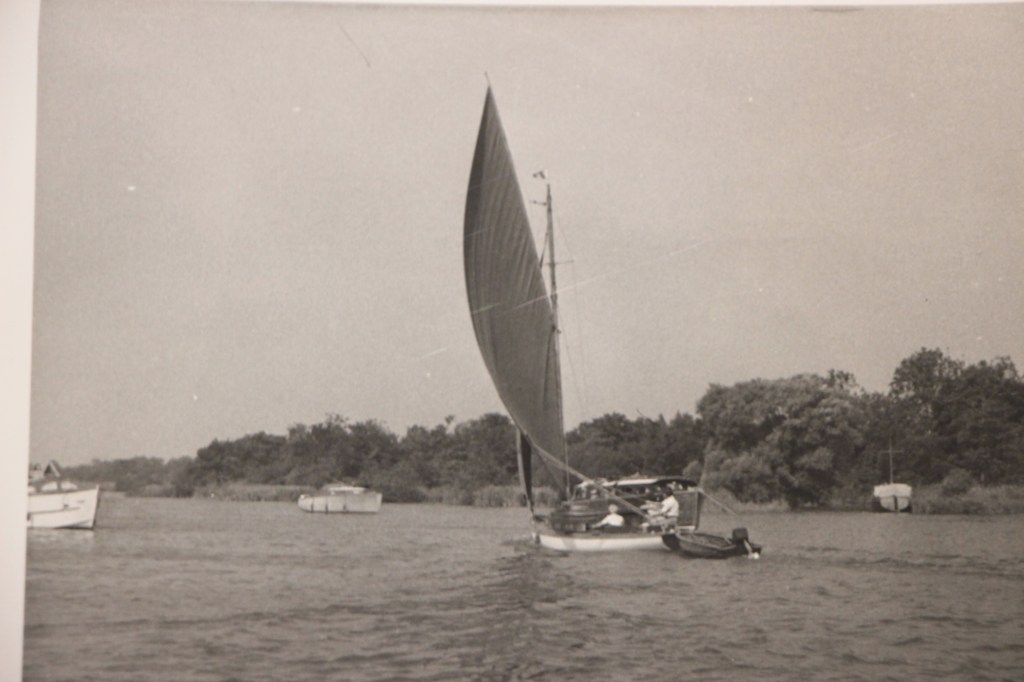
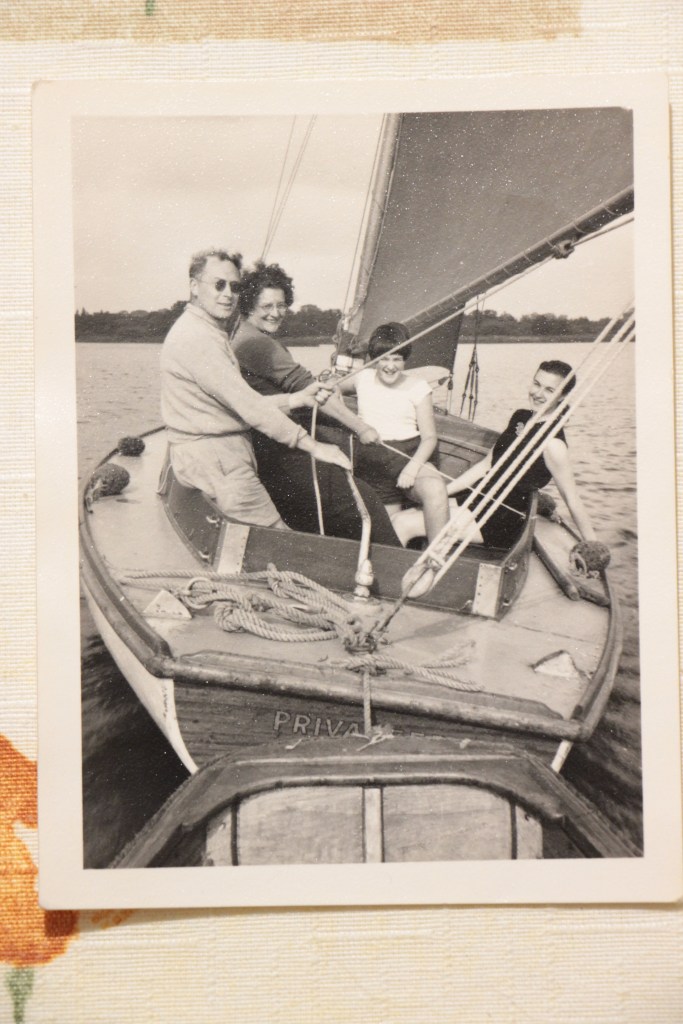
A few days spent on the upper Thurne would result in a frantic ‘sort out’ between the boats present at the end of the holiday. One at least one occasion, Percy Hunter complained that his yachts were returned with C&H cutlery in the drawer.
Jean also recounts meeting Tim Whelpton at the Chumley & Hawke yard, prior to his move to Upton. The C&H connection being explained here; https://broadssailing.blog/2020/01/31/upton-the-ch-connection/
In 1956, C&H disposed of ‘Privateer’ to a Mr J. Brittain – who kept her for 7 years, where she passed to Paul Bown’s father. He’s kindly shared with me this photo of ‘Privateer’ at South Walsham Broad, 27th July 1963 – when they bought her;

Note the white painted transom, potentially a sign of an elderly yacht needing some TLC.
Paul’s family bought ‘Privateer’ from Mr Brittain, who just bought S/N117 – Anne.
I’ll stop here for Part 1, and revisit my notes about Paul’s father, Paul’s ownership & ‘Privateer’s later history for Part 2.
Goodnight.
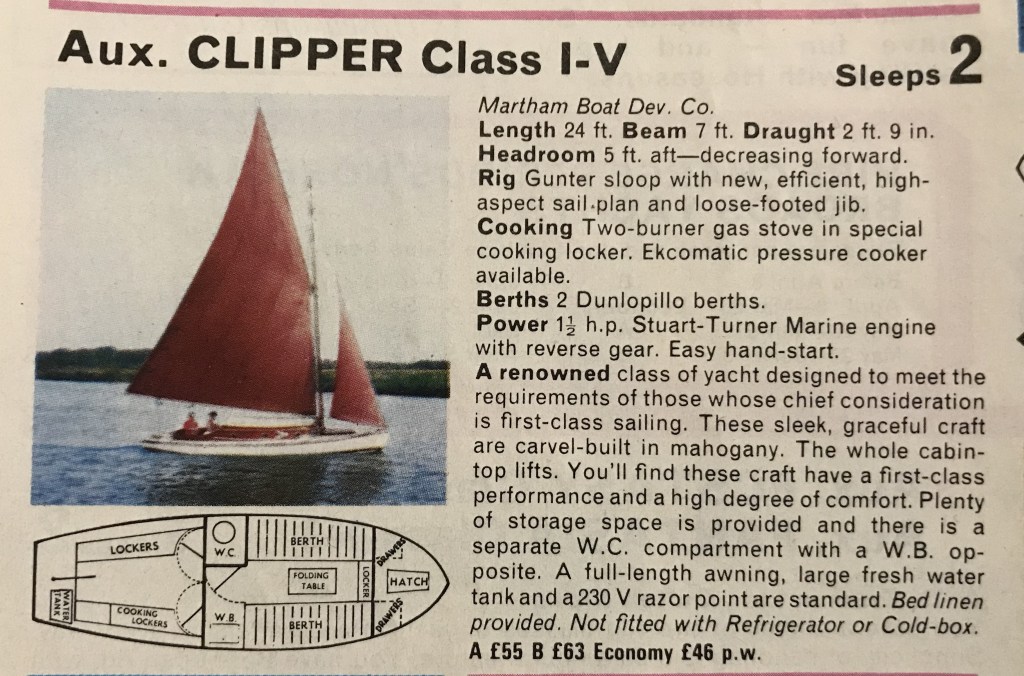



 A Broadsman