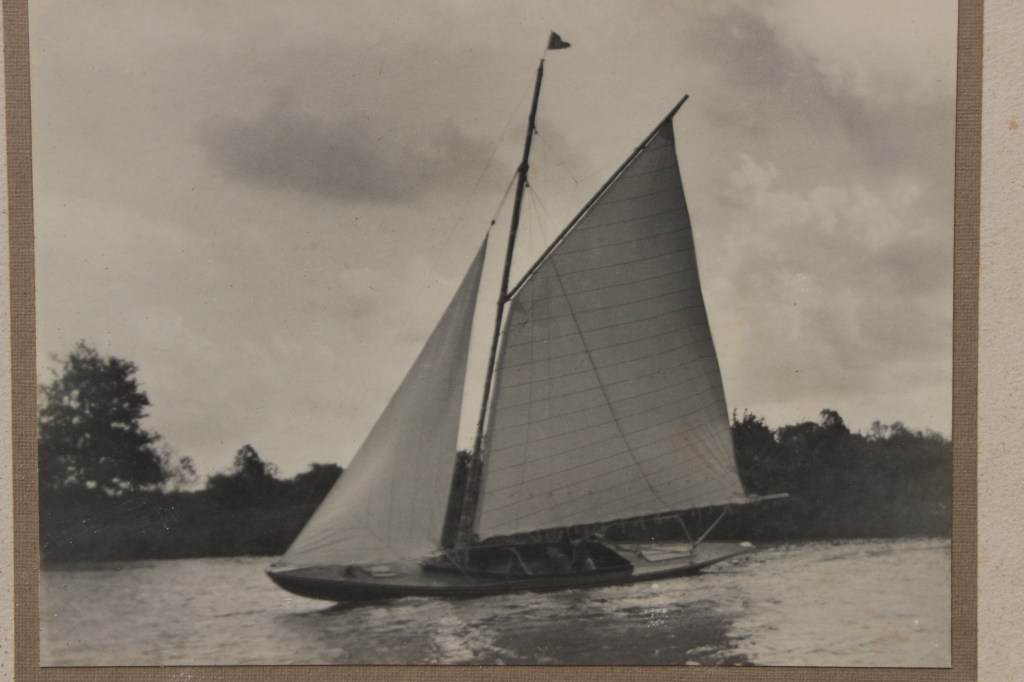
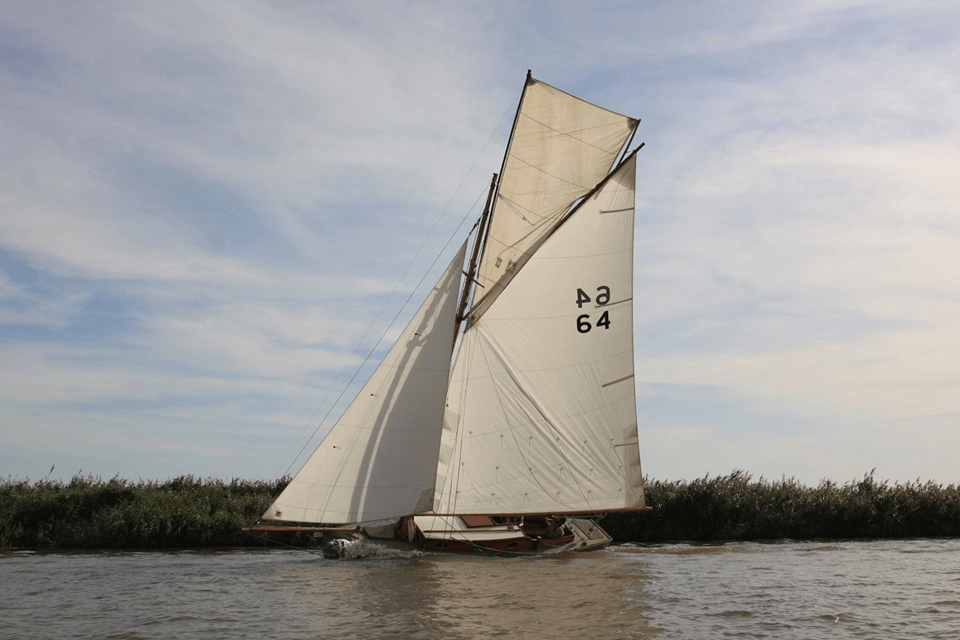
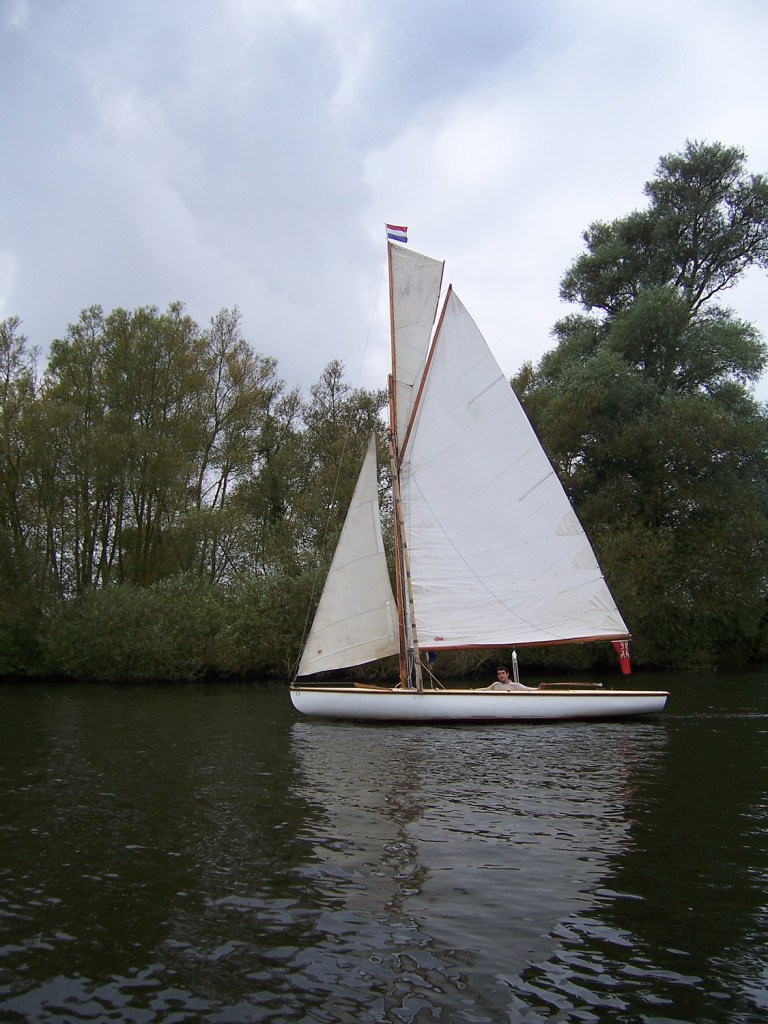
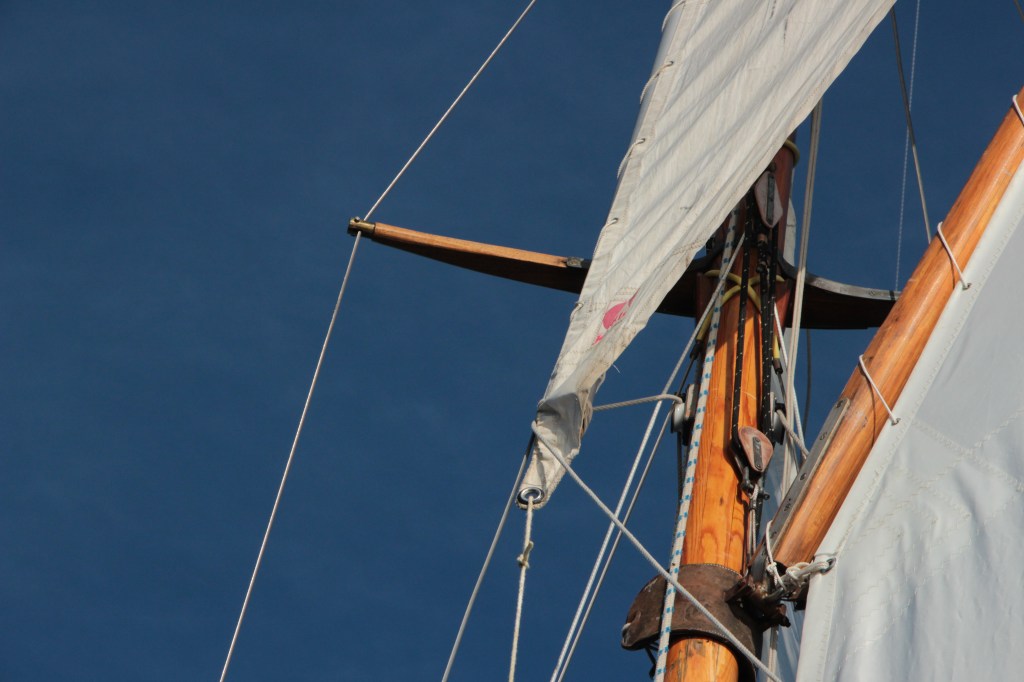
Clippers – dispersal

Returning to the intended order of writing, it was early 2010 when I started looking into the fate of ‘Corsair’s’ sisters. In part this was spurred on by the C&H connection to Upton.

Of course the Clipper’s also have a bigger sister – ‘Privateer’, who I will write about next.

For ‘Corsair’, I knew by this point she had passed through the hands of Stephen Hinde – a reminder of his ownership is here; https://broadssailing.blog/2019/07/24/olorenshaw-hinde/

Having his head turned by ‘Loyalist’ – Stephen left ‘Corsair’ at a boat auction in Potter Heigham. This period of her life I don’t have many details about, save what’s printed in the class listings within the ‘Green Book’.

1978; sold at boat auction.

1979-1983; owned by K.T. Henson

1984-1987; owned by P. Willen

Bizarrely – during one change of ownership – the spelling of ‘Corsair’ was corrupted to ‘Coresair’ – which wasn’t corrected until 1986!

What I do know, is that for these 9 years, ‘Corsair’ lived on the Northern Rivers, with a prolong spell moored at South Walsham Broad. Given the proximity of S.W. Broad to Martham, it’s likely that she often saw her sisters, still hard at work in the business of hire.

Clippers – dispersal

I’ve written previously about the C&H yachts which made their way to Upton; https://broadssailing.blog/2020/01/31/upton-the-ch-connection/

The other C&H yachts went to a variety of owners, but sticking to the ‘Clipper’s’ – these found their way to Martham, where they became part of the Martham Boatbuilding & Dev. Co fleet.

Known locally as ‘Martham Boats’ – they still retain an extensive fleet of wooden sailing boats, and certainly they were the only yard who saved many beautiful yachts by keeping them working long enough that private owners could be found. More info on their fleet is available here; https://www.marthamboats.com/

In 1961, Martham bought I – V, bolstering their existing fleet of yachts with these small pre-war yachts. Clipper’s I-III were still engineless (!), credit to their reputation as immortalised by ‘Blakes’ the hire agency;

“a design giving distinctly superior sailing qualities”

Perhaps more objectively, this is an insight into the post-war attitudes at Chumley & Hawke. Knowing they intended to dispose of the fleet, it may well have been economic to limit the investment in R3M Stuart Turner engines to the newer (just) yachts.

During 2010, I went and spoke with Gordon Curtis, one of the founders of the Martham fleet, to learn more about how the ‘Clipper’s’ had turned out in their ownership.

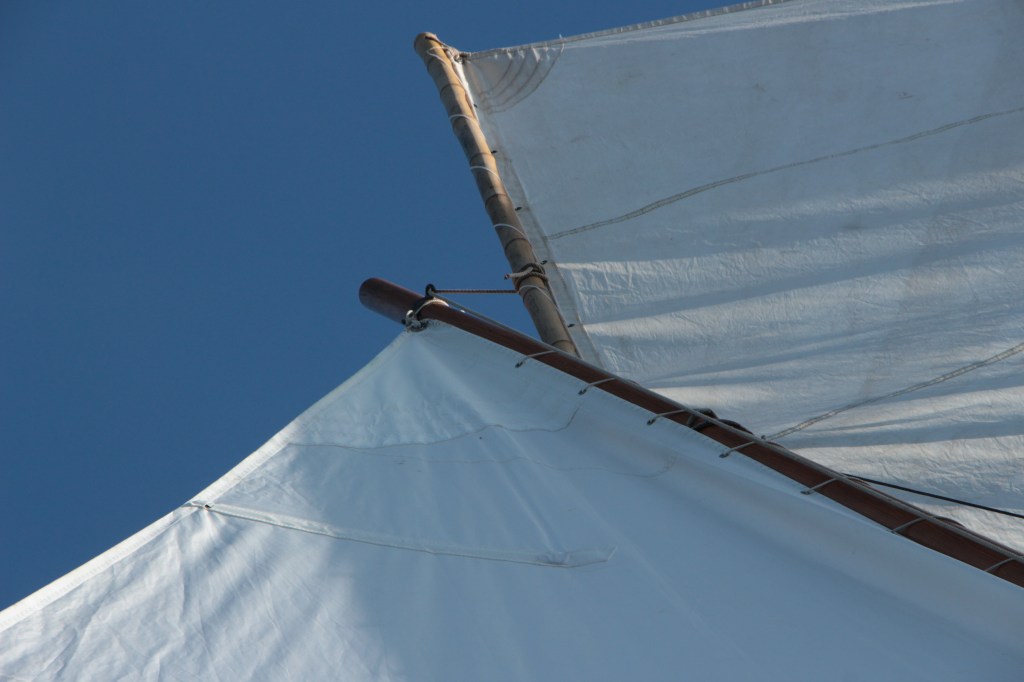
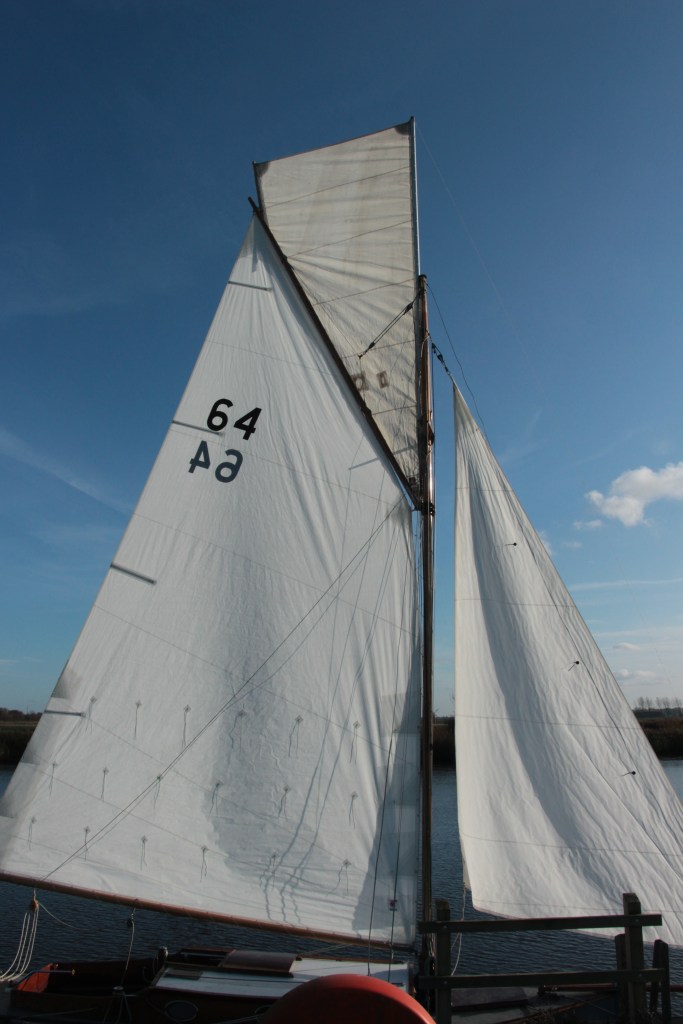
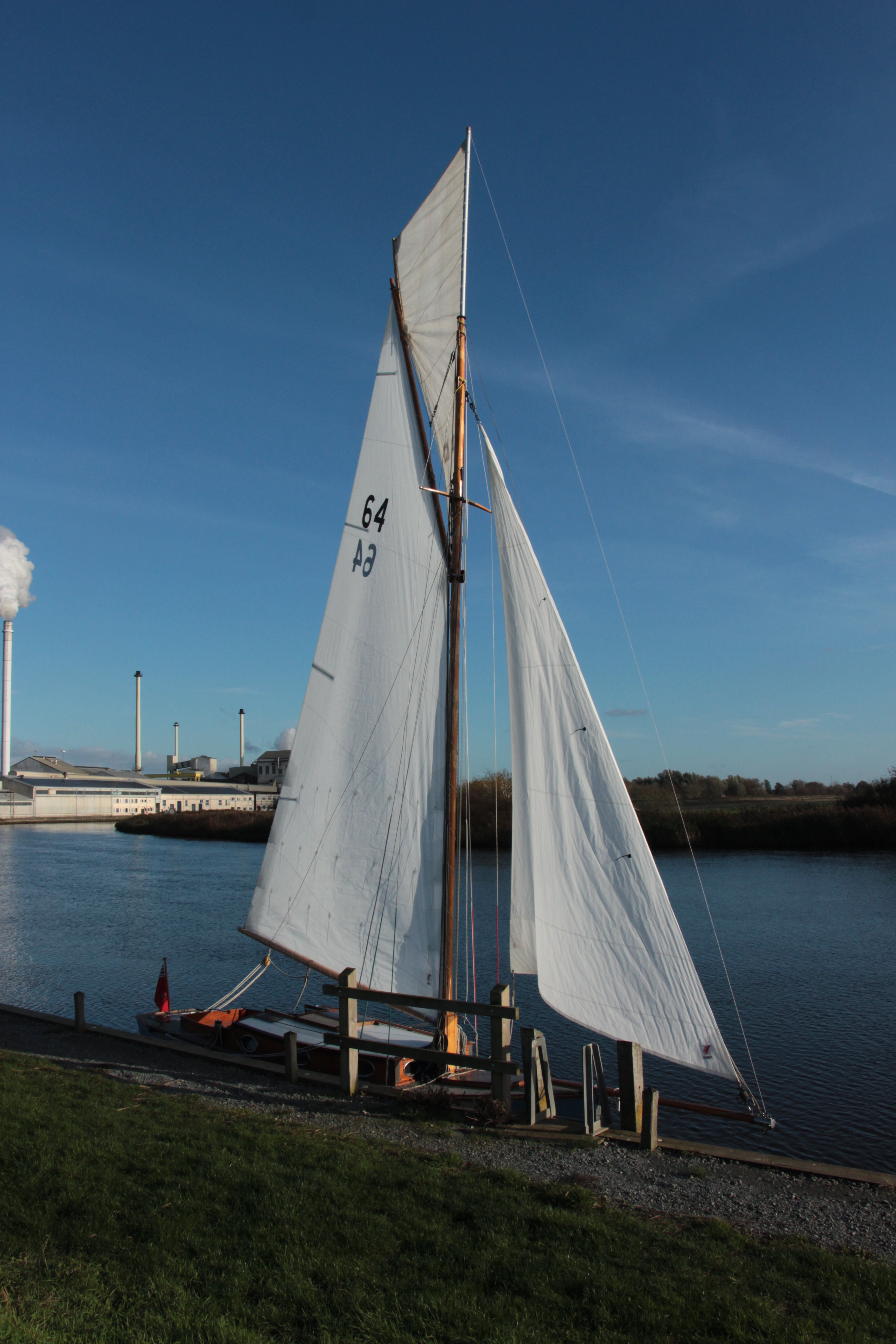
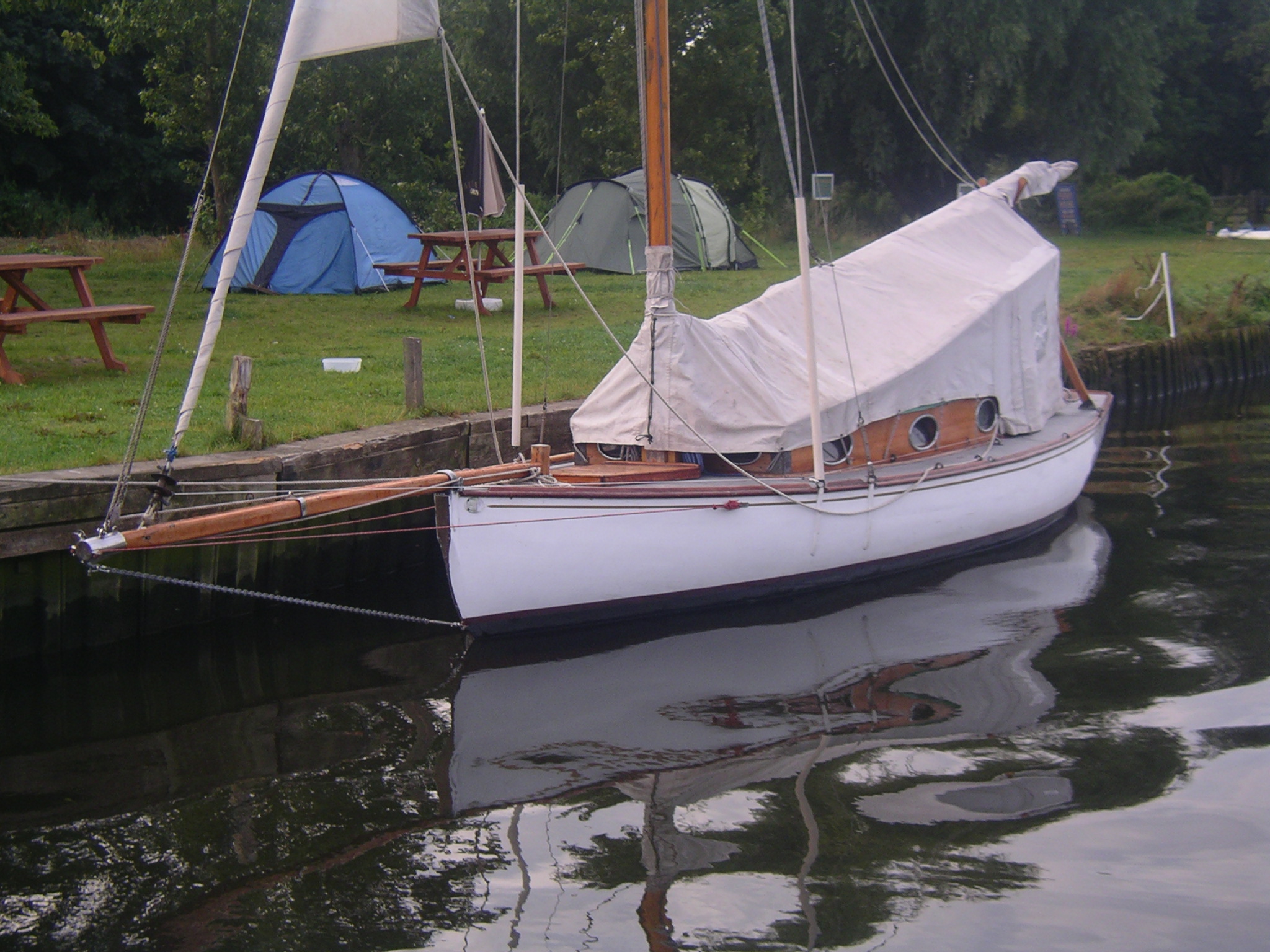
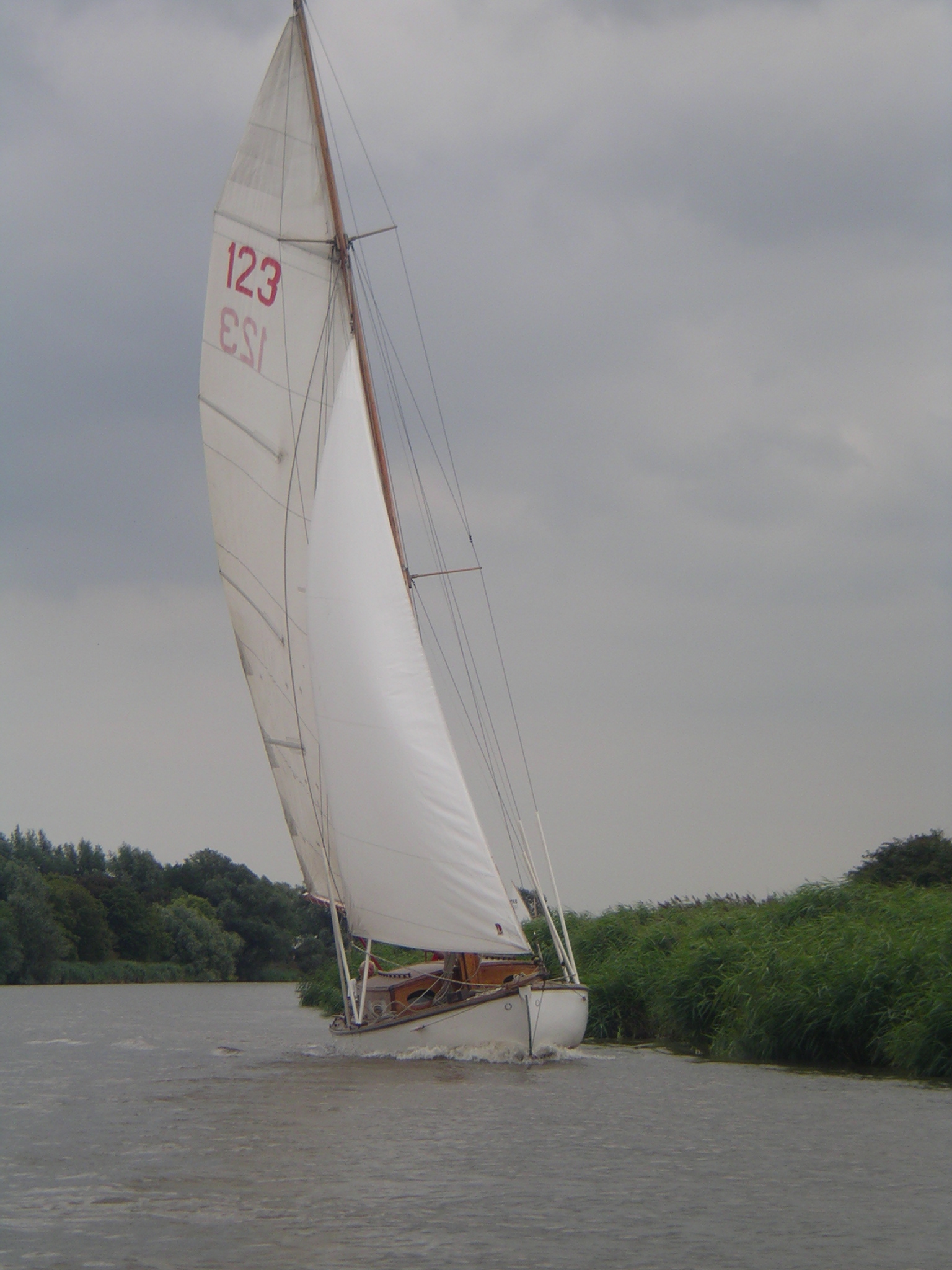
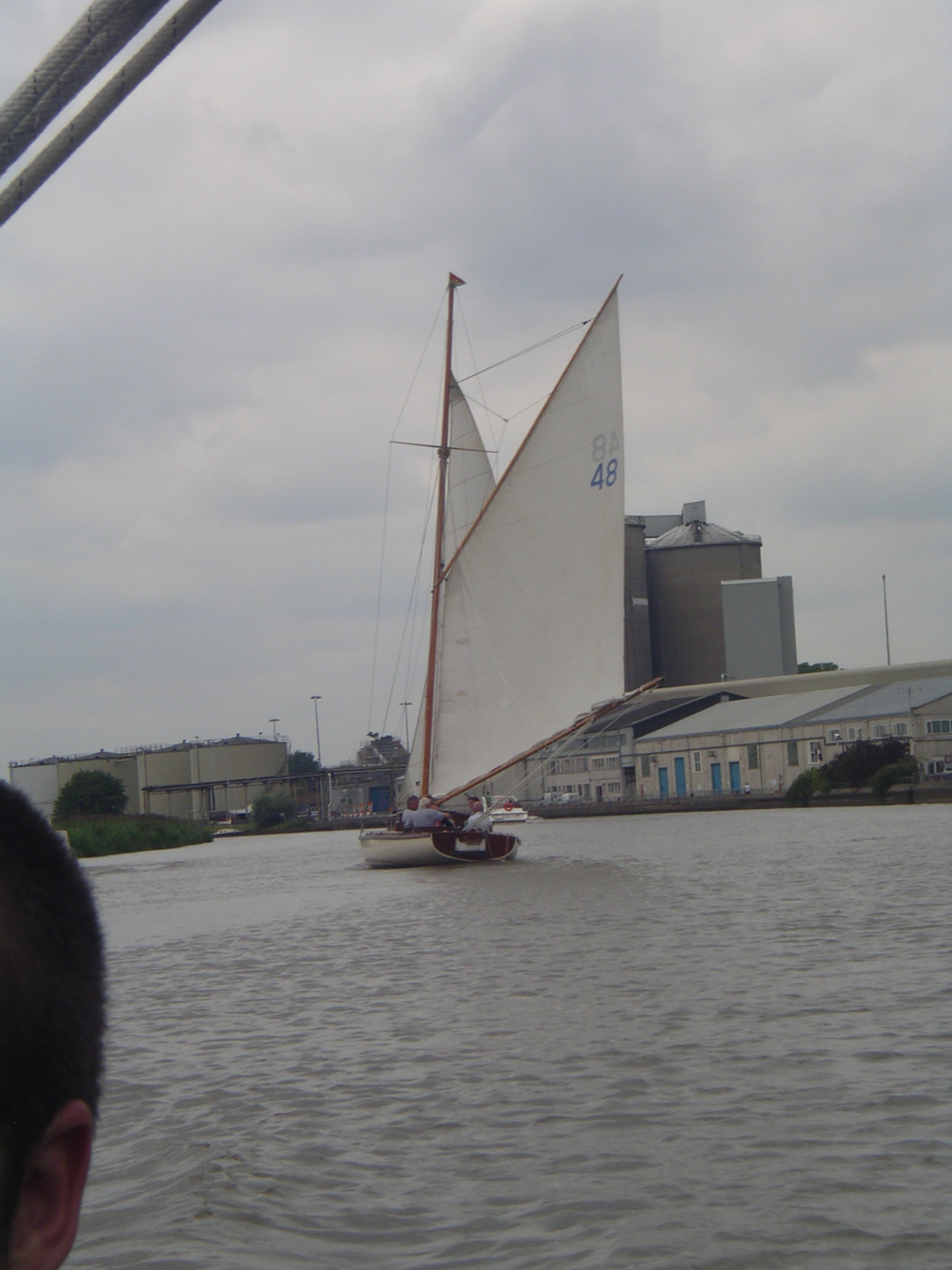
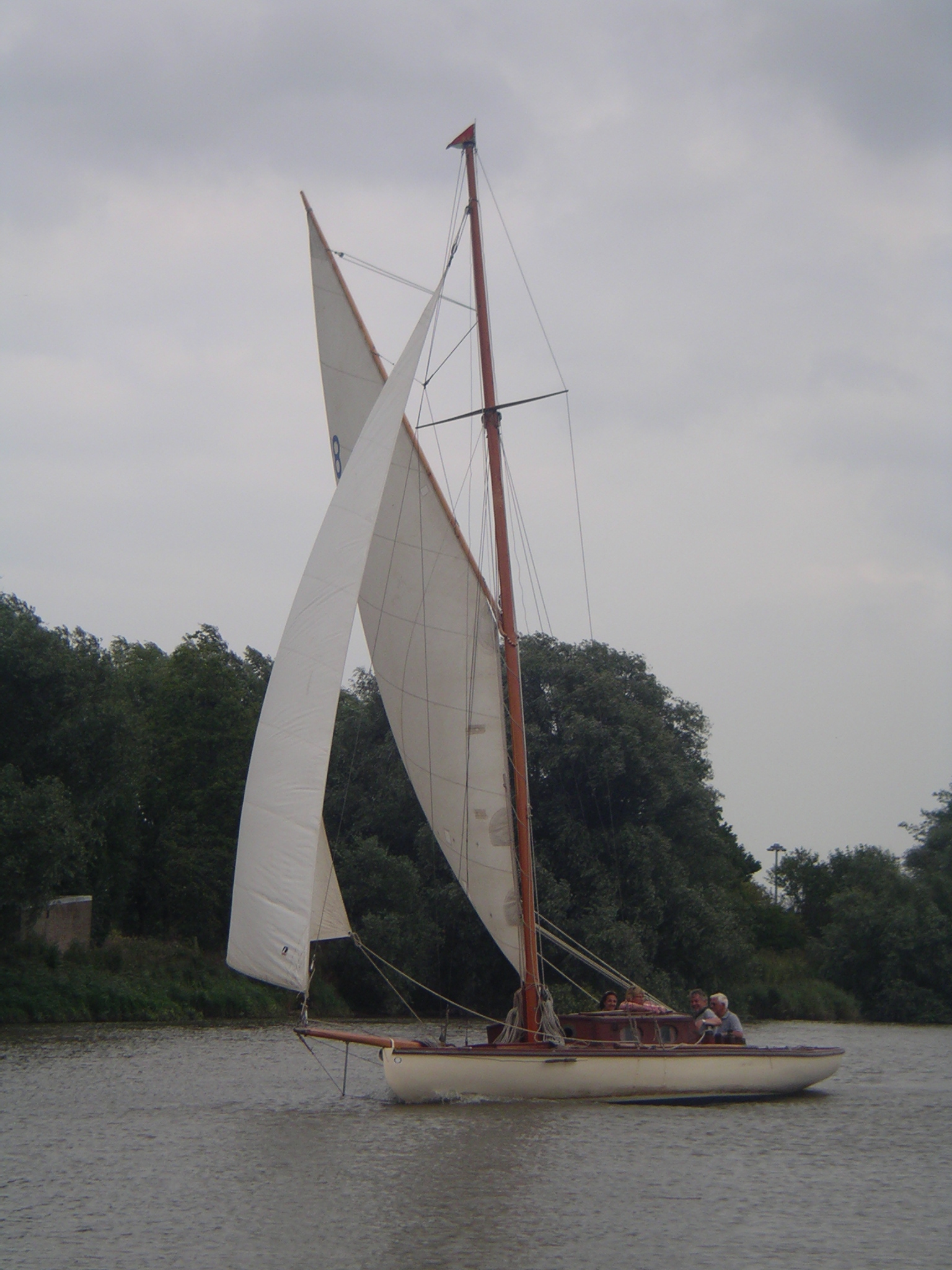
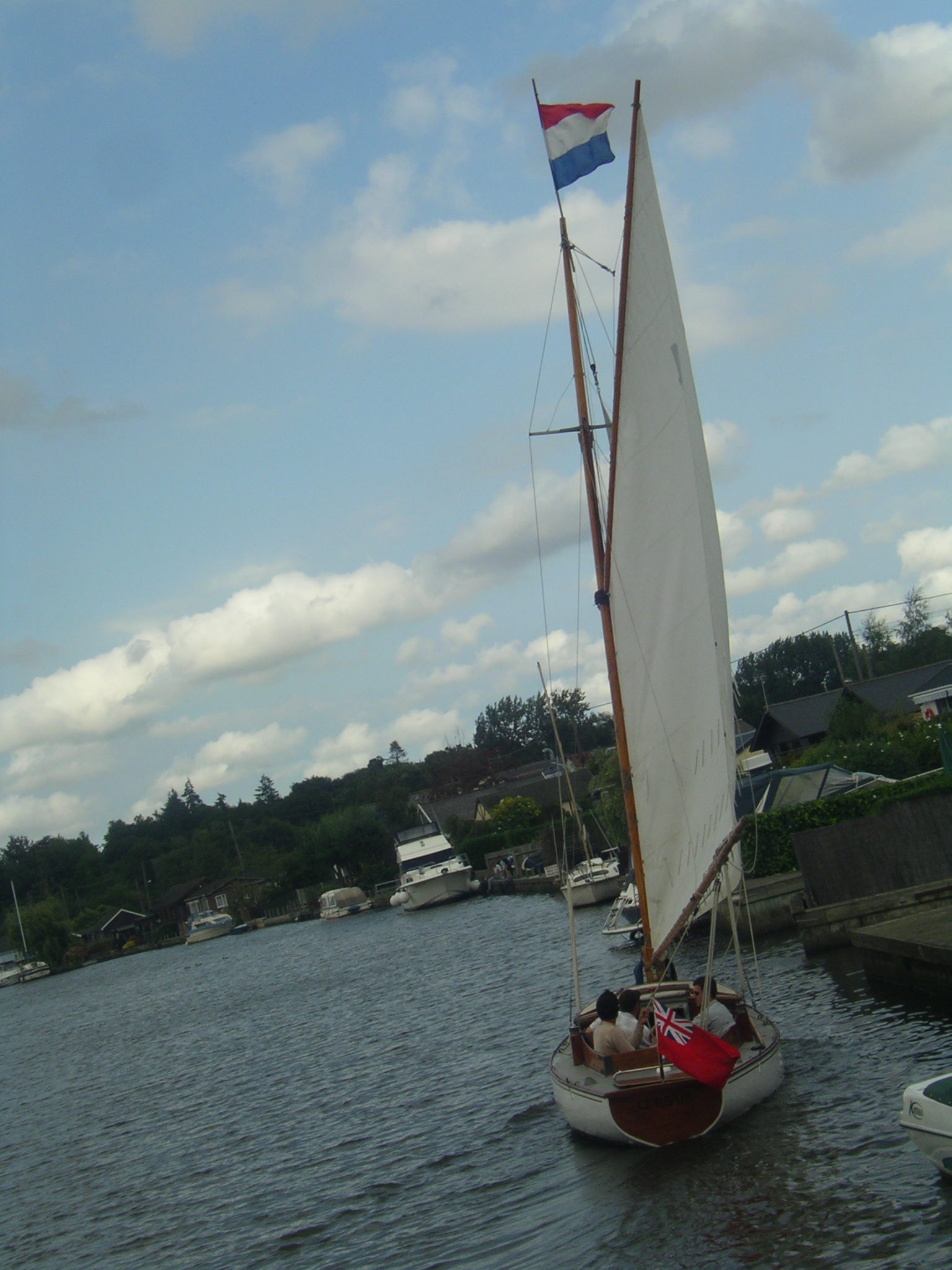
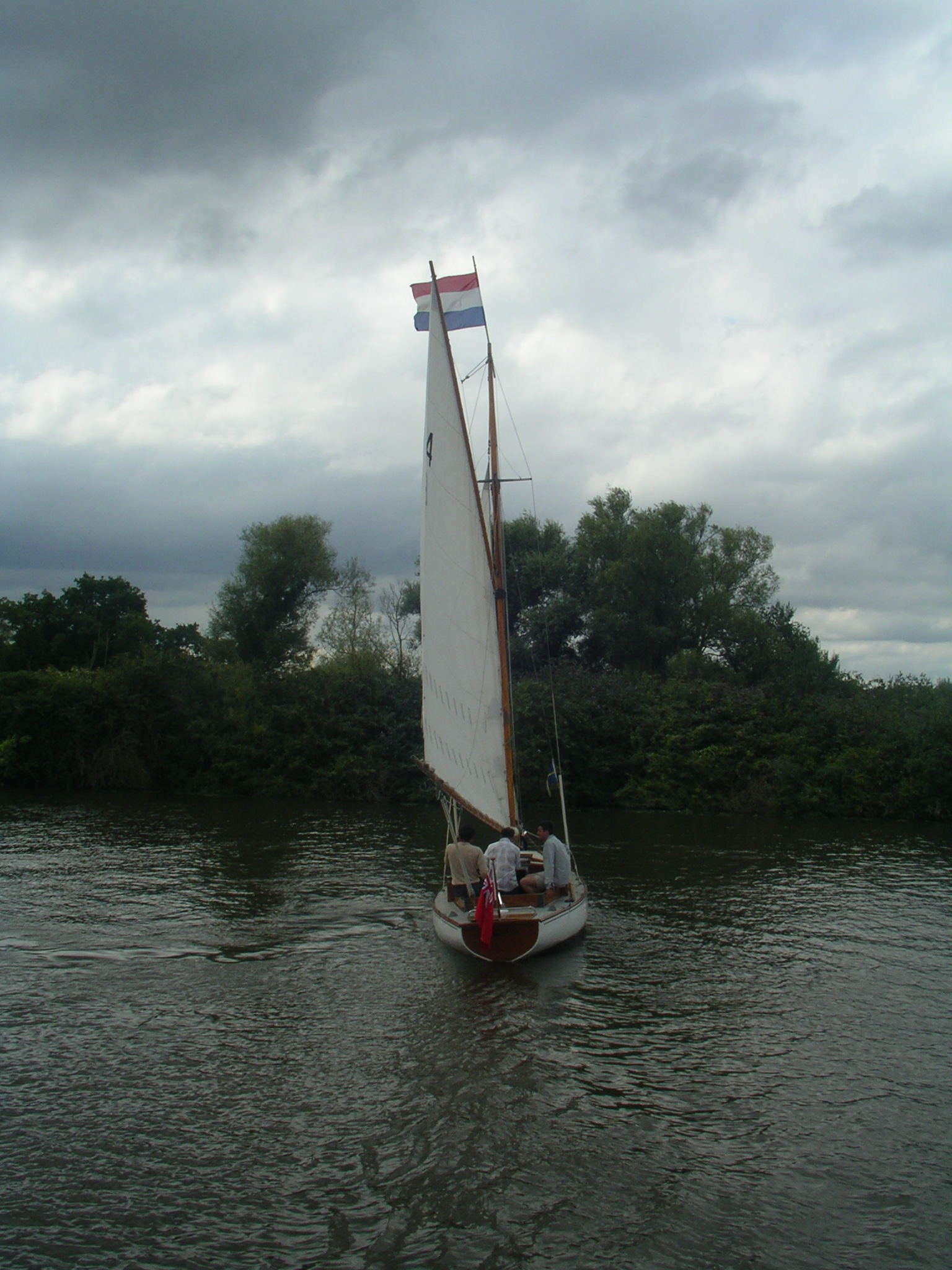
By 1965 Clipper’s I-V all had inboard engines, but had had their rigs adapted slightly. Gone were the self-tacking jibs, and in their place a smart tan suit of sails changed their appearance considerably. Also, gone the pre-war varnished top-sides replaced with white gloss.
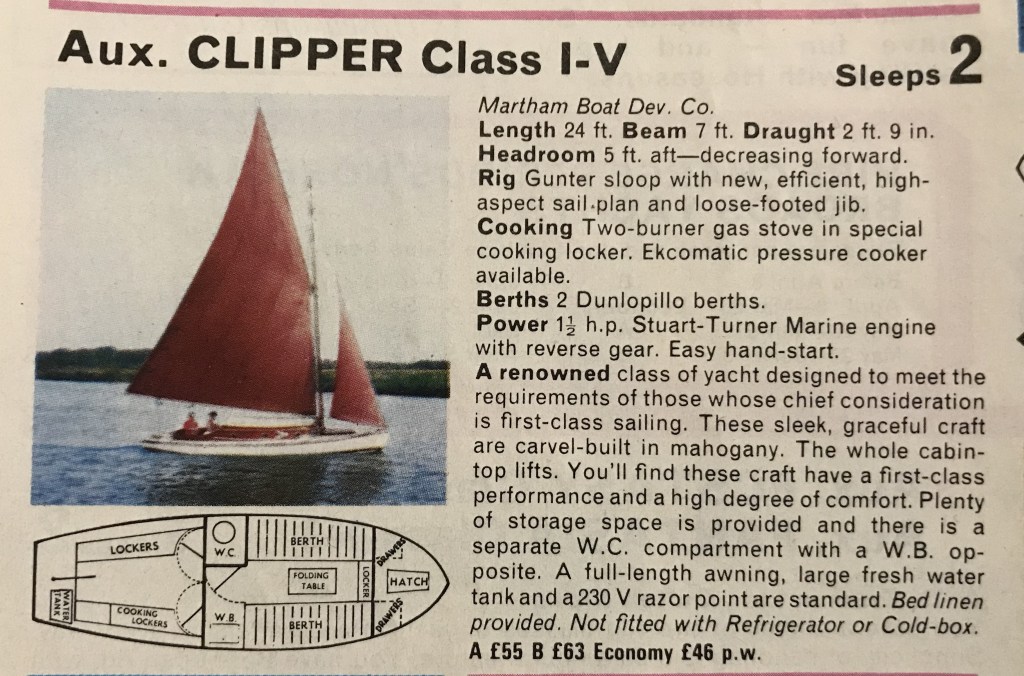
Clipper’s – MBBD Co.

Credibly, Martham kept these pre-war yachts active for a number of years. If it hadn’t been for their intervention, I am not sure that all 6 would have survived.

They did however remain very basic with optional extras limited to a wireless radio & a rowing dinghy!

Digressing slightly, it would have been an exhilerating time for any wooden boat enthusiast to walk the bank at Martham. Woods, Powles, Chumley & Hawke, Press, Pegg & numerous other pre-war pedigree craft lined the Upper Thurne. Gordon even bought a wherry (or two)!

In fact, as a complete aside – Gordon bought the wherry ‘Hathor’ from infamous Broads navigator – ‘Claud Hamilton’. His previous wherry – ‘Claudian’ had sadly broken her back during the 1953 floods. Seen here in 1950 at Barton Regatta looking quite spritely, sailed by ‘Claud’;
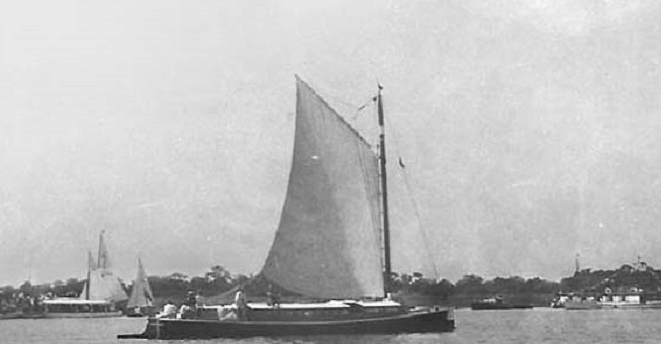
Claudian – 1950 Barton Regatta

Whilst chatting, Gordon recounted how he quickly learnt how to sail ‘Hathor’ using the original pre-war cotton mainsail, until this disintegrated. She then became a houseboat, until saved by Peter Bower – founder of the current Wherry Yacht Charter Charitable Trust.
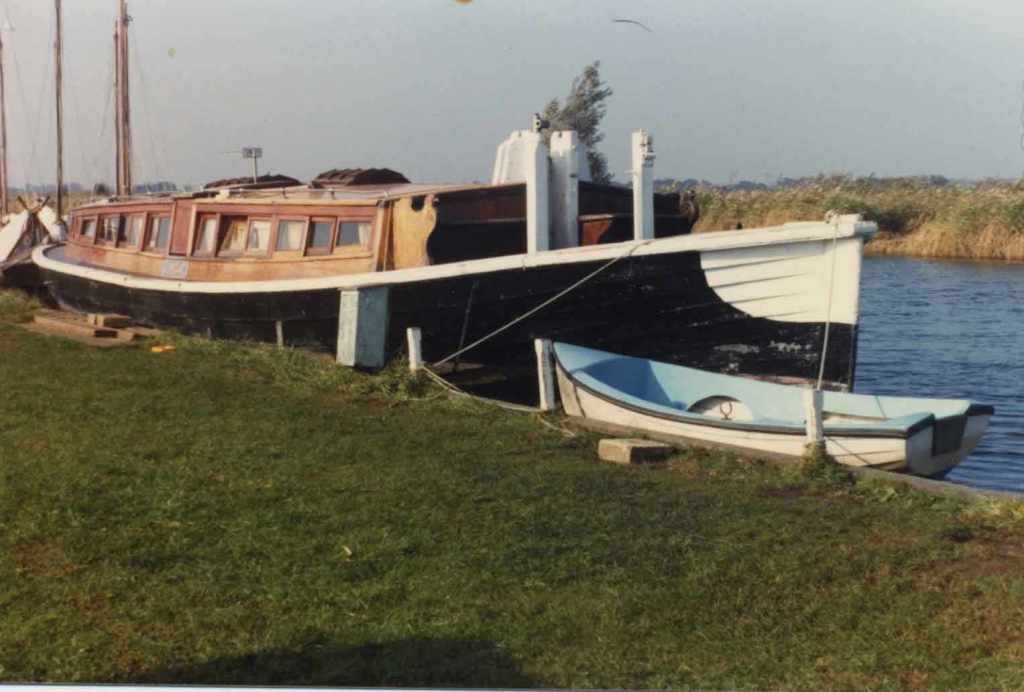
Hathor – Martham. pic; M. Gravener.

Anyway, yes. This is writing about Clipper’s not wherries. Sorry.

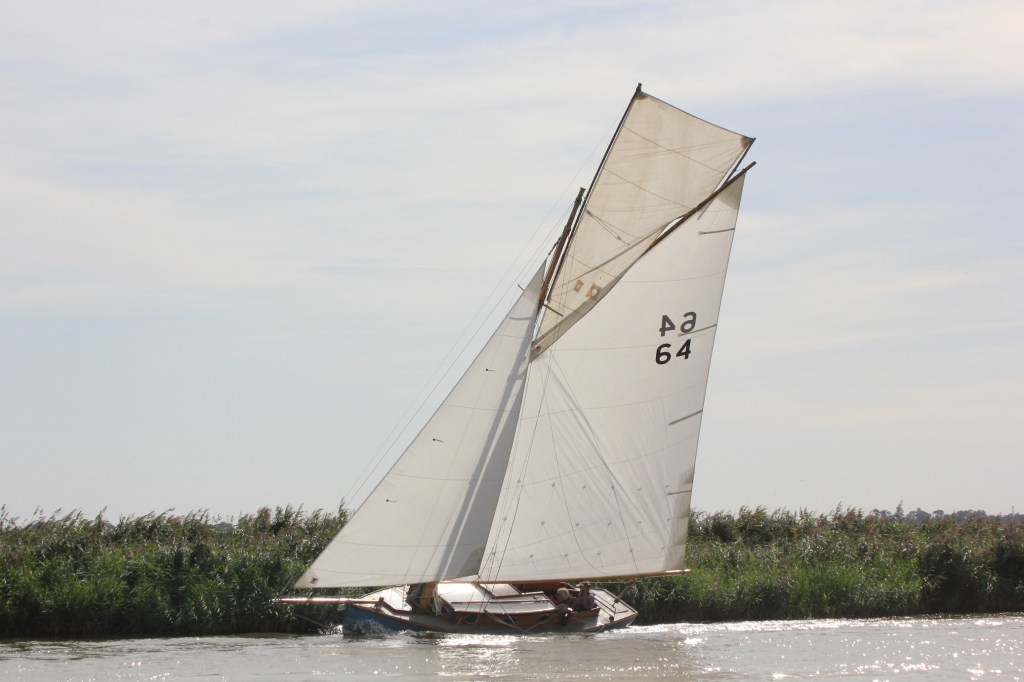
Over the years, Clipper II, IV & V gradually left Martham’s fleet, with Clipper I being the last to formally retire from hire, being sold in 1998.

1998? That’s 63 years work of hire, being sailed week in, week out from Easter through to October. I’m amazed at the resilience of these dainty yachts.

Clipper III remained in Martham’s ownership, and to my knowledge was withdrawn from hire at some point in the early 1990’s. I wasn’t allowed to photograph her, but by a bizarre turn of fate – my good friends Vince & Linda had hired her in the 1970’s!
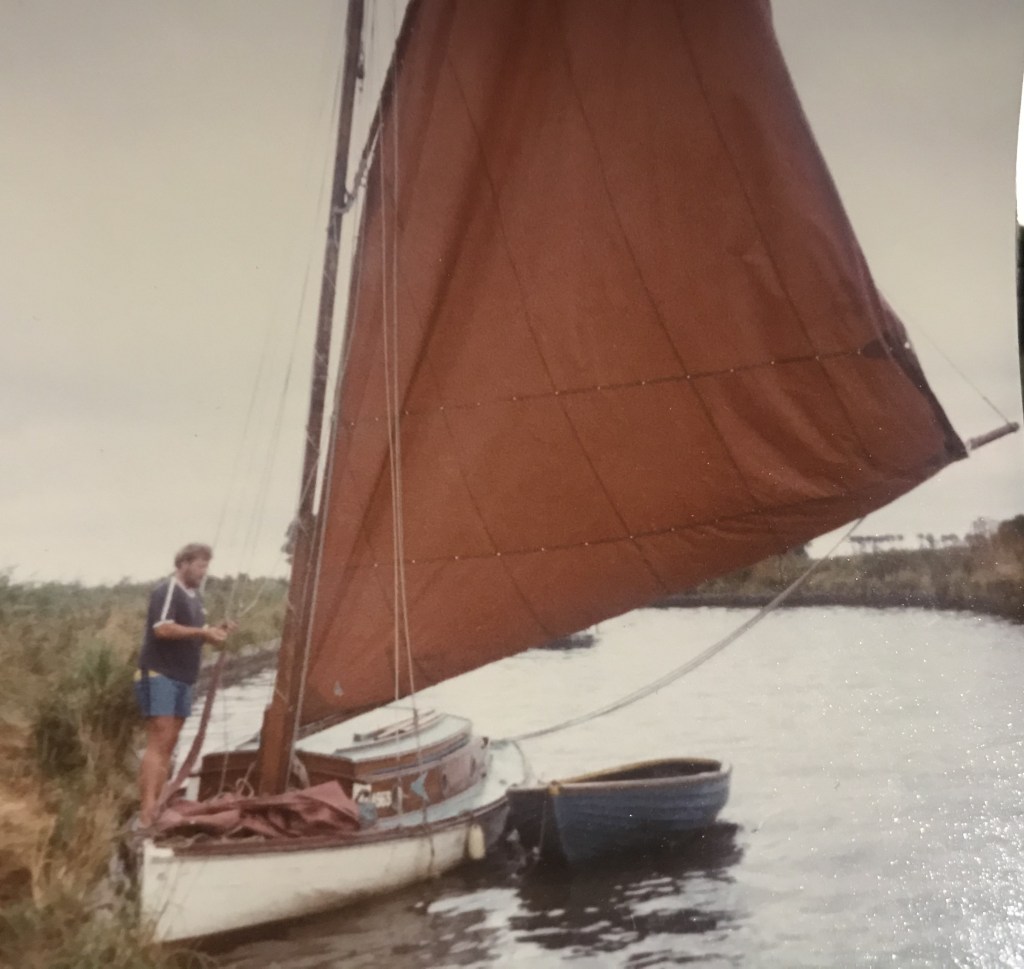
I’m confident in saying that Clipper III is the most original to how the Clipper’s would have been in hire, having now been sojourned at rest for 30 years in her barn.

However, what’s astonishing to me, is the way in which the ‘Clipper’s’ seemingly brushed past me closely, without me knowing about them. Clipper V was bought and owned by my primary school Headteacher for example!

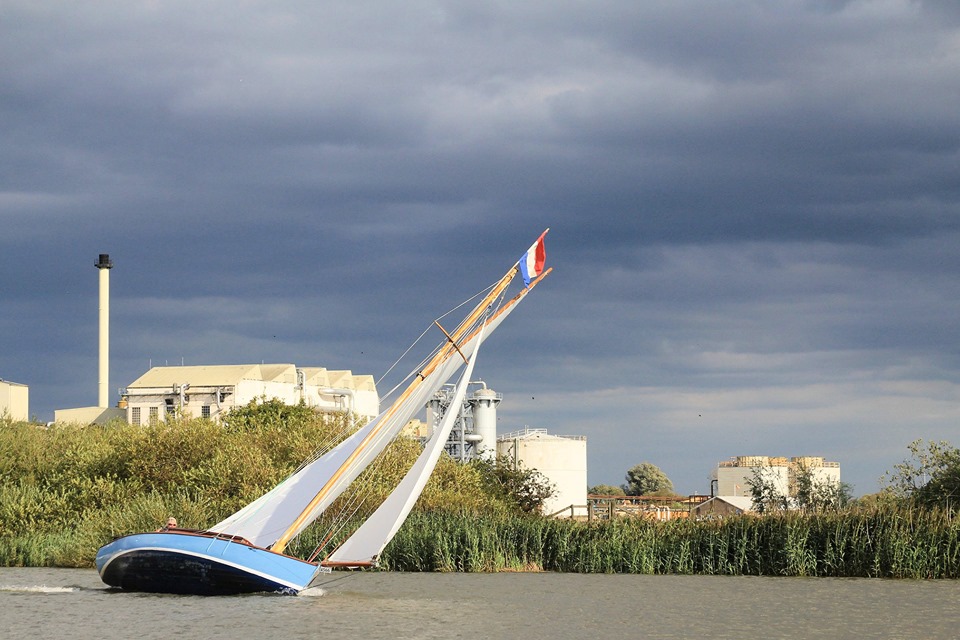
Both Clipper IV & V are perhaps the most significantly altered from original. Both have had their cabin’s cut-down, cockpits extended and some very neat integral topsail rigs fitted. This has made them both extremely competitive!

As an aside, the modifications carried out also haven’t spoilt the aesthetic of the Clipper’s. They retain a very sleek look, as you can see here;

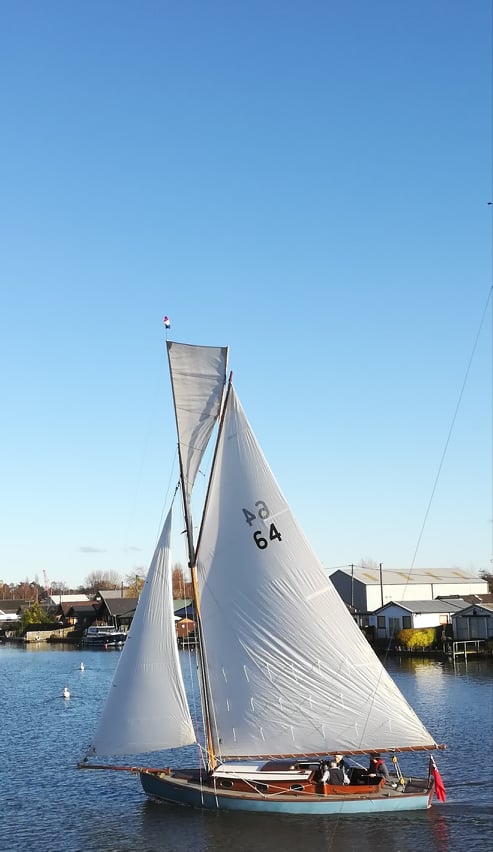
Clipper IV – racing rig!
Clipper V (S/N 290) – Barton Broad

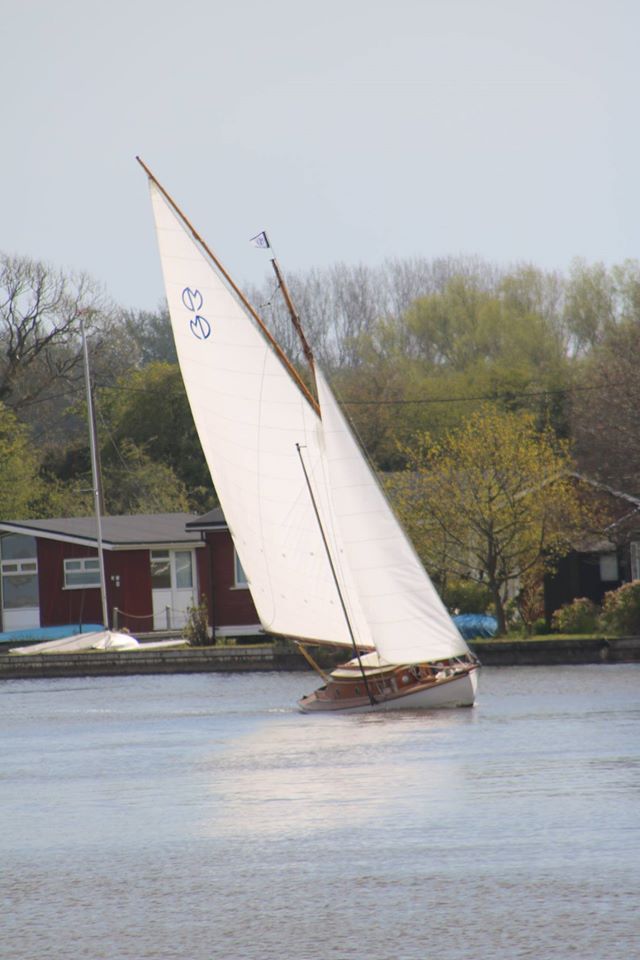
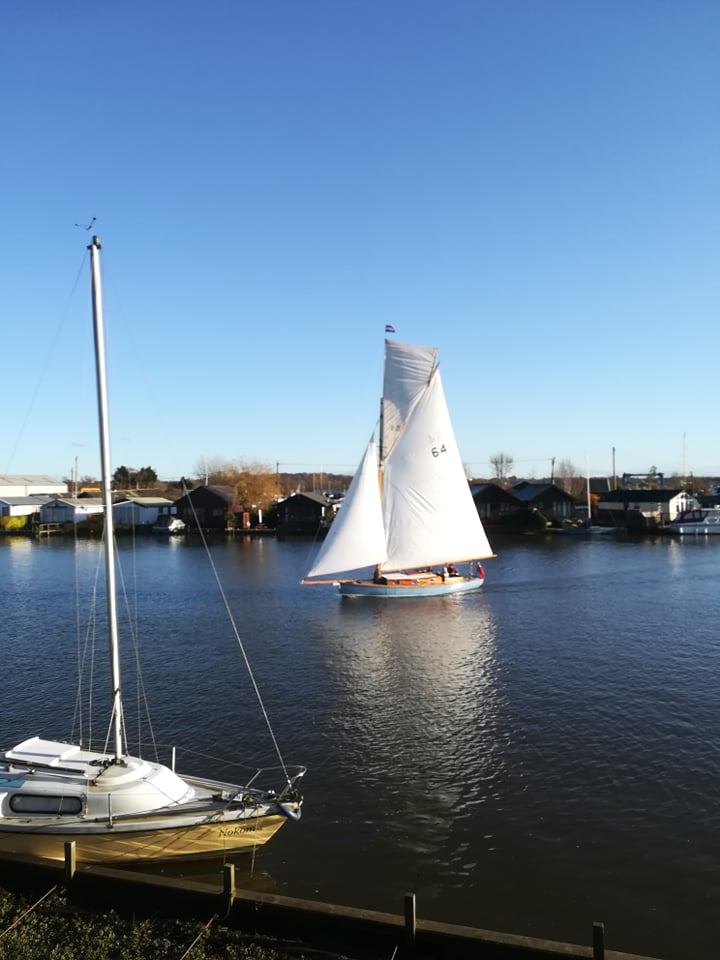
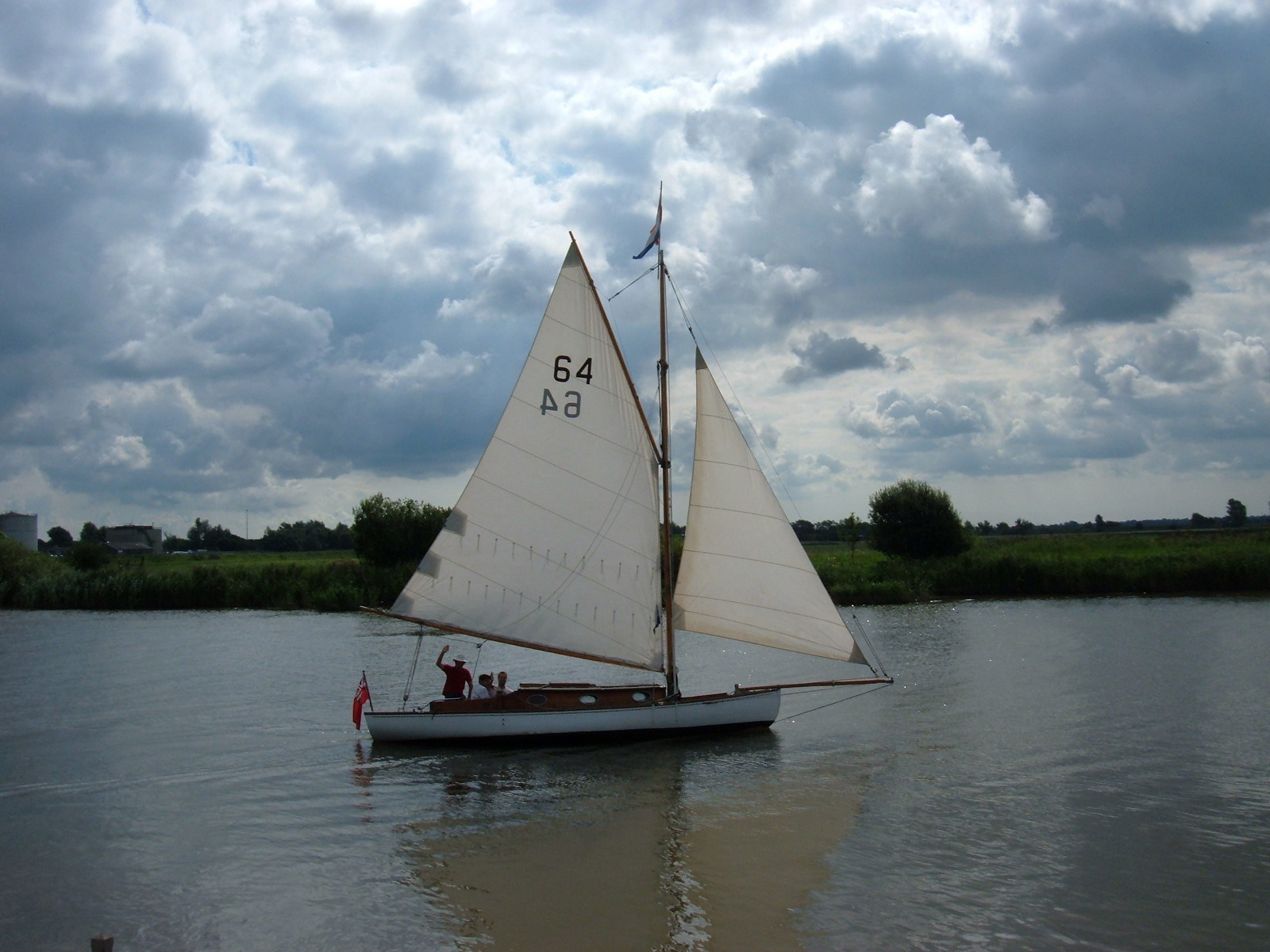
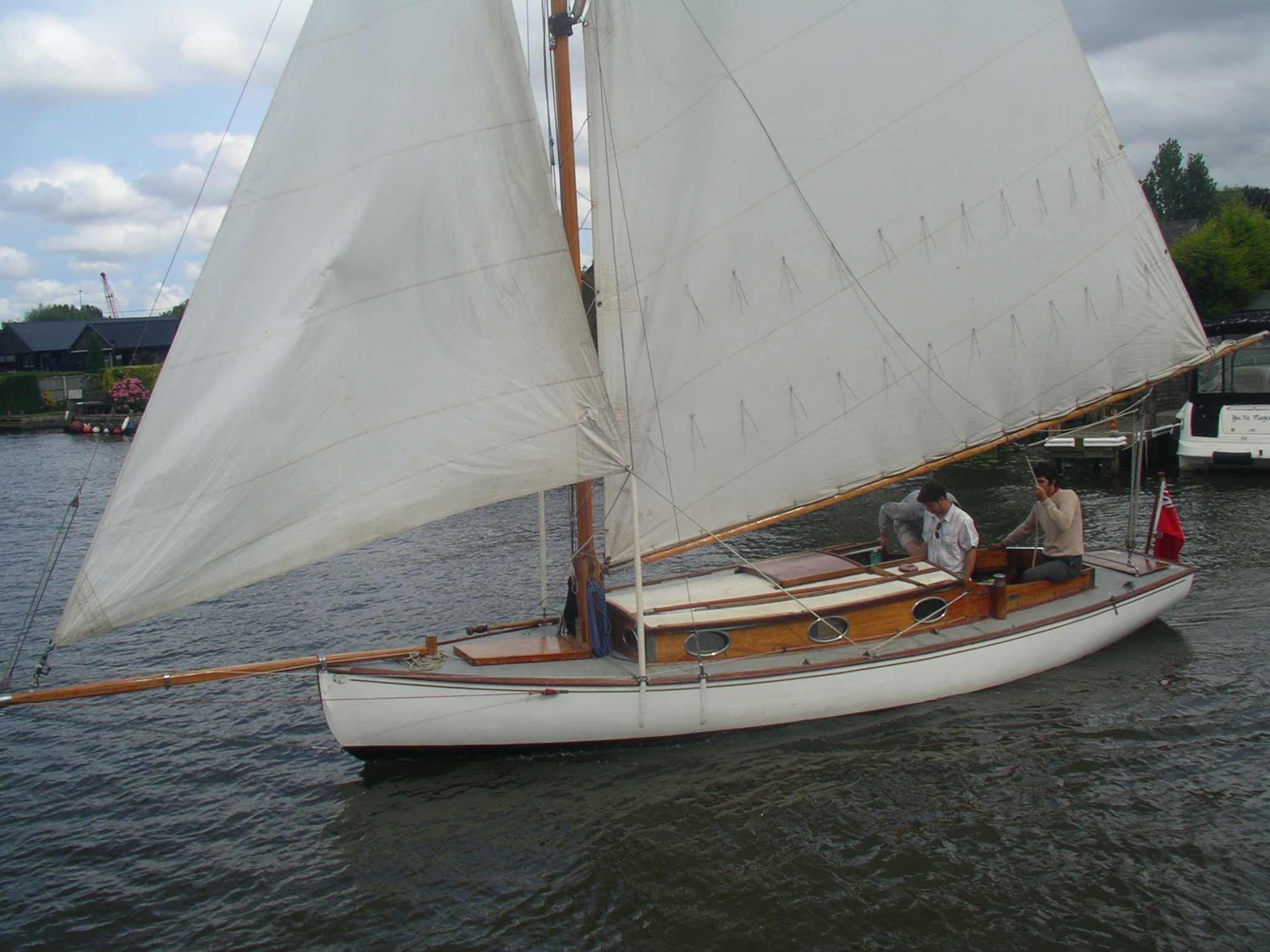
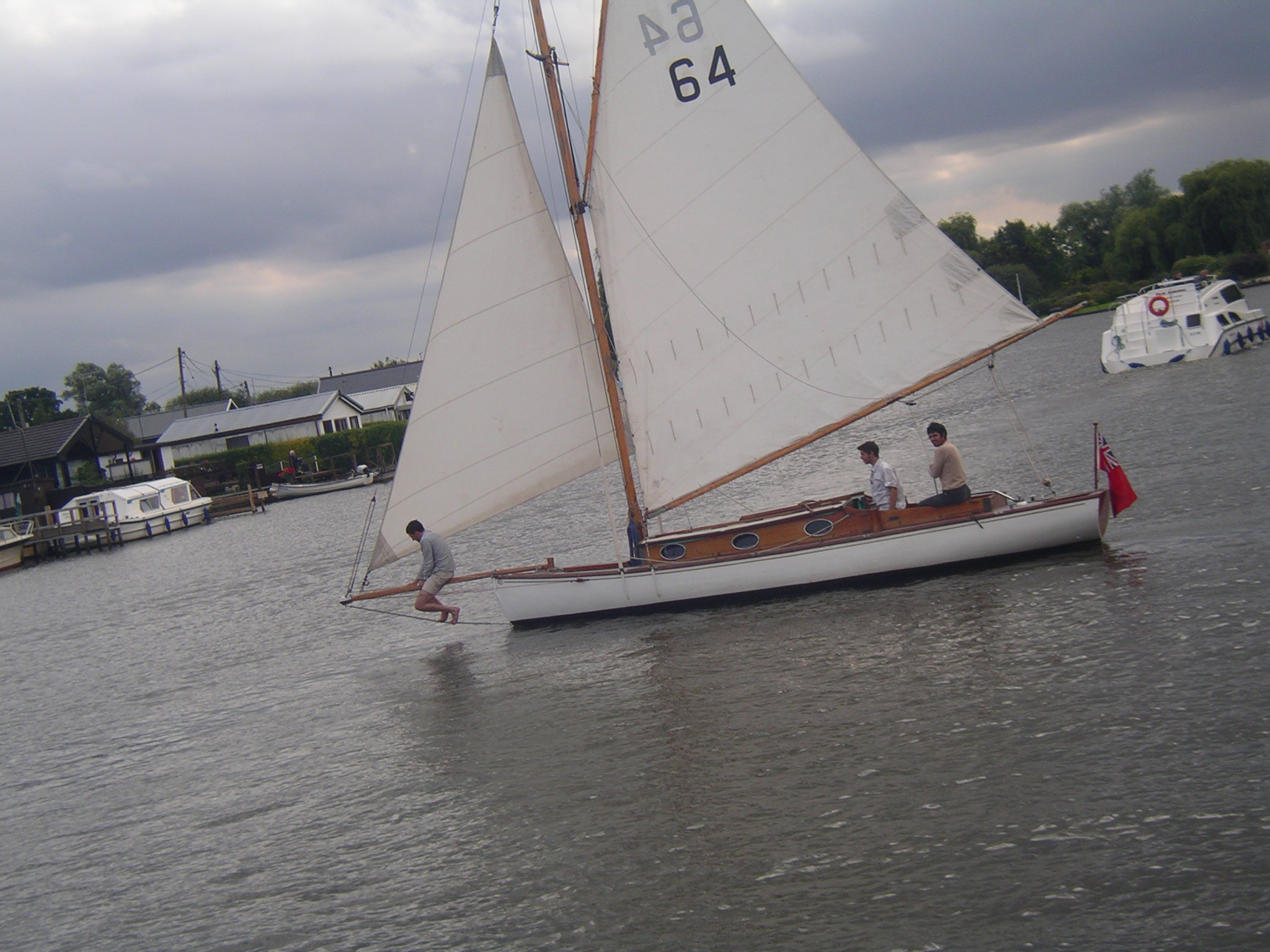
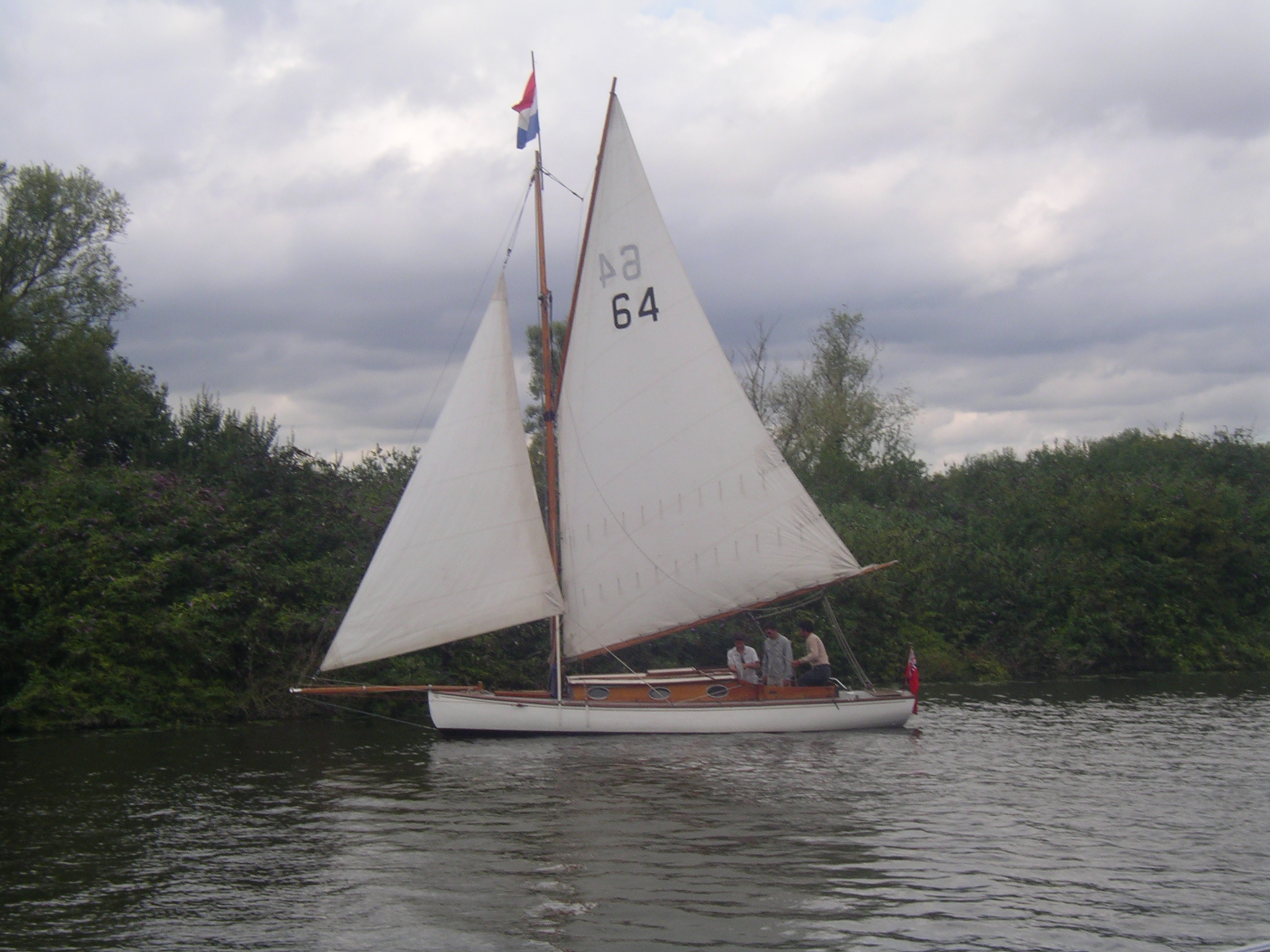
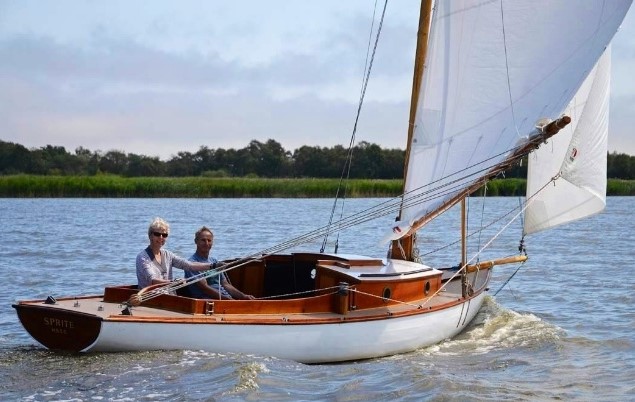
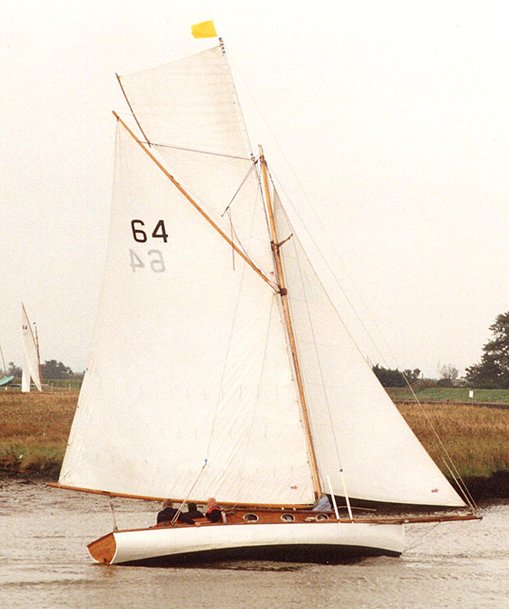
Clipper II still lives close to Martham, in fact she spends much of her time in a wet boatshed at Potter Heigham. She was reverted to varnished topsides – and although she is seen here sailing with an outboard motor mounted (sacrilege), she provides the closest aesthetic to the pre-war Clipper’s. I suspect if given a self-tacking jib, she’d be a facsimile of a 1930’s Blakes photograph.
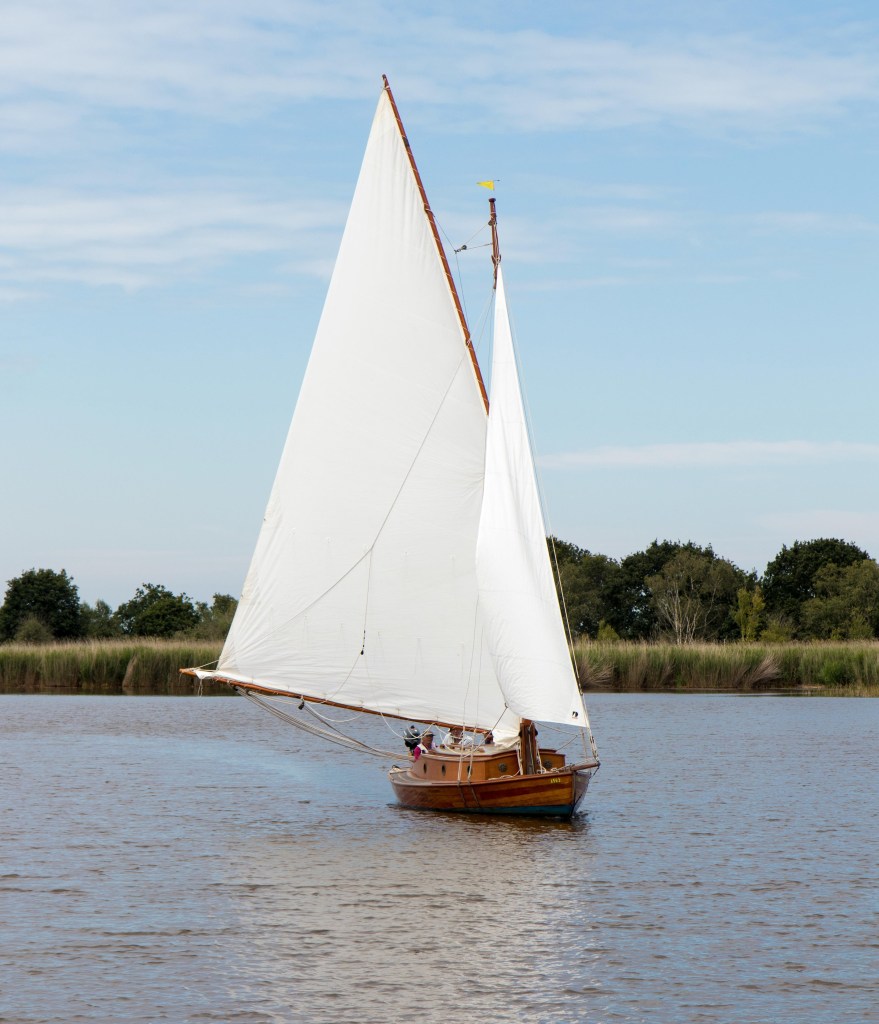
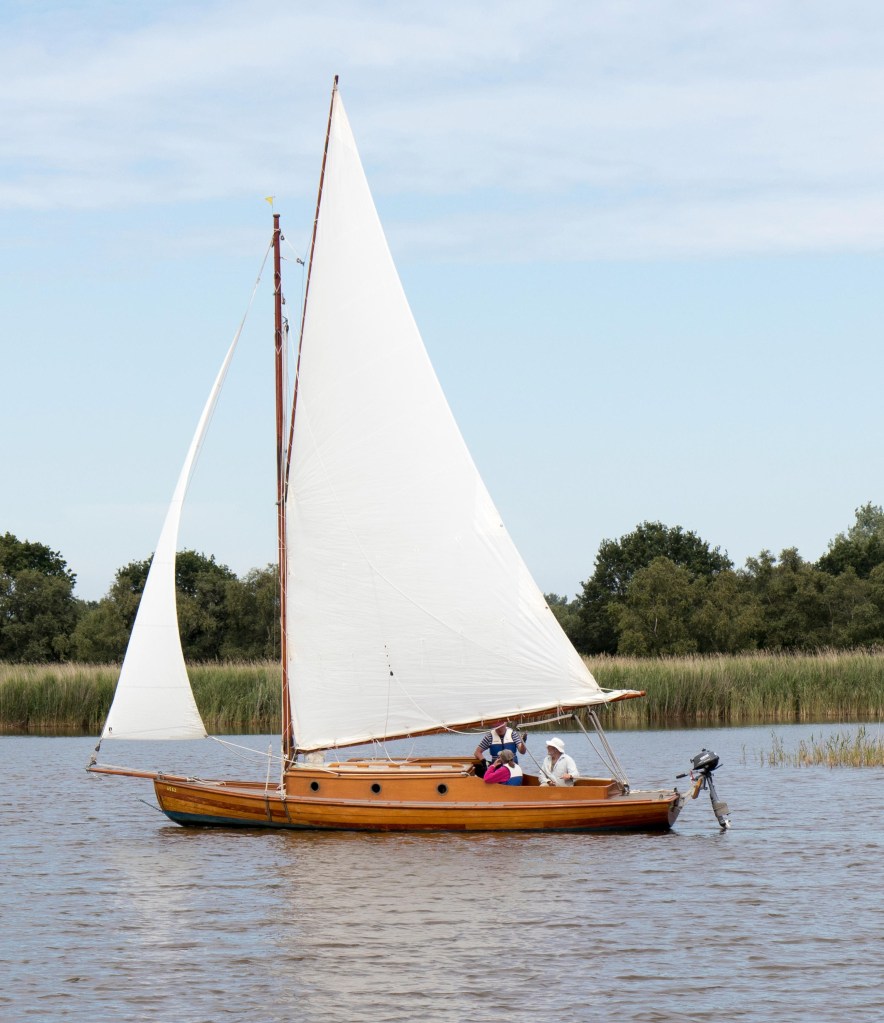
Finally – Clipper I. After her exhaustive career in hire – she was owned by Robert Harris as a private yacht, and then bought back into Martham’s fleet, circa 2015. They immediately treated her to a new suit of sails, giving her a VERY similar appearance to ‘Corsair’, early 1960’s.
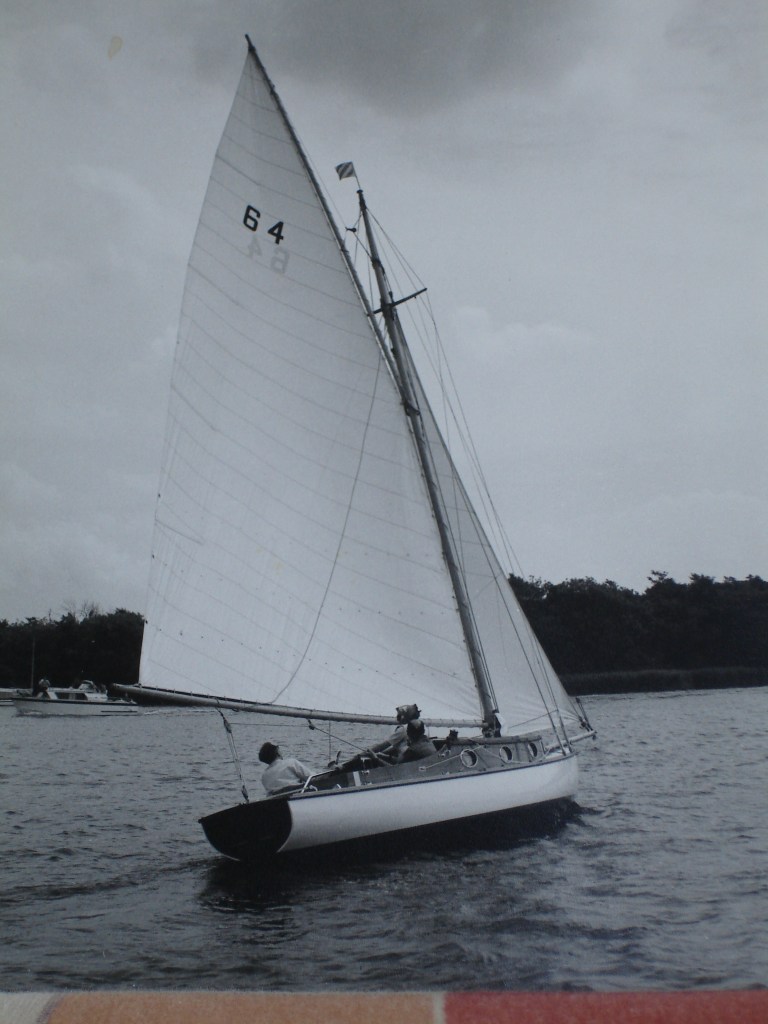
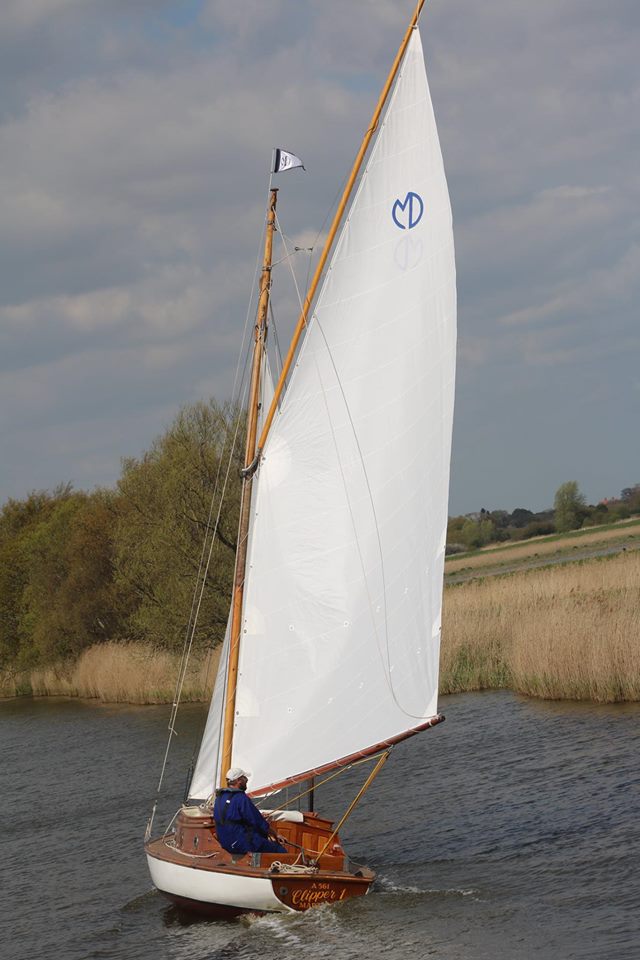
What is apparent when you compare Clipper’s I-V to ‘Corsair’ is the difference that extra plank makes in terms of internal volume. I’m VERY grateful that when ‘Corsair’ was built as Clipper VI, that extra plank was added!

In 2010, Clipper’s I & VI found themselves at rest, Horsey Dyke, which started this whole process.

Clipper I & Clipper VI at rest.

So yes, in a round about way that’s the fate of all the Clippers. One day I might be lucky to get all 6 in the same place.

Goodnight.

Upton; the C&H connection.

Returning to writing, after a long absence. At the end of last season, my head was full, and I needed to focus on wrapping ‘Corsair’ up. As you can see its taken a few weeks for me to feel like writing. Anyway.

This image has an empty alt attribute; its file name is corsairupton19.jpg
End of the 2019 season, 11th December.

I’ve previously stored ‘Corsair’ at Upton, during the 2009/2010 winter.

When that season had ended, I’d just learnt about the ‘Cruise of the Clipper’ – those of you interested can look here; https://broadssailing.blog/2019/11/18/cruise-of-the-clipper/

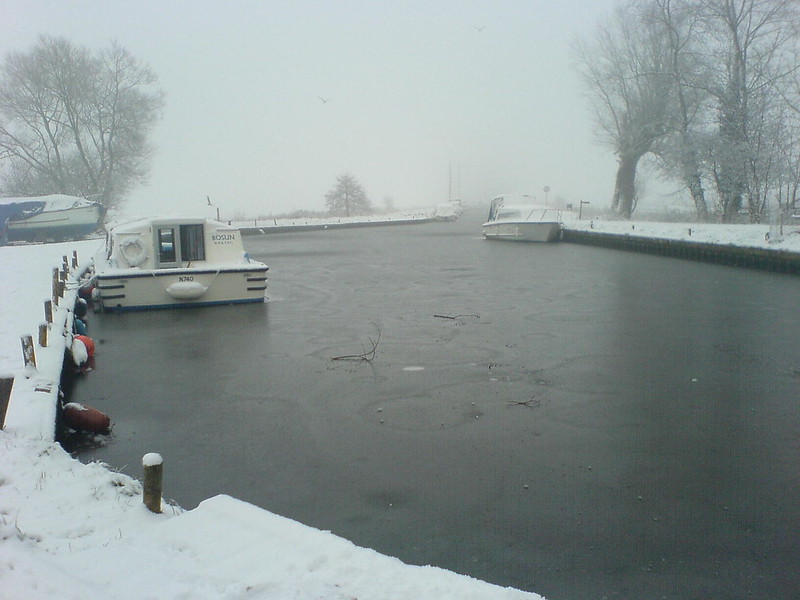
That year, I sailed ‘Corsair’ to Upton from her Oby mooring in late December, she was due to be lifted just before Christmas. It proved to be the only time I’ve sailed her in the SNOW, and to be honest it felt very intrepid (bl&%dy cold) when I’d reached Upton.

A few days after she’d been craned – Upton froze rather spectacularly!

Cold!

In 2009 – when I worked on the boat, I’d live on ‘Corsair’ at weekends.  Luxury it wasn’t! Sleeping inside 2 sleeping bags, having first made the boat utterly disgusting by filling it with dust, etc!

It embarrasses me now, but looking back through notebooks I can see that during that winter a repair (!) was inflicted to the port side-deck which leaked.

It involved removing the cant-rail, and then carefully peeling back the trac-mark. I hadn’t money to buy new! Then, very carefully I dug out the rot, and the soggy bits… being VERY careful not to go through the boards completely. Then I sprayed everything with cuprinol wood hardener, before literally trowling epoxy in and smoothing it out.

Inside the boat, a mixture of masking tape and playing cards were sacrificed to stop the epoxy from leaking through… (!!!)

I also had to complete my 1st replacement plank. I made about every mistake I could have made. The plank was short (about 4ft), was butt-jointed to the adjacent timber with some good old ‘prayer books’ on the inside, and I think I used a linseed based frame sealant to caulk up.

Also – in view of my ‘ahem’ limited budget – that plank was fashioned from a 5ft length of 7 inch wide skirting board… If you cut the moulding off, you can just about get a short plank out of it (!)

I can’t defend these repairs today, as they were short-lived. But at a time when I was struggling financially, they meant I kept the boat afloat and sailing.

Thankfully no pictures exist…

And, having suitably disgraced myself, I will try and explain the connection between Upton and Chumley & Hawke…

Eastwood Whelpton boatyard was founded by Tim & Annie Whelpton. Tim having built ‘Clipper VI’ in 1951, we met him by chance during 2008; https://broadssailing.blog/2019/06/20/cruise-2008-days-4-5/

One of the post-war owners of Chumley & Hawke, Vic Harrison evidently supported Tim & Annie’s endeavour to run their own hire fleet. When they moved to Upton in 1958, it was in the midst of changes at Chumley & Hawke.

I understand that Vic was instrumental in Tim & Annie taking a number of the C & H yacht fleet with them;

– Reveries 1 – 6  (Press built)

– Brown Elf, Imp and Sprite (C&H built – ALB designed)

– Pixie (Press built)

R/e the builder’s notes above… I know they’re accurate in terms of ALB designs.

I’m not clear when the Reverie’s joined C&H, but given they are Press built boats, and Alfred Yaxley (the post-war foreman at C&H) came from the Press yard, I suspect the boats came with him post WW2, so to speak.

In fact, all these yachts were 2 berth, small yachts. Leading to the nickname that EW was the ‘honeymoon’ fleet!!

Design- wise, the Brown Elf class was the most interesting in the EW fleet at that time. They really show A.L Braithwaite’s tendency to experiment.

Originally these were ‘Una’ rigged, in the same way a ‘catboat’ is in the US. It certainly wouldn’t be the first instance of US design influencing boats on the Broads, its rumoured a local boatbuilder (from up Wroxham way!) used the ‘Rudder’ magazine as a source of inspiration!

Brown Elf, Imp & Sprite

They are diminutive – vital statistics; 20 LOA, 17ft 3″ LWL, 7ft 6″ beam, with 3ft draft and 223sq. ft of sail & 580lb of external ballast.

Interestingly, Braithwaite wrote to Yachting Monthly in 1949 about the Brown Elf class – they were designed by him in 1930, and must have been one of his 1st designs for C&H.

Their rig differed from a typical gaff Broads yacht, not just with the lack of jib, but also that they carried jaws on the boom, and a down-haul to tension the luff. Much like a lugsail dinghy, although you could argue given their size, Brown Elf, Imp & Sprite were little more than half-deckers (in the nicest possible way).

The Una rig would have made alot of sense for a Broads hire-boat, it locates the mast well out of the way of any accomodation. There’s minimal standing & running rigging. and of course in a moment of panic, if the helm is abandoned they should luff & come to a halt.

Most sailing yachts in hire operated on that same principle. A large mainsail with weather-helm was considered safer with inexperienced sailors.

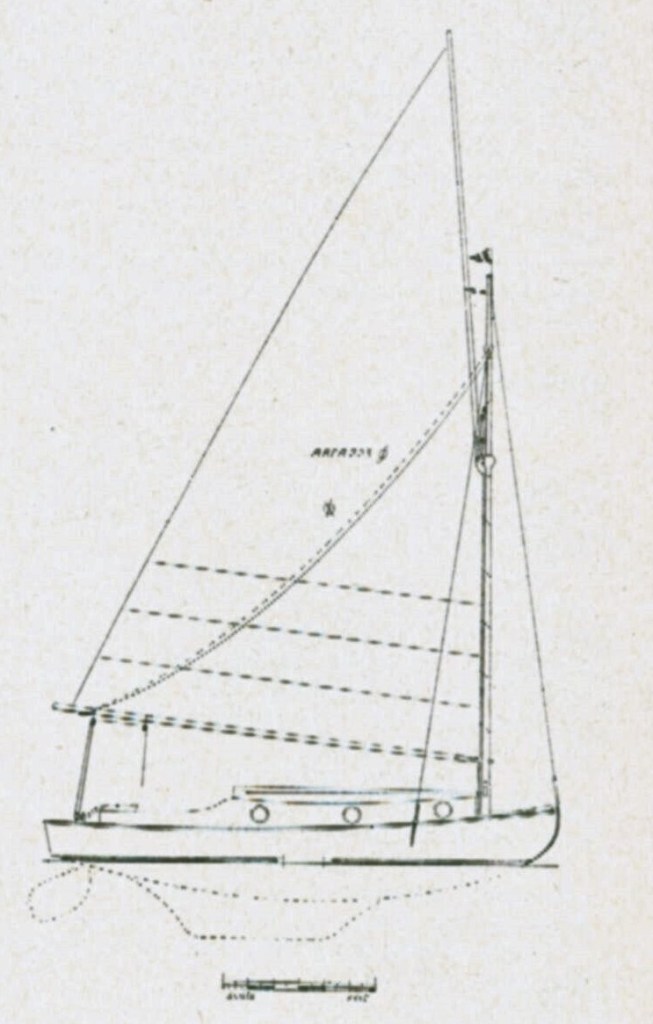
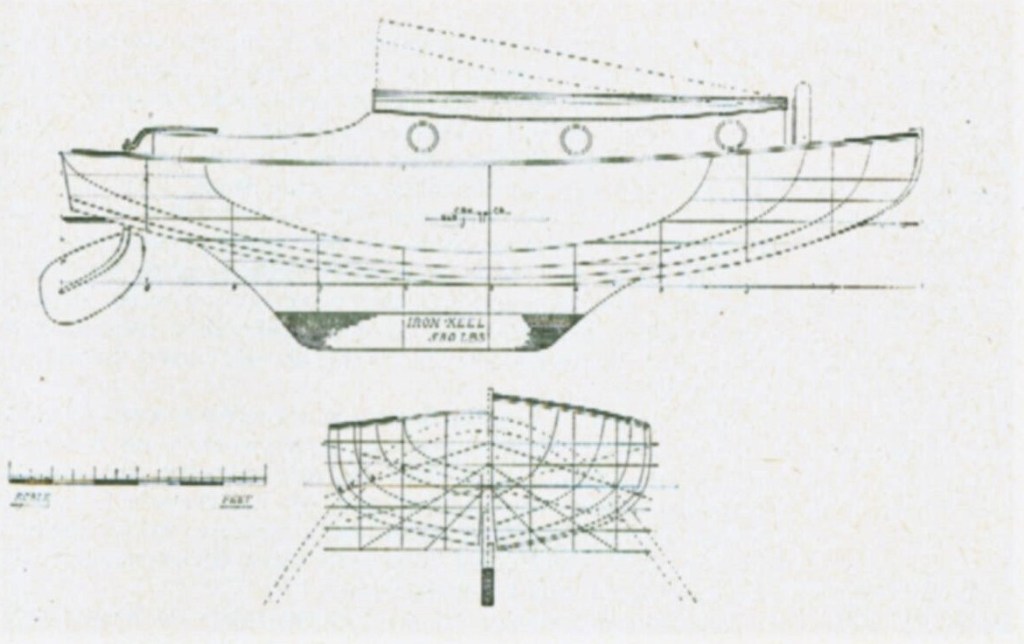
Happily, unlike the ‘Clippers’ there are lines plans which have been replicated for the Brown Elf class, and you can really see the metacentric theory being applied, look at the area curves, and how uniform they are.

It certainly looks like the maximum underwater sectional area is absolutely 50% along the DWL.

Brown Elf – lines plan

Once the Brown Elves were rehomed at Upton, it wasn’t long before Tim also took to altering them. The cabin’s were extended forward, and the Una rig abandoned for a Bermudian sloop configuration.

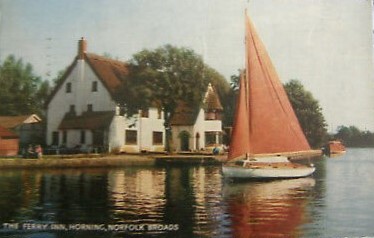
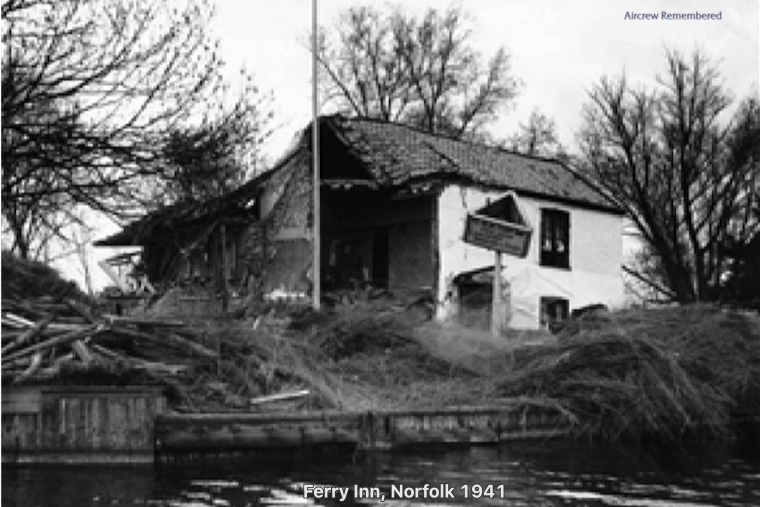
As a nice circuitous touch, here’s a photo of Brown Elf in 1962, outside Horning Ferry, whose link to C&H was the tragic demise of Joseph Lejeune, foreman.

Brown Elf, Imp or Sprite – outside Horning Ferry 1962

I’ve no doubt that Lejeune oversaw the building of the Elf’s, at what must have been an exciting period in C&H’s history – a new owner, new designs and minor publicity in yachting press of time.

Anyway, I hope I’ve managed to narrate the link between Chumley & Hawke, Tim & Annie, Upton, and ‘Corsair’s’ history.

Goodnight.
Starfishes & Sails.

Yesterday I enjoyed what is likely to be my penultimate sail of 2019. I know, I know yet again I’m deviating from the intended order of writing. That’s the joy of being the Editor though.

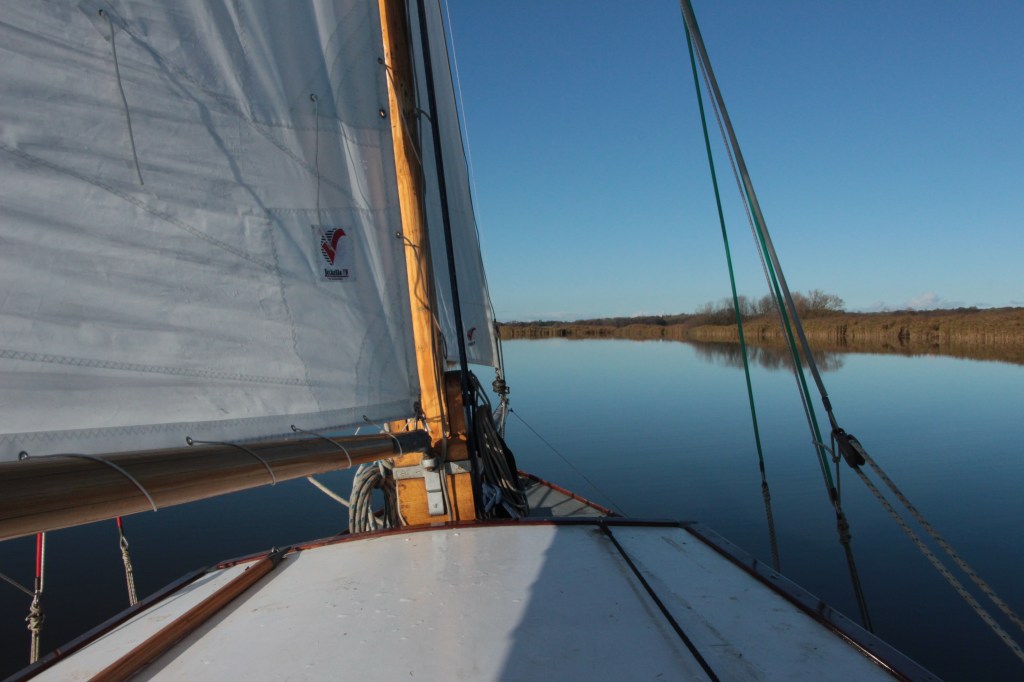
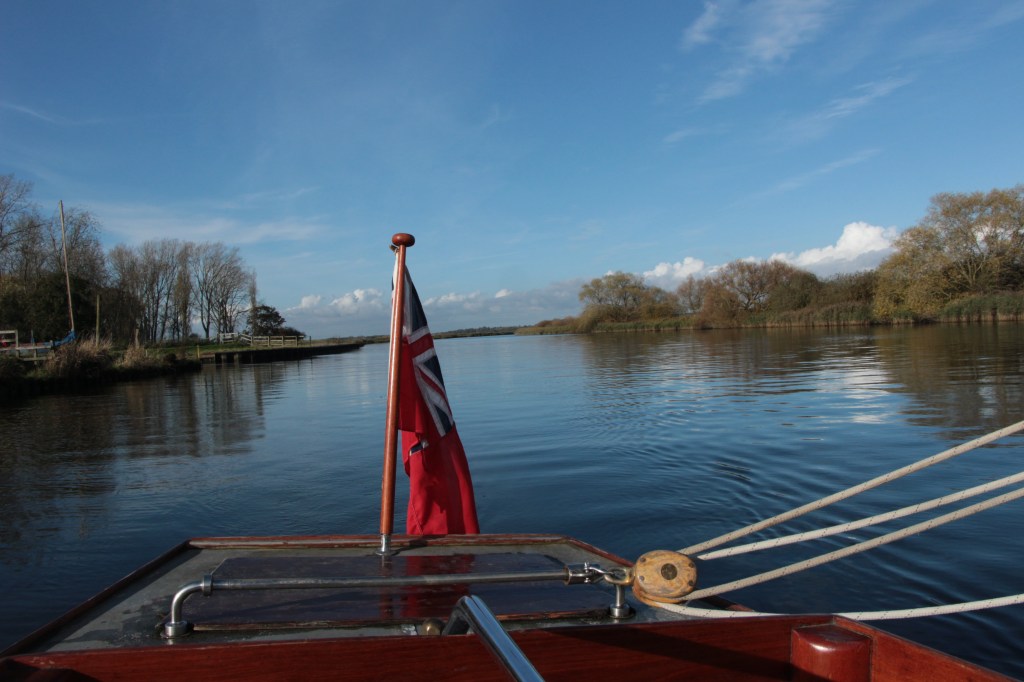
Yesterday was glorious. Bitterly cold, clear, sunny and calm. Very calm. We rigged whilst tied to our mooring, and headed off upriver to Surlingham Ferry, for the Turkey Race – next weekend.

I found myself checking and double checking the rigging again – I’m not sure if I need to re-order and change the cleats on the tabernacle, now the topsail is there. Currently the peak halyard is lead onto the port face, with the throat on the starboard face. The topsail spar has a neat trick of capturing the peak – at the lower end of the spar, which can make lowering the mainsail tricky.

This definitely needs looking at, for two reasons. One – the rig should work, and this is dangerous. Two – when you sail on/off moorings, I find the best way is to keep the way on as much as possible, and to be able to drop the sail – bloody quickly if needed.

Gorgeous!

The rig did present a more amusing quirk – if you tension the topsail forestay just right, it ‘thrums’ and buzzes… Took me ages to work that out, including removing the floorboards and checking on the bilge-pump to see if that was running!

Heading upriver, we were lucky enough to be photographed by a friend, whose currently building a house for his family. The scaffolding made an excellent platform, although if I’m critical – that peak is about 1 or 2 inches ‘out’ by the look of the creases.

I’m struggling to find superlatives to describe the day if I’m honest, it was perfect.

Typical of the season, a North wind with no warmth, a clear sky and a medley of colour in the riverbank, reds, browns, yellow and oranges all competing in the remnants of summer foliage. We sailed every inch of the way, and we knew we’d taken the best of the day for ourselves.

But. I wanted to talk about the starfish.

This links with the subtly of the Broads rivers – and the villages which surround them. There are features worth exploring, and a hidden history. There is a tenuous link to Chumley & Hawke as well…

Surlingham has a starfish. Something which shows the far-reach of war, into the boring fields of Norfolk. In truth both Norfolk & Suffolk were riddled with military action during WW2, and you’re never far from it.

Starfish sites were large decoys – developed in WW2 to act as a distraction to enemy bombers. Norwich took a pasting, in what’s known as the Baedeker raids, with the railway station/yard & nearby engineering works of Bolton & Paul being prime targets.

The solution was to create a decoy – which could emulate (from afar) what bomb damage might look like, including fires. The deception went further – it had to look realistic. There was a network of lights rigged, which could replicate the cadence of lit railway carriage passing by at night. Or a red glow to simulate a fire-box door being opened on a railway locomotive.

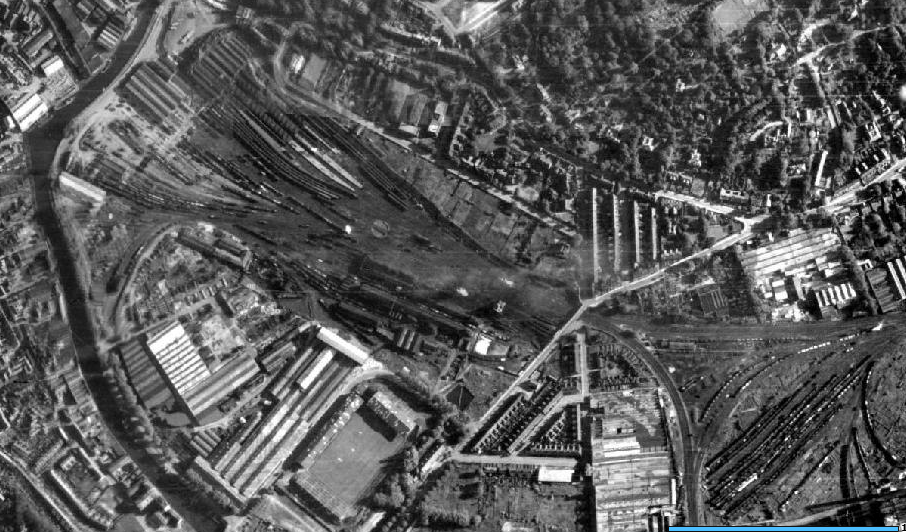
For reference – here’s a 1946 aerial photograph of Norwich railway station;

Norwich Thorpe railway station, including motive power depot, Crown Pint depot, Bolton & Paul engineering works. All very lucrative targets. The River Wensum snakes around the lefthand side of the image.

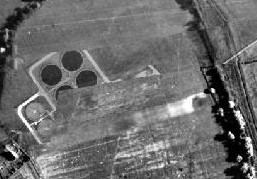
Interestingly – the 1946 aerial photographs also show the deception required. Outside of Norwich, you can just see a crude attempt at censoring the existence of what is either a fuel installation, or the present-day sewage station at Whitlingham;

Nothing to see here!!!

Surlingham was chosen to host a ‘starfish’. Local firms such as the Rockland Reed & Rush company would supply bundles of reeds to act as ‘wicks’ for the fires – whilst the pyrotechnics were handled through a series of heath robinson-esque contraptions – mixing oil & water to make dramatic explosions.

Interestingly – the knowledge & expertise behind the starfish sites is credited to expertise within the theatric industry – being able to use lights, smoke & explosions to good effect on stage can enable a mimic on a much larger scale.

It’s no exaggeration that these sites were vital. Norwich became so battered and bruised, you would see families walking out on the Drayton & Dereham roads on a nightly basis – preferring to sleep out in the open than risk another night of bombs.

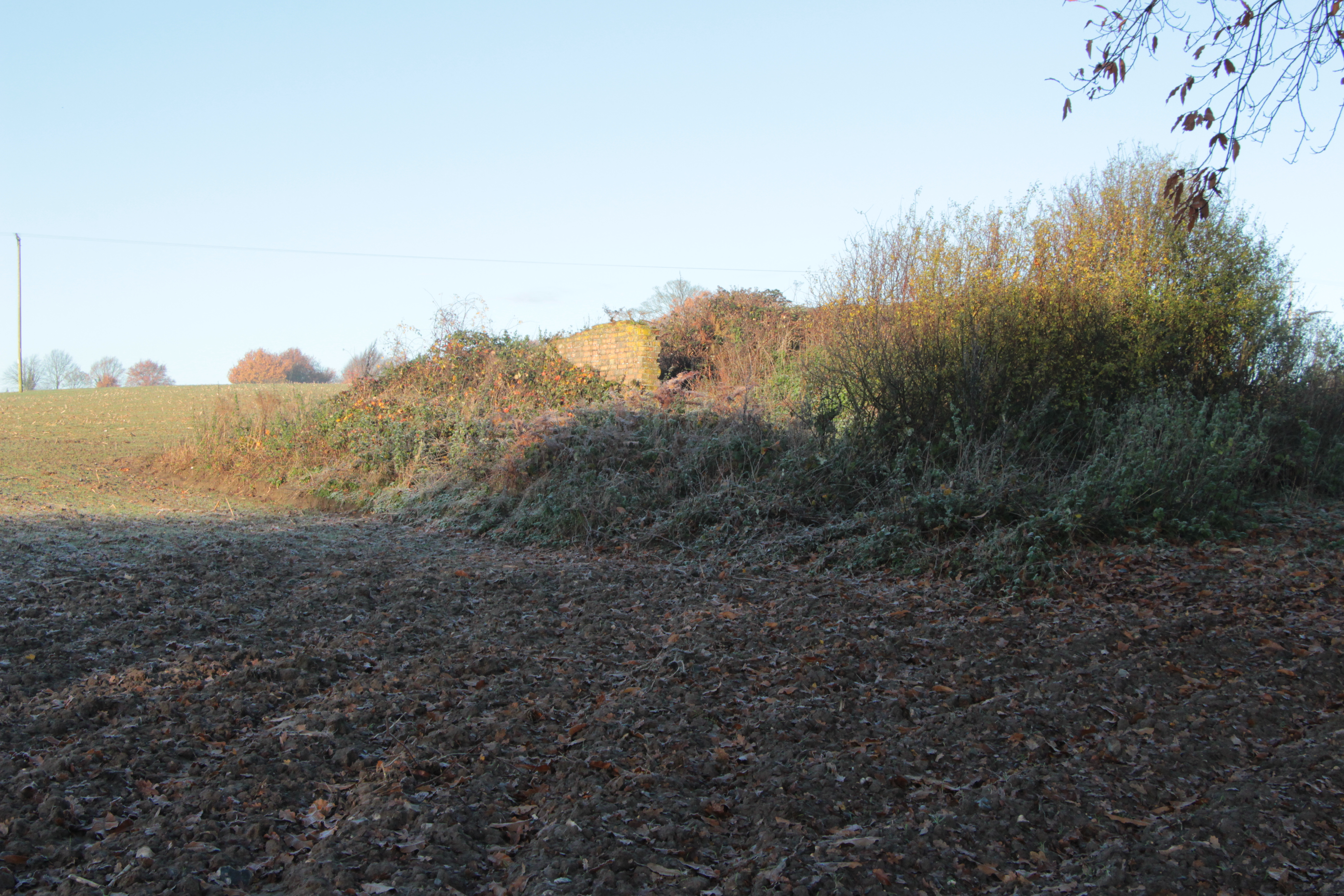
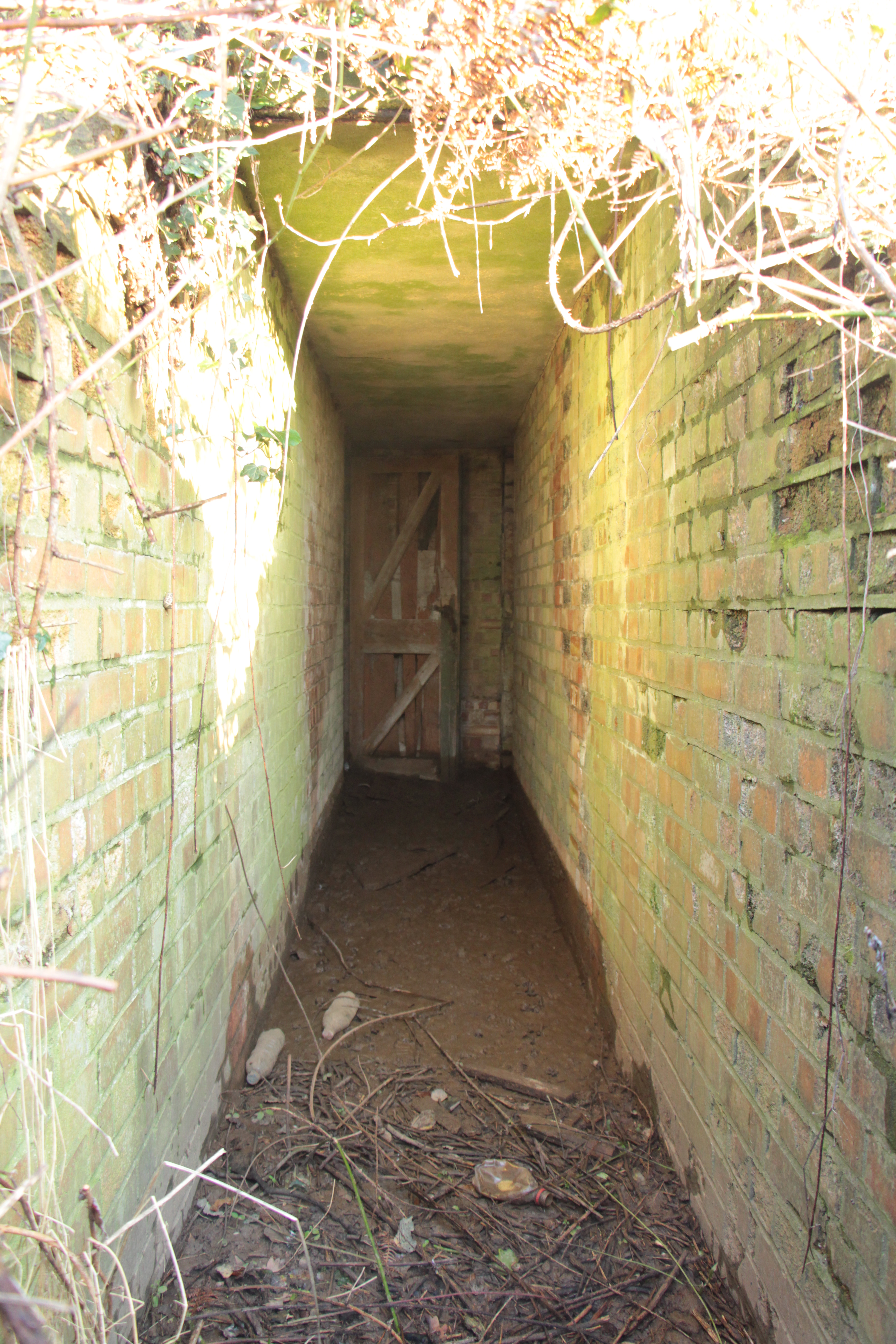
Today – the site of Surlingham’s starfish is much quieter. I stopped by, and knowing where to find the bunker – managed to capture it in its slumber;

Again – the hidden detail, and history of Norfolk’s rivers & surroundings amazes me. You can walk quite easily from Surlingham Ferry, and walk past this 100 times without knowing what it’s about.

I can’t imagine what it would have been like, orchestrating a site like this in the war – knowing it’d lure enemy bombs to drop adjacent to you instead of on an already burning city.

The link between this starfish and ‘Corsair’ is tenuous – but there. It links to Joseph Lejeune – foreman at Chumley & Hawke in the pre-war years, and the heyday of Alfred Lloyd Braithwaite’s design experiments. Lejeune’s & Braithwaite’s most extreme experiment was undoubtedly Khala Nag;

Khala Nag – sometime in the 1930’s, somewhere on the Broads near Horning.

I’m fortunate enough to own that photograph, which is to my knowledge the only extant photograph of Khala Nag – it was part of the treasure trove of ALB’s possessions which I found earlier this year, in Milford on Sea. See here for the highlights of that; https://broadssailing.blog/2019/07/18/on-the-trail-of-a-l-braithwaite/

‘KN’ was a flier.  27ft long, with only 4ft 6” (yes) beam and 3ft 6” draft she carried 2 separate rigs, one for the Broads, one for coastal waters.  The extent of his commitment to balance, weight, sails & hullform is evident in this design & build.

Whilst Joseph Lejeune built the yacht, Braithwaite assisted throughout.  Notably he weighed and recorded each and every component of ‘KN’. This eventually lead him not only to knowing the exact required weight of the ballast keel, but also how to trim the vessel, so that her centre of gravity could be altered to 1” in advance of the centre of buoyancy, calculated to counteract the weight of any crew.  This simple calculation is often overlooked by designers, and pays dividends when sailing. 

At the time of the outbreak of WW2 Joseph Lejeune was the foreman at Chumley & Hawke, and unquestionably there must have been a close working partnership between him, and Lt Cdr Braithwaite.  They were close in age – and clearly shared a passion for experimenting with the limits of design at that time, to create some unique, and exciting craft.

For example, the noted cost of JL’s time during ‘KN’s’ build was £117, 4s 10d (!) The lead for KN’s keel only cost £7 9s 0d. ALB must have valued his input as a designer.

Sadly, this evidently close partnership wasn’t long lived.  Whilst Lt Cdr Braithwaite went back into active service, Joseph Lejeune stayed in Horning.

I know that Alfred Lloyd Braithwaite felt very strongly about returning to active service. His age would have discriminated against him at the outbreak of war, and in fact I notice on the 1939 return there is a note which reads; ‘RNVR in Great War, but refused for present war’. ALB was not to be deterred, and was posted in 1940.

In Horning, during the evening of April 26th 1941, Horning village was subject to a stray bomb attack – which disastrous consequences.

(I actually sit, reading notes I first wrote – April 26th 2016). 

It isn’t clear exactly, but it’s likely a Luftwaffe bomber was jettisoning bombs on the way back to the coast.  And their attention was sufficiently drawn to drop their remaining payload of 15 bombs around Horning.

I wonder if they were aiming for the ferry itself – which may have been silhouetted. Else perhaps it was a chink of light as someone slipped into the pub?

Whatever the circumstances, the most unfortunate target was the Horning Ferry pub, and amongst the 22 fatalities that night was Joseph Lejeune, aged 50.

The devastation was instantaneous;

The link between Surlingham’s starfish and this, is that sites like that, their flashing lights and theatrical pyrotechnics were desperately trying to stop destruction and loss of life like this. Sadly it’s reckoned that Starfish sites only drew 5% of the intended bombs away from the actual targets.

This accounts for how ‘Corsair’ came to be built post-war by the apprentice at Chumley & Hawke – Tim Whelpton, directed by the then yard foreman Alfred Yaxley.

Anyway – In a roundabout way, I hope I’ve explained another bit of Norfolk’s hidden history, and some more of ‘Corsair’s’ story.

Big skies.

Goodnight.
Cruise of the Clipper

Returning desperately to my original concept of trying to write in the order in which I’ve learnt about ‘Corsair’ forces a return to 2009.

The 2009 season passed relatively smoothly. ‘Corsair’ stayed on the Northern Rivers aside from the Perryman memorial race that May, and I was in the enviable position of being able to sail with Joe & Julia aboard ‘The Only Girl’ when on the southern rivers, and on the north rivers with ‘Corsair’.

At the end of the season – I finished my sailing as I do now, with the YSC’s Turkey Race. Essentially we keep the boats in the water until December, and you race with 3rd prize being a brace of pheasant, 2nd Duck, and 1st prize is a Christmas Turkey.

As you can see, 2009 saw me aboard ‘TOG’ – on a particularly cold & calm day!

The Only Girl – 2009 Turkey Race.

During that winter – I was staying with friends in West Norfolk, and once ensconced in the spare room, I exercised one of my character traits… I just have to look at the books on other people’s bookshelves!! You will learn a lot that way, I recommend it, when you next get the chance.

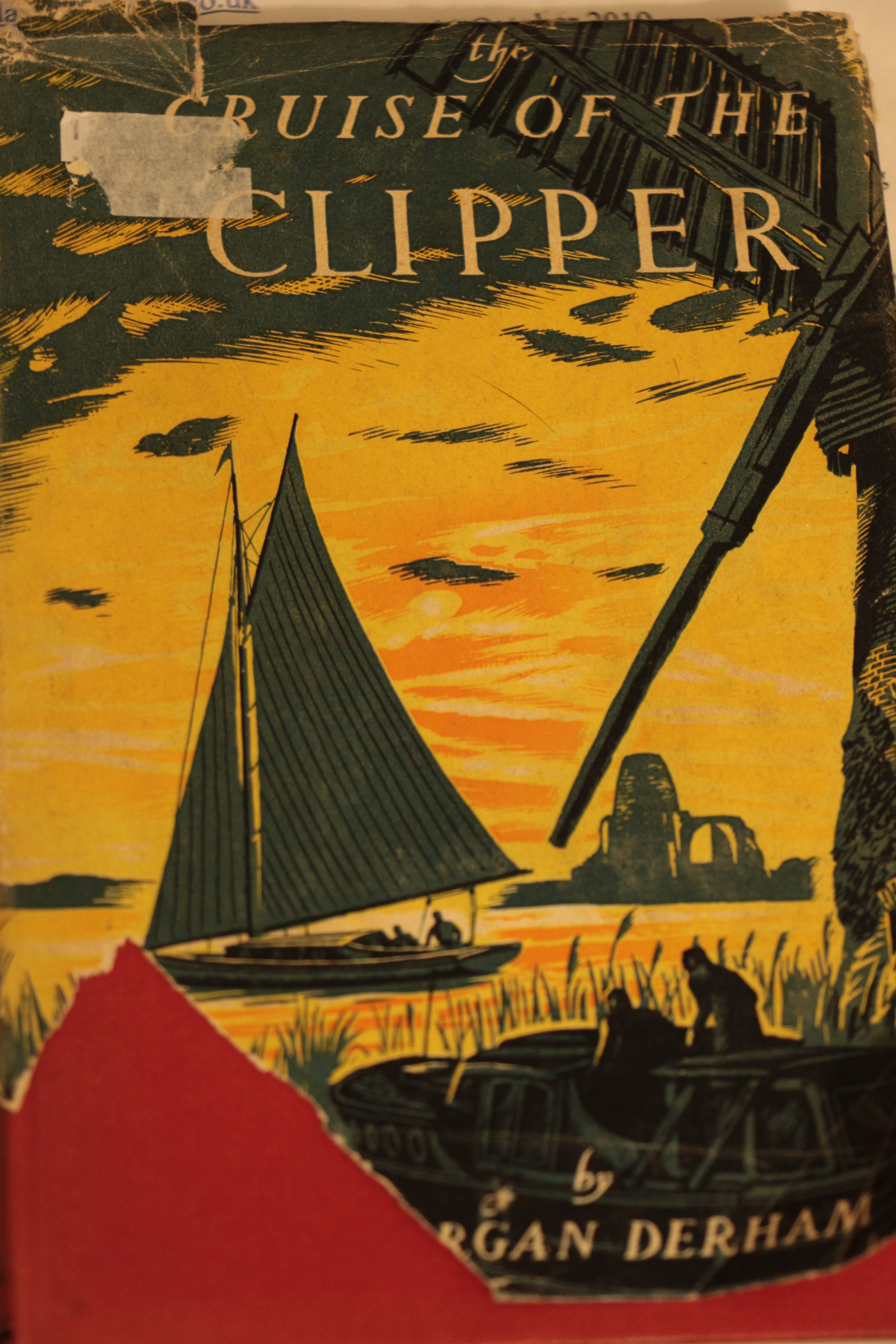
Cruise of the Clipper – A. M. Derham

I don’t know what singled this book out to me, I assume it was that latent tie to that word ‘Clipper’. I know it was late, cold, and VERY quiet, so I didn’t waste time getting back into bed with the book. Within pages I was hooked.

This WAS a book about the Broads… More significantly – it WAS about Chumley & Hawke in Horning, and it featured three young men, who’d hired Clipper.

The book centres on 3 young men, who decide upon a September sailing holiday, and in the early pages even references the discomfort of the 3rd person sleeping on the cabin floor (some things never change!)

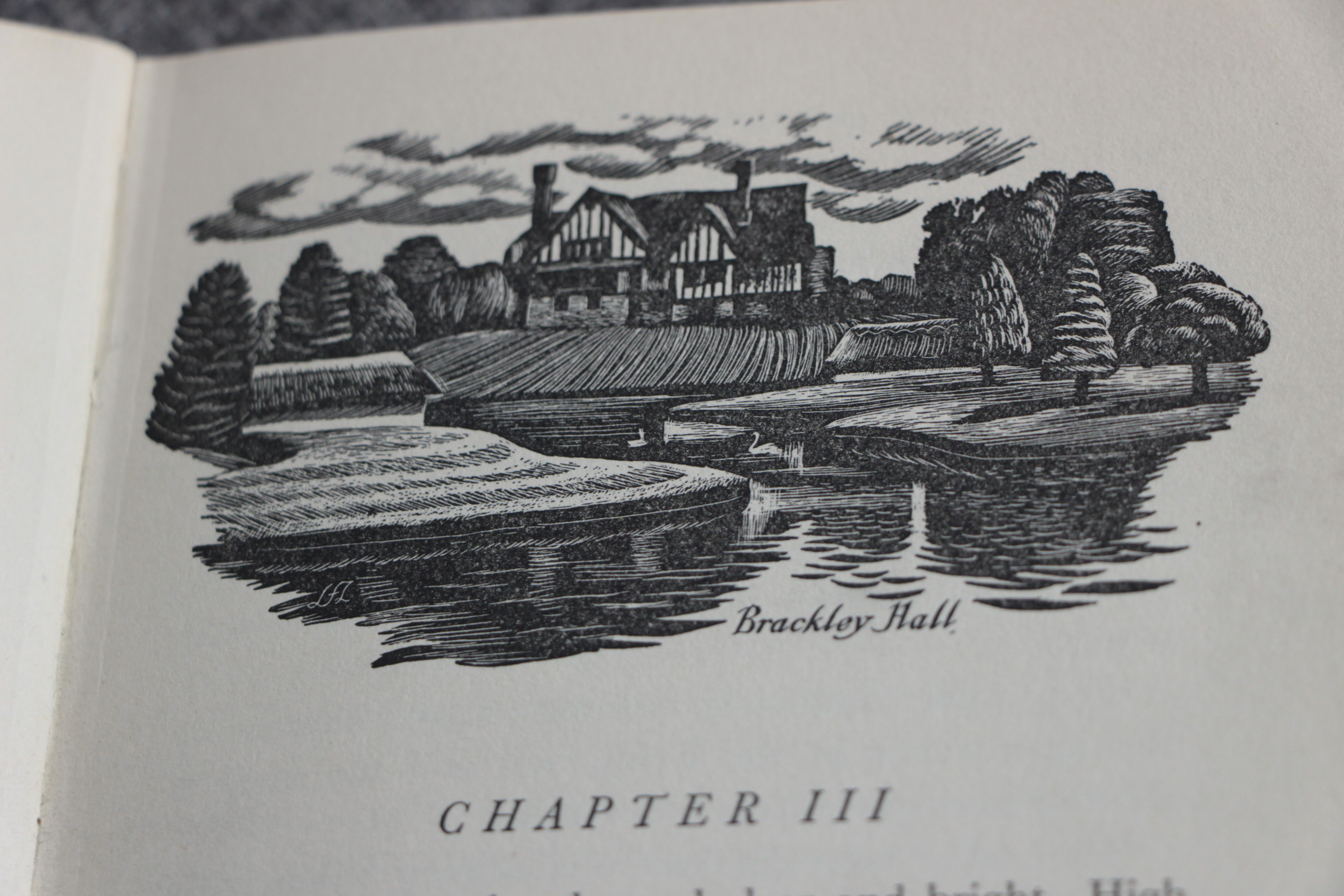
By page 21, I’d realised that Derham has used Broads landscapes and features – aside from ‘Brackley Hall’, which if the illustration is anything to go by, I’d say is ‘Burefields’ – the house adjacent to Horning vicarage;

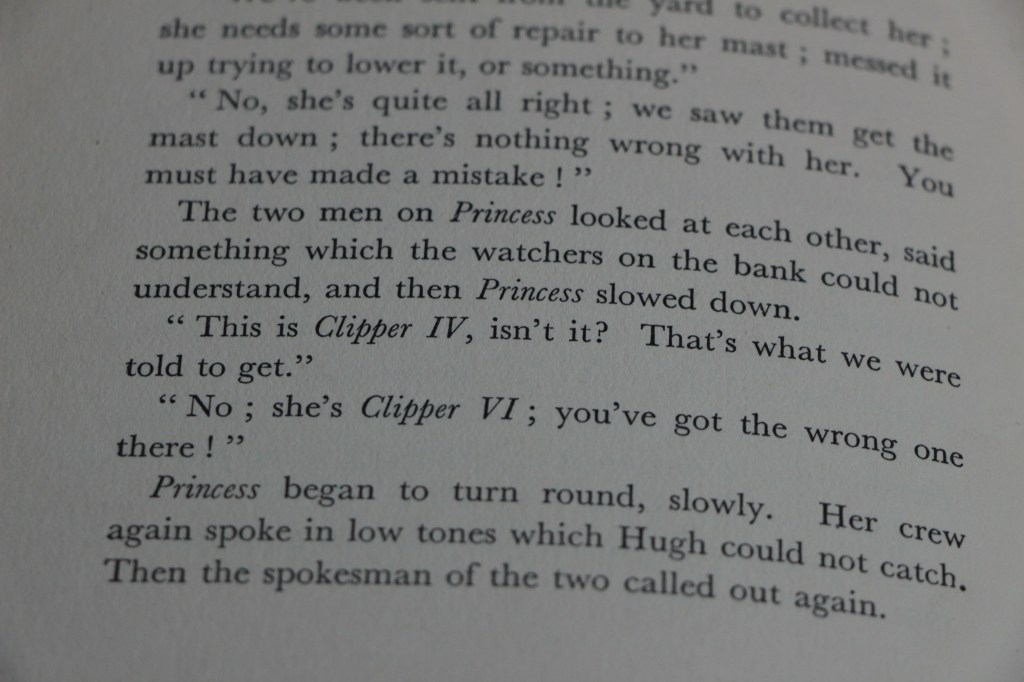
Sleep forgotten, I read on – it’s a reasonably cheerful little book, until I reached page 54. Where I must admit I had to stop! Roman numerals had never been my strong point… I knew what I was reading.

Clipper IV or VI?

Clipper VI. CLIPPER VI! THAT’S MY BOAT! Even now, writing this I’m smiling. It forms one of many ‘awe struck’ moments that have happened to me in my ownership of ‘Corsair’.

I mean – I didn’t own this book, I routinely wouldn’t have access to this book – it’s not even in my house! Here I am, with 100’s of choices, and I select this book. The centre of the story, well it’s my little boat!

Needless to say – I now own 2 copies of ‘Cruise of the Clipper’, which coincidently was published in 1952. I can only guess that Arthur Morgan Derham was a very early hirer of ‘Clipper VI’, given her built completed in 1951.

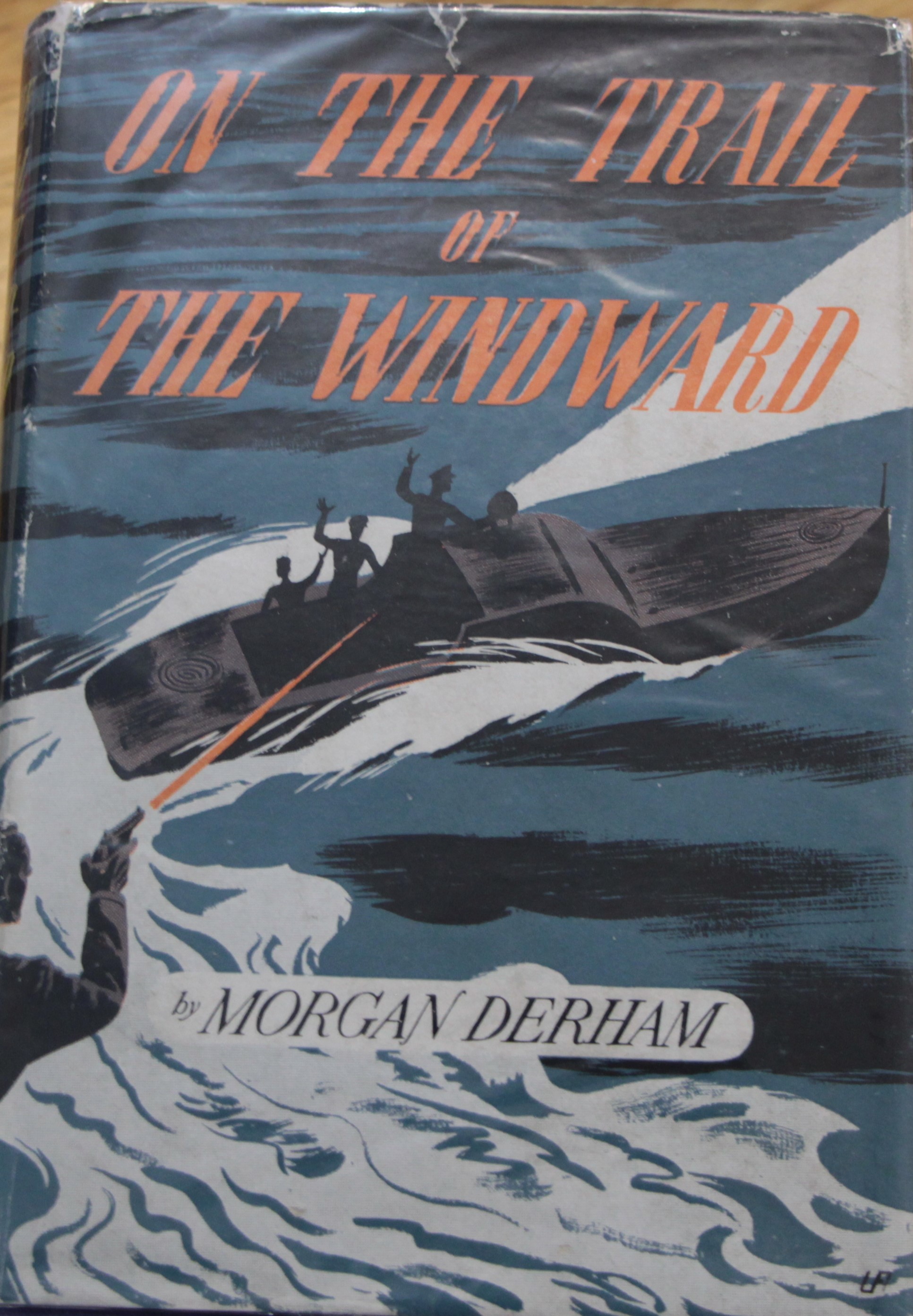
Interestingly – A.M. Derham must have had some close links with Chumley & Hawke, as he also hired their yacht ‘Viking’. She is the star of his book ‘On the Trail of the Windward’ (circa 1949/1950).

The ‘Windward’ is I believe a substitute name for a large Broads ex-hire yacht, the ‘Westwards’ – which were built by Jack Powles in Wroxham.

From what I can tell – Arthur Morgan Derham was born in 1915, in Hertfordshire. By age 14 he had converted to an Evangelist, something which he later embraced quite fully.

As a young man, he was given warrant number 123990 in the Metropolitan police force, serving as a Constable between 1935 & 1938. It was during 1938 that he took on the role of Pastor, at the West Ham Baptist Tabernacle – which itself is a quite imposing 1903 chapel; https://www.geograph.org.uk/photo/3104634

West Ham was (is?) – a densely populated part of London, which took some awful damage in WW2. It’s noted that Derham continued his services, but underground until 1944. At this point, his writing increased and he was known to travel to churches in England.

Potentially, this may be the link to Horning… I know there’s a Baptist church in Neatishead, potentially Derham spent some time there. There is no doubt that he had sailed on the Broads, and definitely knew the area. He captures details sufficiently well to have been there himself.

A.M. Derham later rose to the position of General Secretary of the Evangelist Alliance. I’m not sure if they found out about his other published works… including “Love, Sex & Marriage (A Christian Guide)”…… !!!!!!!!!!

His earlier book, ‘On the trail of the Windward” I didn’t actually own until 2017. Although inside the cover of that book, I notice that it was presented to Peter Hamment, of Tunstead Chapel – so maybe Derham was there?

The publishers are C.S.S.M – the Children’s Special Service Mission, so maybe that’s just co-incidence it was awarded as a church prize (46 attendances in 1949)

I’m delighted to have found both books – as for my friends Damien & Julian who own ‘Viking’, it was lovely to introduce them to their boat, in print so to speak. Like ‘Cruise of the Clipper’ – “On the trail of the Westward’ has some excellent cover artwork.

Isn’t it great? Very much of the 1950’s, and if you can overlook the strong Christian subtexts with the stories – they are cracking little books about 2 very cherished C&H boats!

So yes. ‘Corsair’ is in a book. A book I only found, by chance, over 40 miles from where I live, in someone else’s house. Still amazes me, 10 years later.

Goodnight.
Autumnal Sailing

Very opposite sailing at the moment. From sailing fully reefed in a near gale to a flat calm, on a beautiful, crisp day.

Personally – I think it’s worth keeping the boat in until December, Autumn does give some beautiful days, so I resolved to make the topsail work, with a proper spar.

I sailed ‘Corsair’ for the 1st time with her topsail this year, at Cantley Autumn Regatta with the Yare Sailing Club. Here’s a gratuitous photo;

Corsair with topsail.

I’m not going to pretend that’s set well. In face, given that it’s hanging off my quant pole, which is at least a metre too short, the yard is tangled the wrong side of the gaff, and the peak isn’t high enough I’m reasonably surprised we came 3rd in that race!!

Sticking to my principles, the rig should work, and it should look right. So I resolved to make the topsail set properly. I’ve previous experience of jackyard topsails, having spent a lot of my teenage years sailing a topsail rigged halfdecker;

Grace – my halfdecker. Topsail contrived from upside down BOD jib.

Dixon Kemp helpfully wrote about jackyard topsails in 1913. https://www.woodenboat.com/sites/default/files/library-content/dixon-kemp-jackyard-topsail1913-finalv2.pdf (pg 3 onwards)

Unlike his counterparts though, I am unable to send a man or two afloat to stow the topsail – neither do I have a clue when he advises us to be mindful of “passing the weather earing”.

So – first hoist of the topsail, and it was apparent that the sheeting angle was wrong – with the sheet being too low on the yard. Even worse – on port tack the yard pulled away from the mast, allowing everything to ‘twist’;

I appreciate that topsails & mainsails are two separate sails. However, for the purposes of my simple brain – one is an extension of the other. And a ruddy great gap in the middle of it doesn’t help.

So down it all came again!

Rig adjustments are subtle. The sheet was moved by 3 inches, and an addition line was added, which held the topsail spar close to the mast, and ensured it would be parallel at all points of sail. This is tied loosely to the spar – so it just pulls ‘in’ to the mast, I don’t want it to impact on the downhaul, which you can see is caught up in the topping lift.

So next attempt revealed the sheet was wrong (by 1 inch) and the second halyard (for want of a better name) was also ‘out’ by about 4 inches.

Lowered again… Avoila!

Nicely set.

So, in my book, that’s not bad. Crease diagonally up and down the main from peak to tack. Topsail yard nicely vertical. Load on the jib & the topsail forestay.

Crucially – I’ve marked everything on the spars, and given that I was knee-deep in rope on the forepeak I’ve had some thoughts about extra cleats, and some rope bags to tidy everything.

I’m pleased with this. Just got to test it all over the next few Autumnal Days.

Bliss.

My ambition to have a rig that works well on ‘Corsair’ have been a constant process if I’m honest. During 2009, I made some alterations to the jib, effectively cutting it parallel to the luff, removing approximately 12 inches of sail up its length.

At that time, I had hoped to resolve some issues with occasional lee-helm, and soon reduced the length of the bowsprit to match. From this photo in 2009, you can see that the jib doesn’t quite ‘fit’ the foretriangle;

Small jib – big gap!

To be honest, this set-up worked beautifully for me, at that time. Sailing single-handed I wanted really positive weather-helm. If it all went wrong, I needed to know the boat would luff, and come to a halt.

This was the thinking behind the original hire-boat rig, keep a small jib, so that the boat will automatically luff and stop. Also, for hire-boats any bowsprit would only be a unnecessary damage making implement!

‘Corsair’ has had 4 rigs now throughout her 68 years. She started off a stem-head sloop. First with a self-tacking jib, then a loose footed jib. In 1961 she gained a small bowsprit with the Campbell family, with a larger, high peaked mainsail. In 1989 she gained the ‘large’ topsail rig whilst in the ownership of Joe & Julia(originally cut 1978 for ‘Sabrina’ s/n 71). Joe & Julia actually kept the old sails, and the original bowsprit – enabling them to have either a ‘big’ or a ‘little’ rig.

Finally in 2019 she got her current rig – the 2nd time in her 58 career as a private yacht that she’s received brand new sails, specifically for her!

So, will I keep the rig in its current form? If history repeats itself, she will probably end up carrying this suit of sails for 40 years or so – so who can say?!

I know that for now, the extra string, extra effort and space needed for a topsail is manageable – but I can’t say how I’ll feel about it in 5, 10 years with any accuracy really.

I am glad though, the rig now can be set properly, or as near to as I can get!

2009 cruise – Day 6.

There’s nothing like team-spirit. Or a team in good spirits. Which is what we were, mostly. Chief Engineer Jalil stood a round (or 2), and then became miserable for the entire evening.

The object of his affections, well she didn’t work last night, day off! (We didn’t laugh, not much).

We made an early start, on a typically cold day, fully aware we had a lot of distance to cover to get ‘Corsair’ back home.

‘HB’ arrived, neatly just as we were singled up and ready to leave, and we motored downriver in company. Unusually – the skipper was overcome by a bout of cleaning & I felt the need to clean the underside of the cabin roof (!) So much to the bemusement of my crew, I set to this task with gusto.

A tidy boat is a happy boat!

Whilst moored at Reedham Street – we were engaged in a weird conversation with Vernon the burger van man. He’d learnt of Nulsec’s sinking – and wanted to know the technicalities… he laughed!

Not much can be said of our transit of the lower Yare – the ebb ran and we motored a long stretch without many notable features.

Yarmouth reached, and it proved to be itself (!) I took full advantage of the situation, and having despatched Jalil & Chris B to Asda – I kept a viligant ‘anchor watch’ waiting for slack water.

Ever alert.

Truth be told – were we all tired by this point. I’d lived aboard ‘Corsair’ for 9 days now, having attended a regatta before the cruise. We motored from Yarmouth up the lower Bure.

At Stracey – we did decide to set sail, in frankly what were gusty conditions. This was mostly a cry for help on our part. For much of the Lower Bure Theo had kept us entertained with a theory that all wind-pumps were actually Darleks… (yes, really?!)

He wore us down.

To be fair, the first 2 miles of sailing (tacking obviously!) weren’t too bad. At one stage we even thought we might catch up with the hen-party who’d passed us on a motor cruiser!

However just upriver of Stokesby – we encountered a viscious squall, which after 10 minutes showed no signs of abating… Offering careful explanation “$%&* this” – I swung ‘Corsair’ into the weather bank and we lowered sail.

It was at this point, we learnt HB had lost their dinghy – and would be several hours later coming through Yarmouth. Perhaps sailing was finished!!

We then motored back to Oby quietely, tidying ‘Corsair’ as we went. Shortly before 4pm we arrived, moored and departed. l

Joe

Postscript

The 2009 cruise is 10 years past now. It’s made me smile, writing about it in lots of ways.

We flew by the seats of our pants a fair amount, and drank far, far too much.

Our holiday started with a near-drowning, followed closely by a sinking, several collisions (both with land & other boats), featured some broken ribs, an overall age range from 78 to 20, 5 boats, three rivers, and ALOT of tacking.

There was the full range of human emotion. Rage, anger, irritation, love, infactuation(those poor barmaids) rejection, grief & sometimes even normality!

As a comparison, I look now at the rivers in a very different way, the lower Yare HAS lots of features. You’ve just got to look for them and embrace the subtleties of the Broads landscape.

For example, I know now that the lump of Brambles on the North bank, just upriver from Raven Hall isn’t just Brambles.

It’s the remains of some ancient Lime Kilns, as part of the once extensive Berney Arms settlement. You just have to look, and explore.

Also, why spend a week tacking?! Go the other way for god’s sake…

Goodnight.
2009 cruise – Day 5.

Ouch – Lots of Ouch. Port, its lovely, but ouch. My head!!

After the skipper had gathered himself – ‘Corsair’s crew enjoyed a sumptuous breakfast and we decided there was nothing for it, but to go sailing. Certain parties were reluctant – and the Skipper had to motivate the malingerers!

Once everyone had risen – we tacked back downriver, past Brundall gardens. Both s/n83 ‘Pollywog’ and parent-craft Zandamon were moored at church fen.

S/N83 – PollyWog

‘HB’ had left early from Surlingham (6am) – with ‘Seabird’ and ‘Dragonfly’ choosing Rockland St. Mary for the overnight stop.

‘Corsair’ and ‘Nulsec’ were heading back to Cantley, and for a change we tacked! In fact, there had been far too much tacking already this week, and we’d all gotten fed up!!

Robert was unceremoniously dumped ashore at Brundall railway station – Uni and a shower proved too much temptation (he’s weak willed).

Pushing on, I muttered the immortal “lunch at Buckenham”, and handed control to Chief Engineer Jalil.

THREE TACKS. THREE. having handed over the tiller, after 3 tacks – we ploughed an almighty furrow in the mud and stopped.

Engineer he may be… sailor he ain’t.

All the tricks were deployed – pushing on the quant, swearing, lowering the sails, swearing some more, then hanging crew (Jalil) out on the boom, swearing more…

During this lull, ‘Nulsec’ kindly ran aground nearby – to keep us company!!

Jointly aground. HARD.

We’d run aground on the outside of a bend – where the river was cut out to a 90 degree corner, for turning coasters. 40 years later, no coasters but quite a lot of mud.

We then broke the outboard.

2 hours, 2 HOURS after we ran aground – ‘Corsair’ made her way to Buckenham Sailing Club, where we ate chips. The skipper multi-tasked and planned Jalil’s death…

The fleet decreased again, with ‘Nulsec’ leaving us, ‘Corsair’ due to head through Yarmouth tomorrow – ‘HB’ would meet us later. So we tacked downriver to Cantley, joined by the GWYC fleet. There was a lot of close quarter tacking, and we scared some bystanders!

Much of our day was hungover – and on the mud. Beer… glorious beer!

The skipper needed this.

Goodnight.
Aground… for some time!

2009 Cruise – Day 4

Urgh. Well.

Typically there’s always one. in this case it was Chief Engineer Jalil… He’d fallen in love with a barmaid at Cantley. This lead to an evening of heavy drinking – the junk box played on (and on), and things became blurred…

It was a VERY late return (or early) for those who were staying on ‘T.O.G’. The skipper showed some restraint… (!)

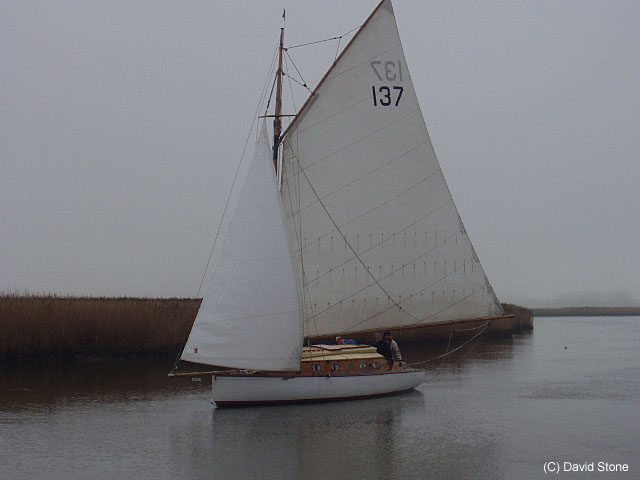
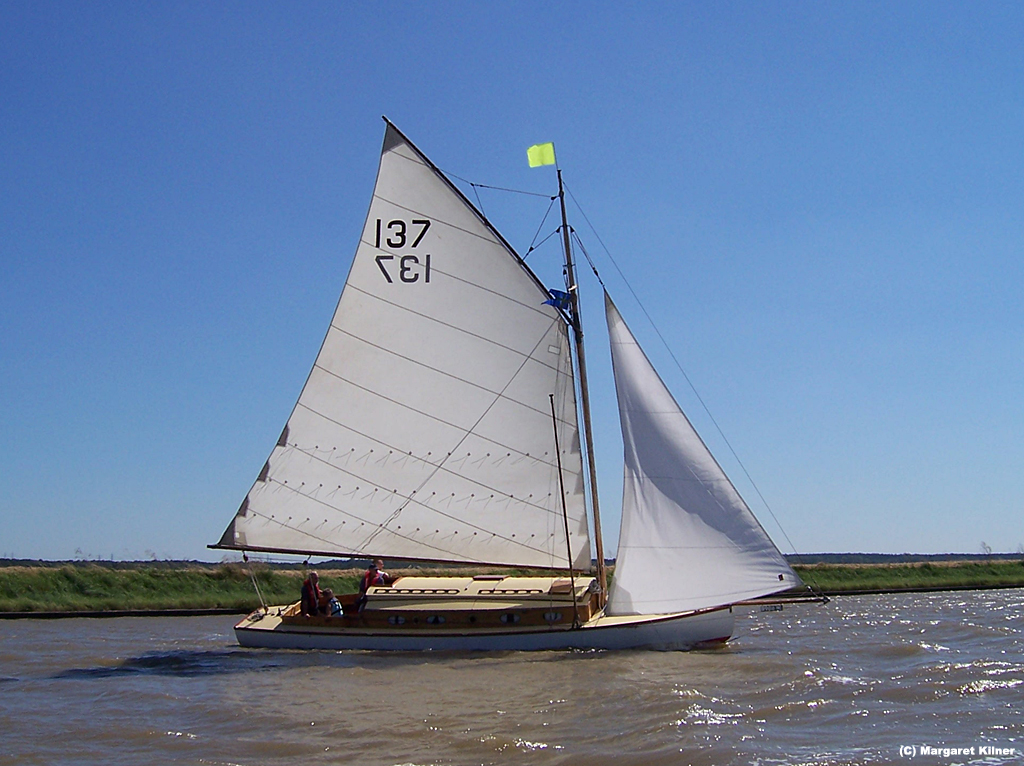
The Only Girl – s/N137.

Two cabins, four berths and ample space for drunkard, love-sick crew members!!

Now, the next day its worth noting that some were alert and fit for duty… Some… well. Less so.

Once again our plan was changed to suit the scale of our hang-overs… We’d head upriver to Surlingham, which gave us plenty of time to bring ourselves into the world slowly… with caffeine. Lots of caffeine.

It was light airs, so we raised the sails on both ‘Corsair’ and ‘Nulsec’ and beat up the Yare. It was even sunny! Yes, this was the life! H.B motored upriver, sweeping past.

Javelin No. 1 – sporting a fraudulent mainsail!

We sailed past Nulsec’s birthplace, at Buckenham Ferry. Here – the 1st 550 (yes, really!) Javelin’s were built. Nulsec is unusual – not least because she is S/N 1, but that she is probably the only wooden decked Javelin still in existence – by S/N 5, the boats were all fibreglass.

More information r/e the Javelin class, which celebrated it’s 50th anniversary in 2018, is available here; https://www.javelinuk.org/

‘Corsair’ moored at Brundall for victualling, and petrol. Strangely there was demand for energy drinks and paracetamol!!

Determined to rescue his reputation our Engineer leapt into action, as we walked upto the shops. His Uncle’s boat ‘Strongbow’ (aptly named) had some mechanical issues (it had a BMC1500 diesel)… ‘nuf said!

Returning from the shops, we looked longingly at the railway station, thinking about civilisation, showers, hot water!! Eventually – we all walked back to the boats!

get back to the boat!!

Jalil had managed to bring life to ancient iron – the subtle clattering and blue haze surrounding ‘Strongbow’ gave it away as we approached! ‘Strongbow’ also served as an excellent camera vessel for ‘Corsair’ as she tacked through Brundall.

Sadly – ‘S/B’ had to retire – oil pressure was scarily low. On ‘Corsair’ then amused ourselves by tacking onwards, aiming at lots of expensive boats, with a probing bowsprit!!!

‘Nulsec’ attempted the shortcut through Surlingham Broad, and ‘Corsair’ took the long way around via Brooms. We didn’t catch them – BUT we did enjoy ourselves, arriving at Surlingham last.

At Surlingham – it was the skipper’s turn. A thoroughly pleasant (for some) – and deeply amusing (for most) evening was spent attempting (and failing) to capture the attention of a barmaid…. (!)

Accepting failure, Chief Engineer Jalil & the skipper took a nightcap (or 4) aboard ‘Seabird’ – and set about getting wrecked commiserating eachother!

Goodnight!

Cruise 2009 – Day 3

Day 3 started with rain. Lots of it. It drummed on the awning and slowly but persistently it revealed all of the deak-leaks. Annoyingly most are above our bunks!

It’s pointless staying in a damp bunk – so over breakfast various damp people from the fleet discussed our destination. No longer was it Geldeston, we’d motor down the Waveney and head for Cantley.

All of this was discussed over a nutritious meal of bacon rolls, and ‘hair of the dog’ Strongbow… design specifications had been exceeded last night. (!)

Following this decision, there was a flurry of activity as tents were folded, masts lowered and every inch of space used to stow gear. ‘Corsair’s’ forepeak was crammed, to the point we’d not get the mast back up ever again…

The outboard decided to break its fuel system at this point – thanks to Chief Engineer Jalil for sorting this (note promotion from Petty Officer!). As we left, we were definitely at the back of the fleet, and all of us soaked.

As ‘Corsair’ towed ‘Nulsec’ downriver a lucrative card-school was hosted in the cabin, the stakes were 2p a bet. All was well until some fool (James) lost his winnings.

Periodically these gambling, drinking swines would come to inquire as to the skippers well-being…

(It took years to find all the 2p coins in the bilges!!!)

As we motored downriver – those swines drank ALL the booze!

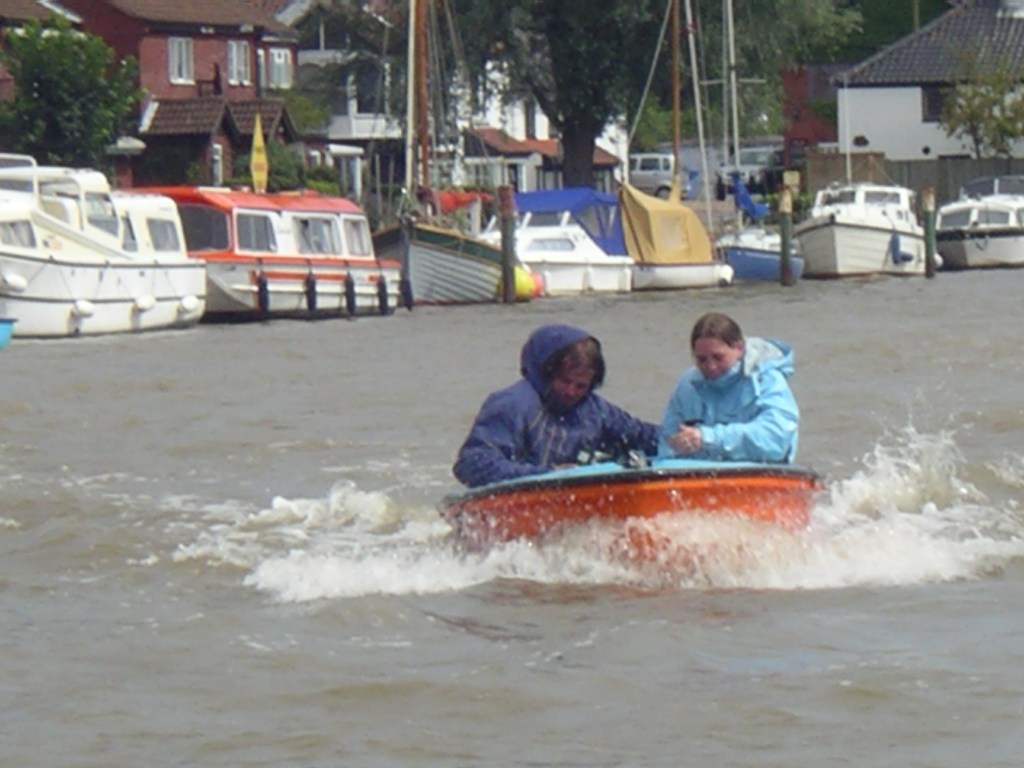
In the New Cut – bizarrely we realised that on our tail was ‘Herbie’ we weren’t last! Simon & Sarah were hustling along. Herbie was a 12ft Fibrocell dinghy, but was sporting an Evinrude 20hp on the back! There was nothing but a flurry of spray, a bow-wave and two soggy looking people!!

Fastest dinghy in the East… Or West…

‘Corsair’ and ‘Nulsec’ moored at Reedham Street (to replenish the booze!), and we kept an eye to see if ‘Nulsec’ would sink again. She didn’t, and we managed to get all the sails up, to head upriver for Cantley.

Even the repaired rudder behaved itself!! Both craft enjoyed some champagne sailing up the Yare, to the extent that ‘Corsair’ carried on up with the last of the flood to the Beauchamp Arms…

We moored to a fishing platform – tiptoed ashore as the water swelled the banks and had a well-earnt pint.

Our stolen pint.

Returning to Cantley kept us on our toes, but we’d drifted off (literally). Flush with success we poured ourselves some room temperature Gins and drifted back in the early evening sun.

Almost civilised!

The weather hadn’t finished with us, a ‘roger’ belted into us just upstream of Langley – shitshitshitSHIT, helm down, let go sheets, no good the booms in, HOLD ON!

Somehow – Robert in his role as official reporter coolly held his nerve (and his drink) and photographed how far we were over;

Damp bunks… Again.

Suitably chastened – with split Gins and frayed nerved we returne to Cantley

Quick phone call sorted extra beds. So 4 lucky souls will sleep aboard on ‘The Only Girl’ (S/N137) for the night.

In the meantime though, the morning’s hangovers we discarded, who cares! the pub, the pub!!

Goodnight.

Herbie – at speed. New Cut.


Day 2 – 2009 cruise

Sorry. As ever my ambitions to write regularly get thrown aside. However – a lot of the distraction has been sailing the boat, which is no bad thing.

‘Corsair’ had her topsail set recently. It’s the only sail remaining from the 1978 suit. To be honest I’ve never set a topsail on her before. In the true spirit of all ‘well thought’ out decisions, I dug the topsail out of my loft on the Thursday evening, rigging it Friday evening (on the quant pole in lieu of a proper spar) – and then raced with it on the Saturday morning.

It’s important to spend time on well founded (funded) development… (!)

The only down-side, was that the new mainsail doesn’t set quite ‘right’ with the old topsail. I’m considering narrowing the topsail by about 3 inches, which should allow the peak to sit better.

Also – using the quant as a topsail spar – it worked, kind of… Ultimately the sail needs its own spar, as the quant did bend. In fact I’m curious to see if a better spar will allow me to peak up the required amount.

Oh, and having put the boat in the reeds to get the rig up, you know what I needed to get out? The sodding quant…

She didn’t look too bad though;

‘Corsair’ – with topsail

The regatta in question, is the Autumn Open at Cantley – some excellent photographs were captured by my friend Sue, here if you’re interested. https://www.flickr.com/photos/ladylouise2/albums/72157710884428228

And, Editor’s privilege, here’s a gratuitous photograph of us – powering to the finish line. 2nd to last place. Champions.

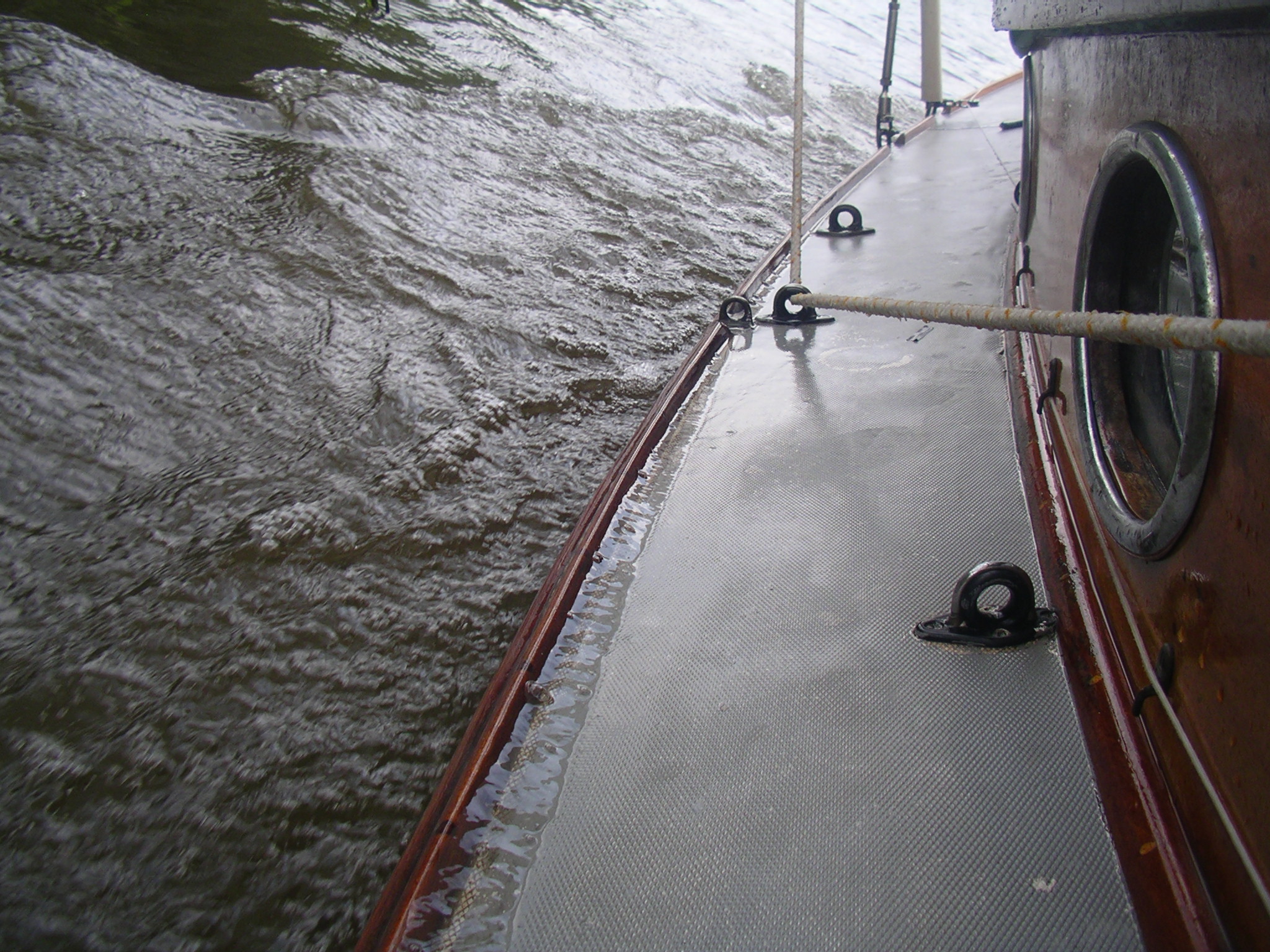
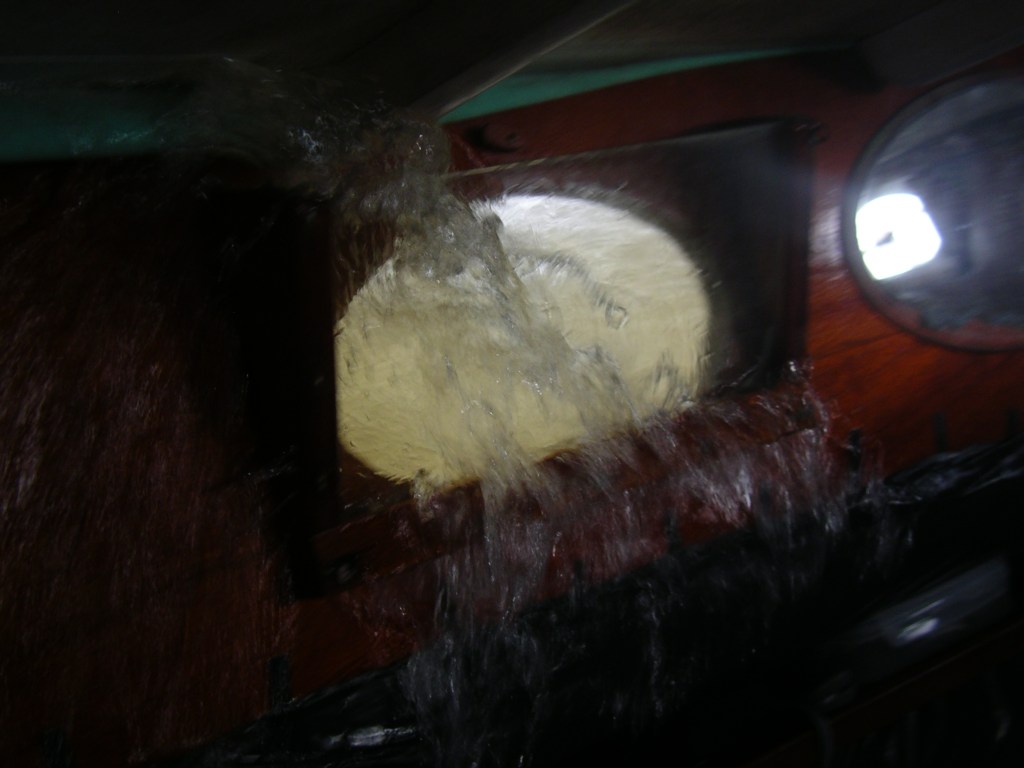
Water through the cabin ports!

So. Yes. Back to Day 2 of the 2009 cruise. To recap what had happened, please see here; https://broadssailing.blog/2019/08/14/summer-storms-submarines/

In short – James had sunk, we’d got pissed, and then some dubious sailing had occurred. Situation normal really!

Day 2 – Cruise 2009.

There was a strange sense of de ja vu about the early morning at Somerleyton… The skipper shuffled through the cockpit, en-route to get the kettle going. A cursory glance astern. BOLLOCKS!

‘Nulsec’ had caught up on the quay, and as the tide fell, she had reached an unnatural angle of heel. The bugger would capsize any moment. A flurry of hungover people came busting out of various craft up and down the bank – and pyjama-clad, we proceeded to put ‘Nulsec’ back into the water.

Later, post breakfast and caffeine (plus some ‘feedback’ to James) us saily-types decided that we would sail from Somerleyton staithe, up the Waveney with the ultimate destination of Beccles. ‘Corsair’ and ‘Nulsec’ were first to depart, taking advantage of an early opening bridge to saunter in the direction of Beccles.

‘Corsair’ took a brief pit-spot at the Waveney River Centre, providing a glimpse at Sailing Barge GM. A vessel I had skippered on a delivery trip from London to the Waveney River Centre earlier in 2009. Anyway, ‘Dragonfly’ swept by majestically, being lead by ‘Seabird’, we needed to stop dawdling!

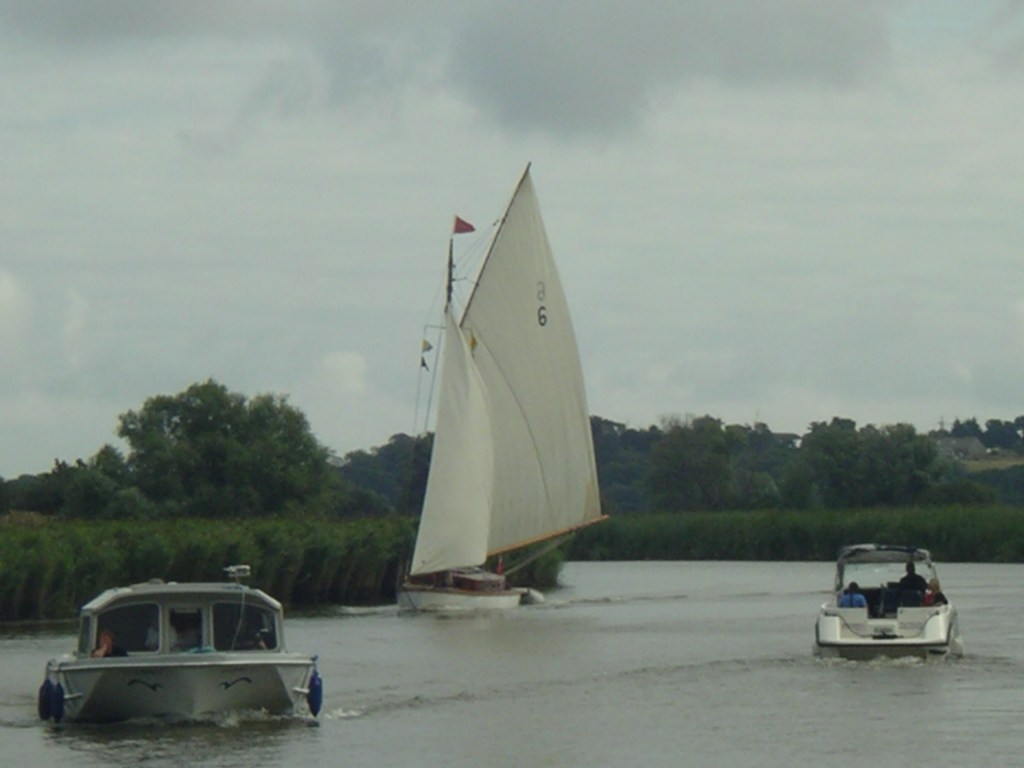
Dragonfly – S/N 6. Largest Broads yacht on the rivers.

Having set off again, ‘Corsair’ tacked her way up the Waveney. A very short interlude later, ‘Nulsec’ was sighted, firmly stuffed up the lee bank. ‘Corsair’ brought up on the weather bank, and after some encouragement – ‘Nulsec’ paddled across, enabling us to make a temporary repair to the rudder. (more of this later).

‘Nulsec’ then set off, and we took bets on how long before we’d see them again…

Inevitably – the rudder had suffered a terminal failure. Thankfully it was in eyesight! Wow. ‘Nulsec’ stormed across the river, the rudder and tiller parted ways. The adjacent hire boat stopped abruptly in an indignant cloud of diesel smoke.

They shouted. We cringed. James flinched and Alison screamed.

‘Nulsec’ however, she was still going! In a series of beautiful violent and uncontrolled gybes, twists, loops and spins she seemed reluctantly to go out quietly. (!) She did inevitably, cannon into the lee-shore with a final thumping gybe.

HB was despatched to act as salvage craft to tow ‘Nulsec’ to Beccles.

‘Corsair’ continued her gentle tack up the Waveney, now being in the tree-lined upper reaches. I manned the foredeck (read my book), or at least I tried. The skipper would like the record to state that Chris B tried to garotte me with the jib-sheets!

(I’ve never liked him).

Eventually Beccles was reached, with some weapons-grades Pimms, and a BBQ restoring everyone’s spirits. Simon was a sterling figure of ingenuity – he first fixed ‘Nulsec’s’ rudder – and then identified the cause of the leaks / sinking!

James had left the self-bailers open.

(insert descriptor here)

After berating him suitably, we sat about long after it’d got dark, everyone just chatting away (nobody could stand after the Pimms).

Goodnight.
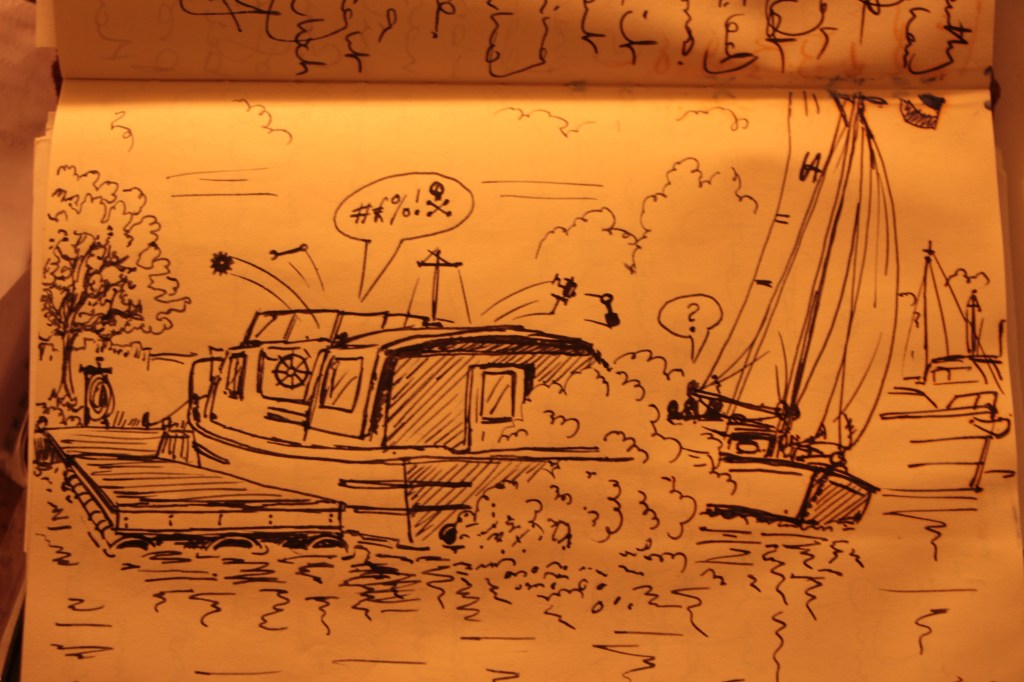
The ‘incident’.