So. 21 & a wooden boat owner. That was… interesting. Most of my friends were perplexed when I started dropping out of the usual Friday or Saturday night pub trips… instead I would mutter about ‘the yard’ or somesuch before disappearing off.
Work colleagues soon grew used to seeing my finger nails sporting either primer, varnish or remnants of gloss paint – almost all of them by this point were fed up listening to me talking about the boat!
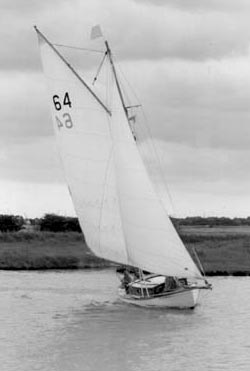
The only photographs I had of ‘Corsair’ complete and in commission were from the 1990’s;
My finances dictacted most of what I could do at this stage. Jobs were strictly completed on an absolutely essential basis. The gas stove remained unconnected, as did the cabin lights.
The bilge pump was wired in, using a defunct battery from my Father’s car, the sum total of my electrical systems until 2018.
I was lucky, very lucky in that J&J had spent the money on ‘Corsair’ throughout their ownership. I could see that she had been comprehensively looked after, which made my life easier in that first fit-out. They generously passed over everything associated with ‘Corsair’, warps, rigging, sails, covers, mattresses, cabin curtains. I think I only put aboard fenders and some crockery. Apart of course from a Tilley Lamp & Primus. No electricity or gas you see…
At this point in my ownership, I knew very little of her history – except that she had been owned by Jamie Campbell’s father. Who I wrote to, asking about the boat. His reply was fascinating.
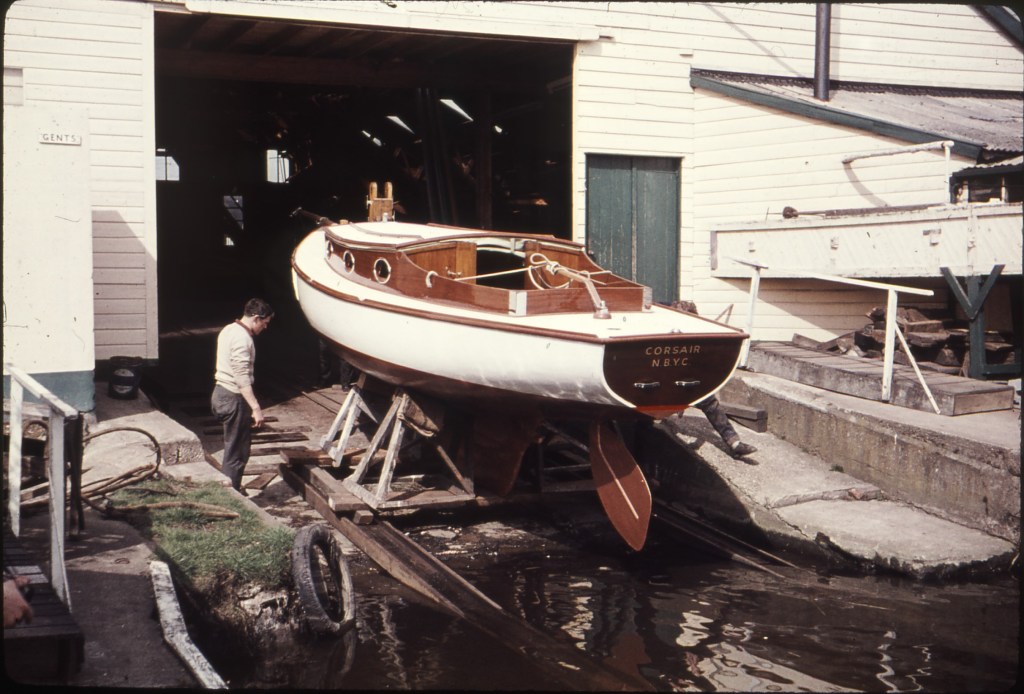
I learnt that ‘Corsair’ was built by Chumley & Hawke in Horning, 1951. She was one of a class of 6, being named ‘Clipper VI’. He provided some early photographs which gave me an exceptional opportunity.
My favourites date from 1961, showing her freshly purchased and made ‘yachty’ for the Campbell family. I like to think that they were as thrilled with her as I, although I suspect they were more sensible.
I think it was April, when she was ready for launch. Keeping this quite secret – I’d booked the day off, and headed upto Thurne. Apprehensively, I stood back and watched as the strops were placed, she was hoiked onto a trailer and began the 1/4 mile journey to the river.
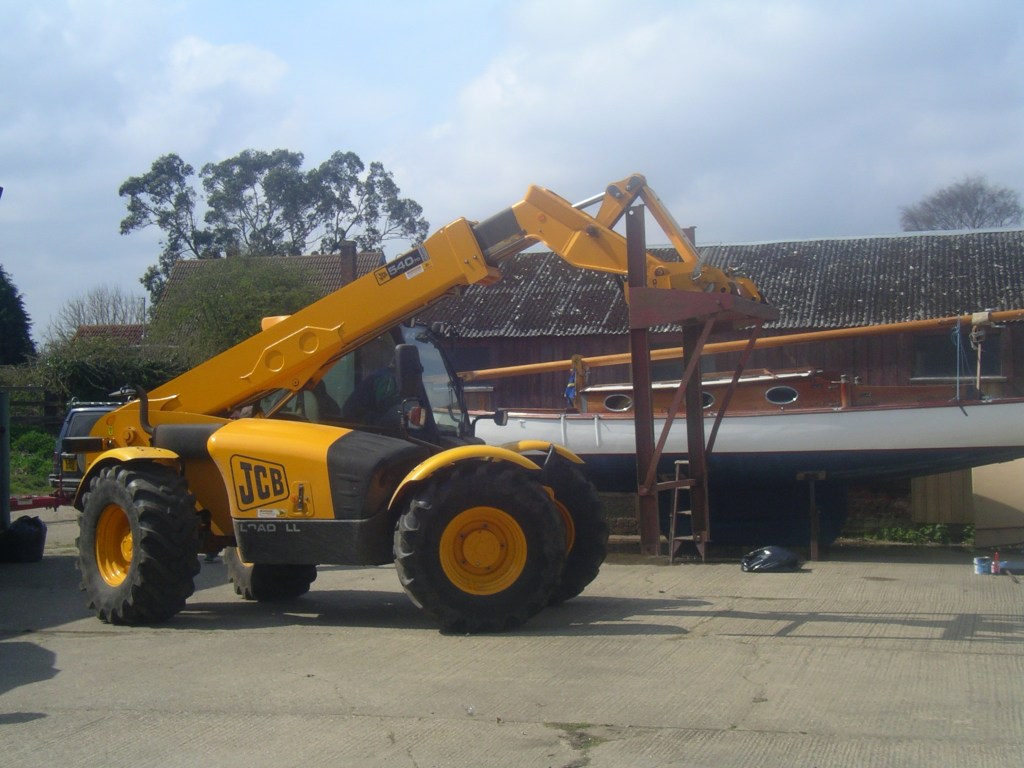

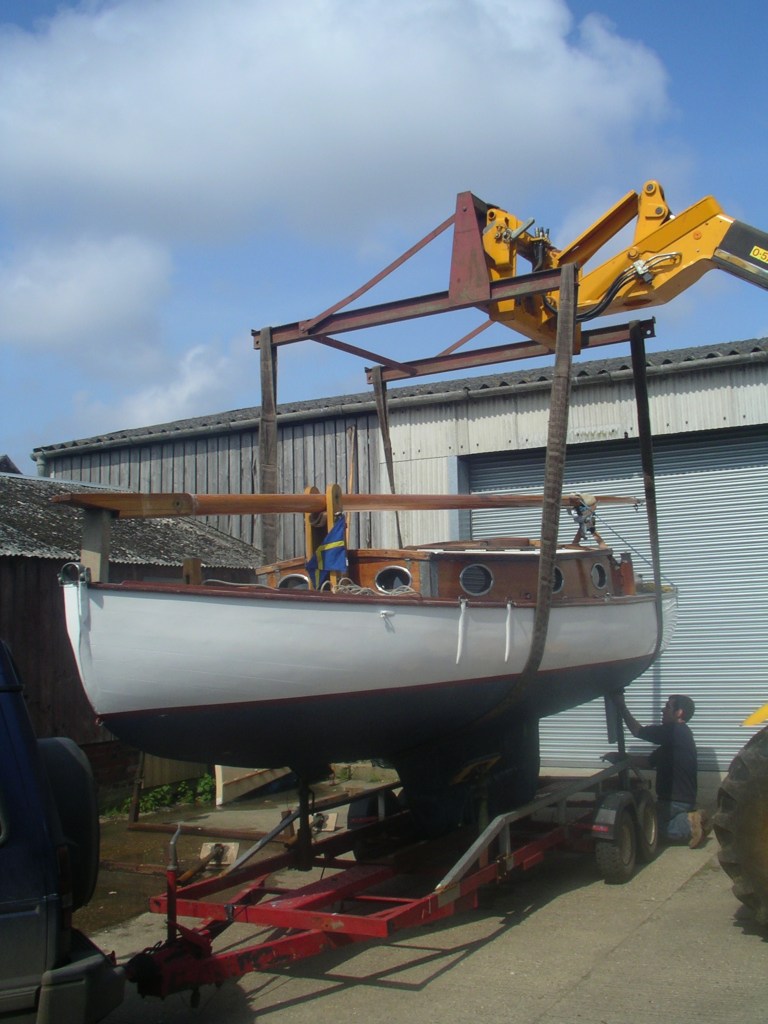
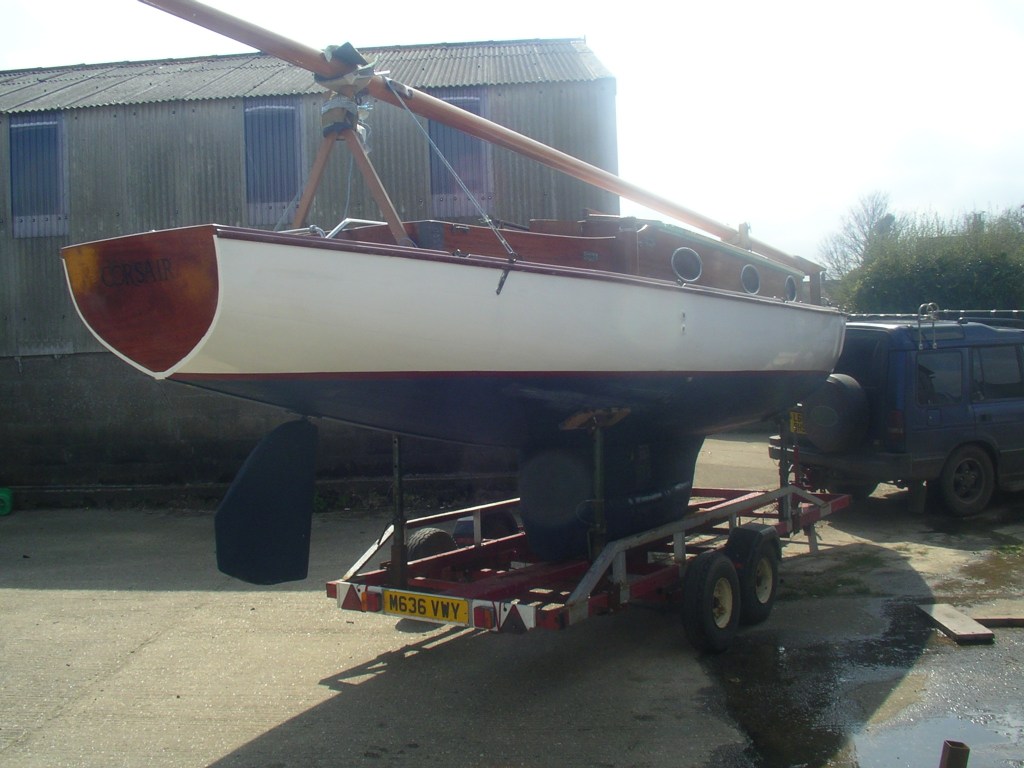
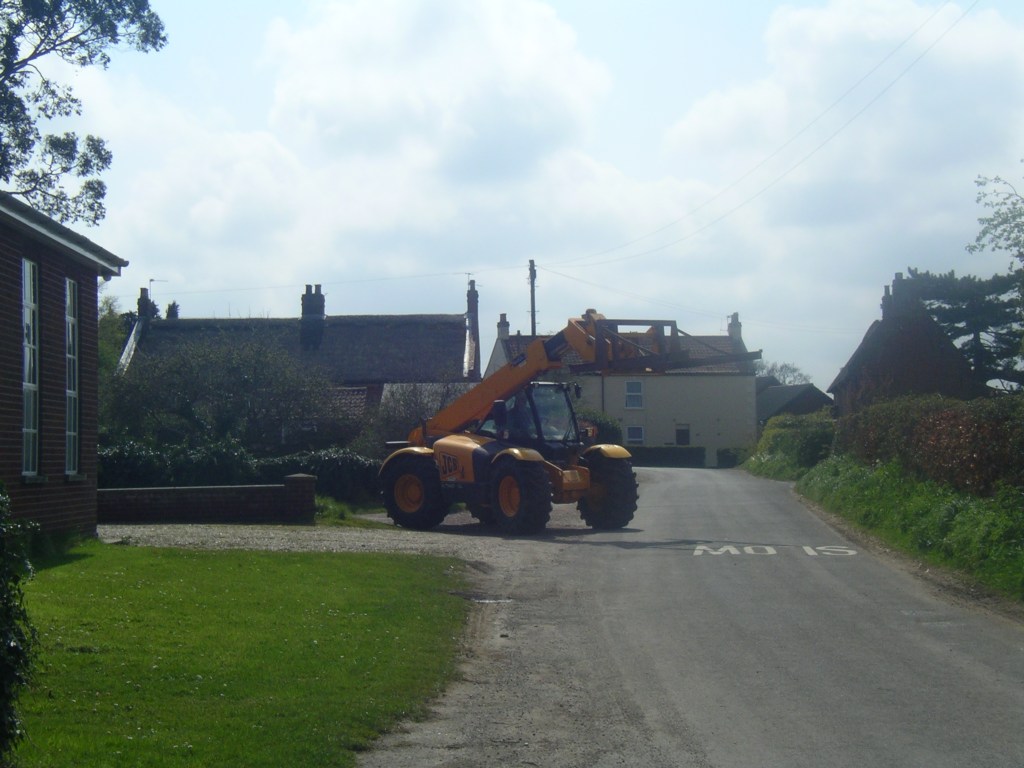
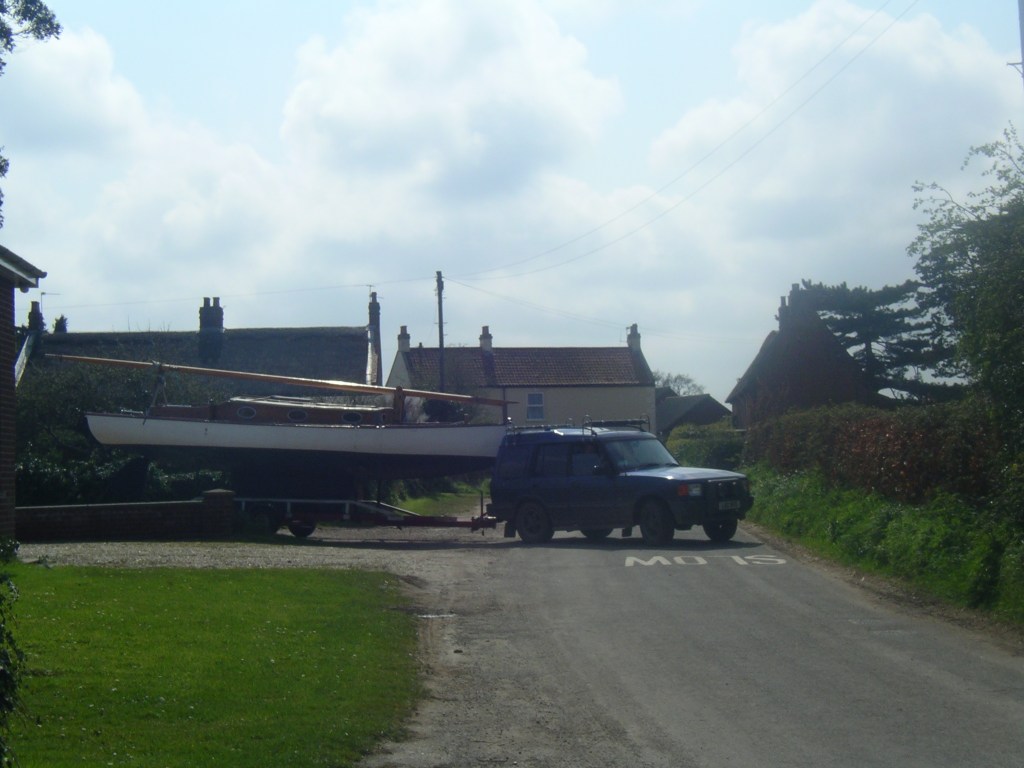
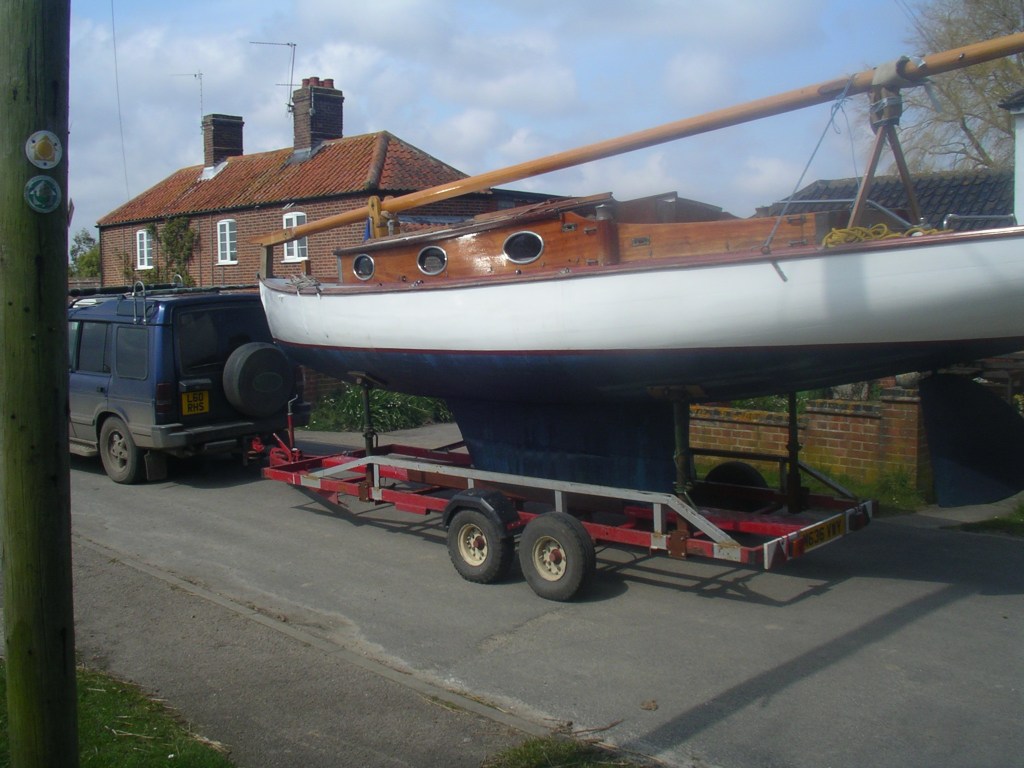
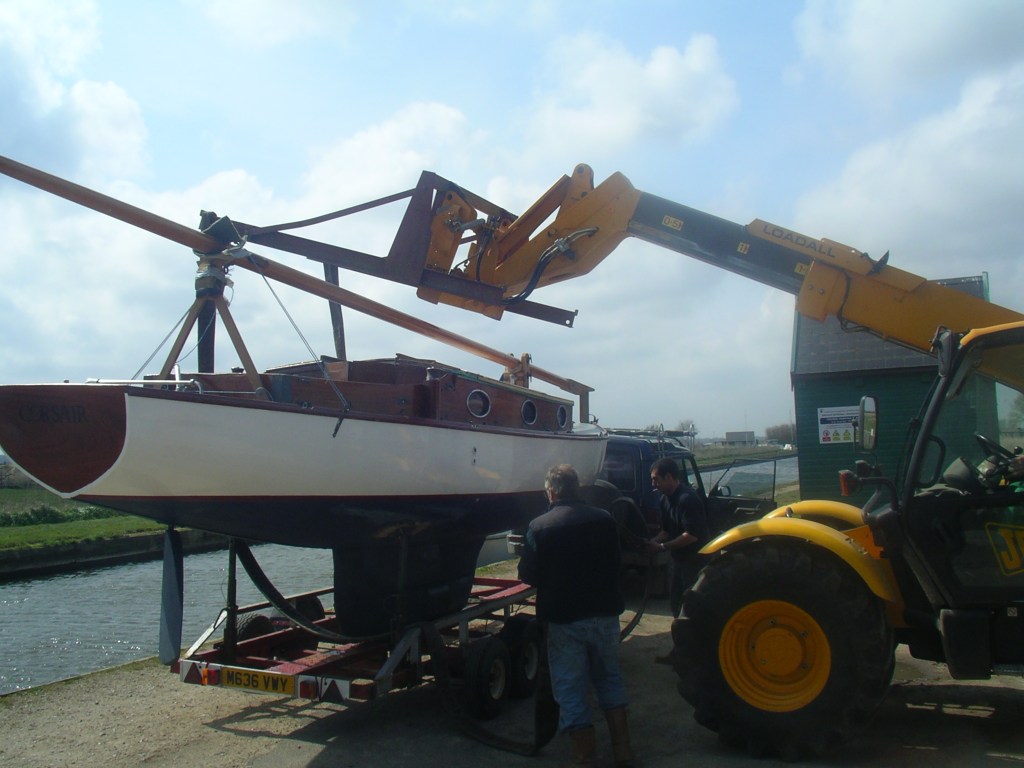
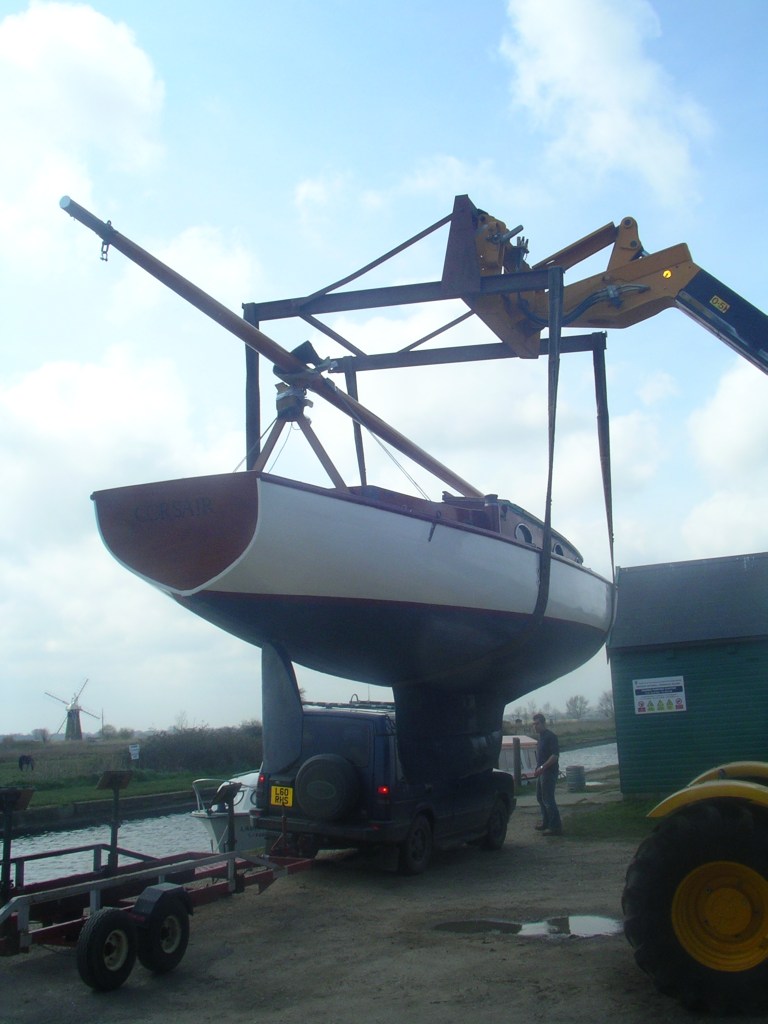
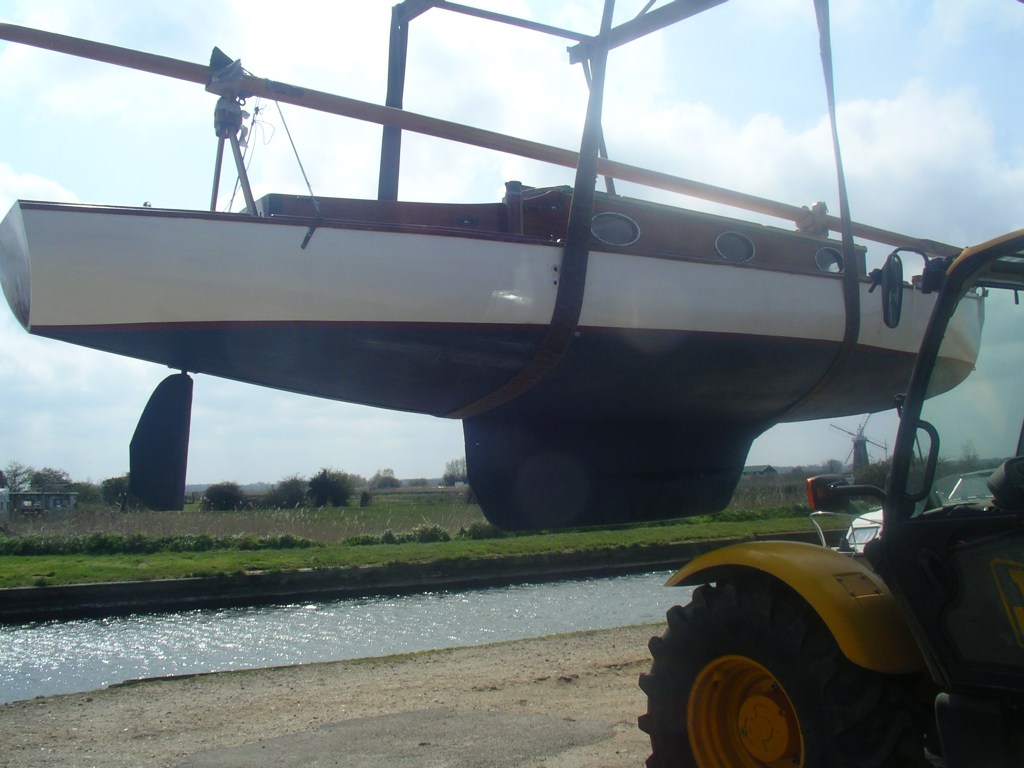
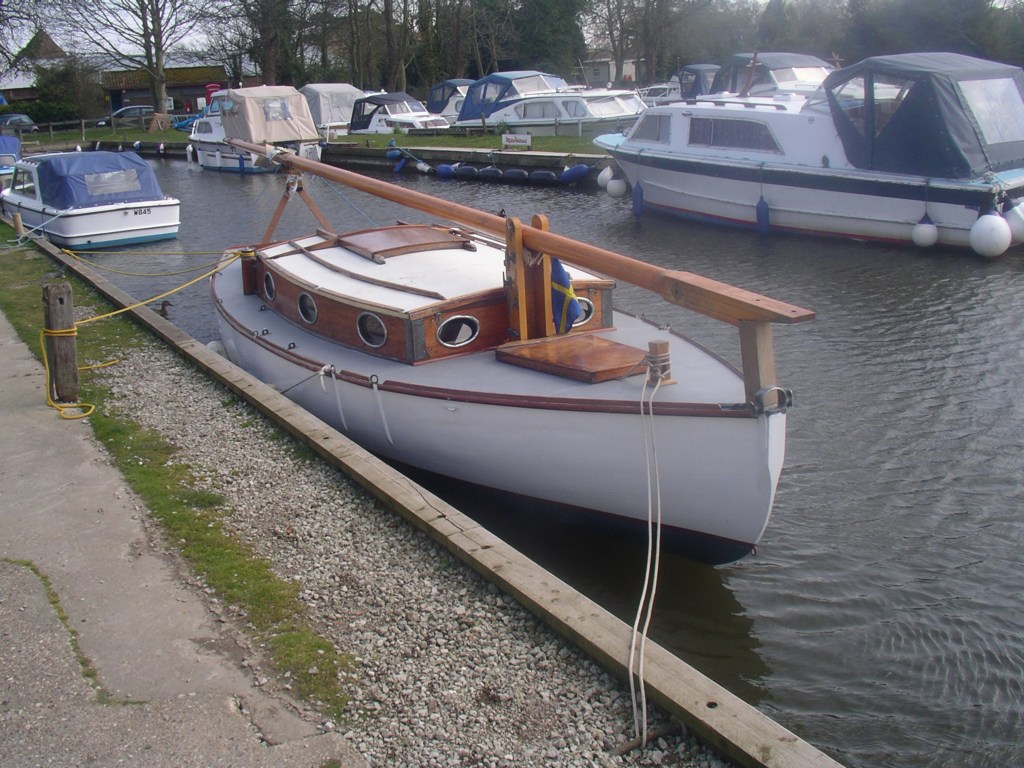
You’ll note the unusual rudder. More of that later…
At this stage, I hadn’t yet fitted the canvas ‘bellows’ around the roof, so it couldn’t be raised. I spent the first night aboard, roof lowered, awning off, listening for the bilge pump. If you’re interested this is the most uncomfortable way you can stay on a Broads yacht. A fact affirmed to me by my girlfriend at the time. She adamantly stated that I needed to resolve the lack of canvas bellows. One green, antique Scout Tent duly butchered, we had bellows, which smelt gorgeous being actual canvas.
(n.b. I fitted this canvas myself, with ferrous grip-fast nails… into the MAHOGANY CABIN SIDES… I inwardly cringe now when I look back)
The next day, we motored slowly to my mooring at Oby Dyke. What little I did know, you had to wait for a wooden boat to ‘take up’ before sailing her. So the first sail would wait.
But yes! Here she was! My very own river cruiser, afloat!! Looking lovely. (Invoices mostly paid, or rather most invoices paid).
Next, we (I) learn to sail a River Cruiser, and I explore more of her early history.
 A Broadsman
Good story and a very good teller
LikeLike